












Product Details
Product Overview
The Allen-Bradley 1771-DCM functions as a high-speed Direct Communication Module (DCM) within the legacy PLC-5 Universal I/O platform. It establishes a robust link between PLC-5 processors and Remote I/O (RIO) networks, enabling peer-to-peer data exchange across distributed architectures. This module supports both discrete and block transfer modes to accommodate various data densities and timing requirements. We supply this unit as 100% Brand New and Original, featuring a factory-applied conformal coating to ensure long-term electronic integrity in aggressive industrial atmospheres.
Technical Specifications
The 1771-DCM optimizes data throughput between the local chassis backplane and remote stations using the industry-standard RIO protocol.
-
Manufacturer: Allen-Bradley / Rockwell Automation
-
Product Line: PLC-5 (1771 I/O)
-
Module Type: Direct Communication Module (DCM)
-
Supported Protocol: Remote I/O (RIO)
-
Transmission Rates: 57.6K baud @ 10,000 ft; 115.2K baud @ 5,000 ft
-
Communication Modes: Discrete Data Transfer (7+1 words); Block Transfer (63+1 words)
-
Backplane Current: 1.2 Amperes
-
Module Scan Time: 1.3 to 5 ms
-
Response Time: 15 ms
-
Wiring Arm: 1771-WN
-
Environmental Protection: Conformal Coated
-
Operating Temperature: 32 to 131°F (0 to 55°C)
-
Storage Temperature: -40 to 185°F (-40 to 85°C)
Engineering Advantages
-
Extended Network Range: The 1771-DCM manages reliable communications over vast distances, reaching up to 10,000 feet at 57.6K baud. This capability allows for the integration of remote machine cells without requiring expensive signal repeaters.
-
Dual Data Transfer Logic: The module processes both Discrete Data and Block Transfers simultaneously. Engineers utilize Discrete Transfer for high-speed bit-level interlocking (up to 7 words) and Block Transfer for larger data arrays (up to 63 words), such as recipe parameters or diagnostic buffers.
-
Resilience in Harsh Conditions: Factory conformal coating protects the internal circuitry from conductive dust, humidity, and chemical vapors. This prevents parasitic leakage and dendritic growth, common failure points in pulp and paper mills or chemical refineries.
-
Streamlined Integration: The 1771-DCM uses the standard 1771-WN wiring arm, which simplifies field wiring for the Belden 9463 "Blue Hose" cable. The mechanical keying (between pins 2-14 and 16-18) prevents the accidental insertion of incorrect modules, protecting the system from electrical mismatch.
FAQs
-
What cable type does the 1771-DCM require for networking?
The module requires Belden 9463 twinaxial cable (commonly known as "Blue Hose") or an equivalent shielded twinax cable to maintain signal integrity and noise immunity over long distances.
-
Does this module support programming in C or BASIC?
Yes. The 1771-DCM supports operations for both BASIC and C programs, providing developers with high-level language flexibility for complex data manipulation or specialized communication routines.
-
How does the module communicate with the main PLC-5 processor?
The module communicates via Block-Transfer instructions. The PLC-5 processor executes a Block Transfer Write (BTW) to send data to the DCM and a Block Transfer Read (BTR) to retrieve status and data from the DCM.
-
Is this a refurbished or surplus unit?
Absolutely not. We guarantee this 1771-DCM is 100% Brand New and Original. It comes in factory packaging, ensuring the conformal coating and internal components remain in pristine condition for immediate deployment.
Additional Information
- 100% Genuine Parts: All products are original and authentic, ensuring reliable industrial performance.
- 30-Day Refund Guarantee: Return any in-stock item within 30 days in original, unopened packaging for a full refund (excluding shipping and fees).
- 12-Month Warranty: Covers defects in materials or workmanship; excludes misuse, normal wear, or unauthorized modifications.
- Worldwide Shipping: We ship via USPS, UPS, FedEx, and DHL. Delivery times vary by country and may be subject to customs or import fees.
- Support & Contact: Technical and warranty assistance is available anytime. Contact us here: Contact.
- Purchase Guidance: Check product specifications and compatibility carefully before ordering to ensure proper application.
Tech & Buying Guide

Optimizing Tank Level Control Using Proportional Algorithms in PLC Systems
Industrial automation engineers frequently encounter liquid level regulation challenges across diverse process plants. Traditional ON-OFF control mechanisms often disrupt system stability due to abrupt actuator switching. Therefore, upgrading to closed-loop architectures like proportional control yields smoother responses. In a typical PLC environment, such as Siemens TIA Portal, engineers utilize closed-loop feedback to minimize process errors without requiring full PID complexity.
Understanding Why Your PLC Enters Stop Mode: Causes and Troubleshooting
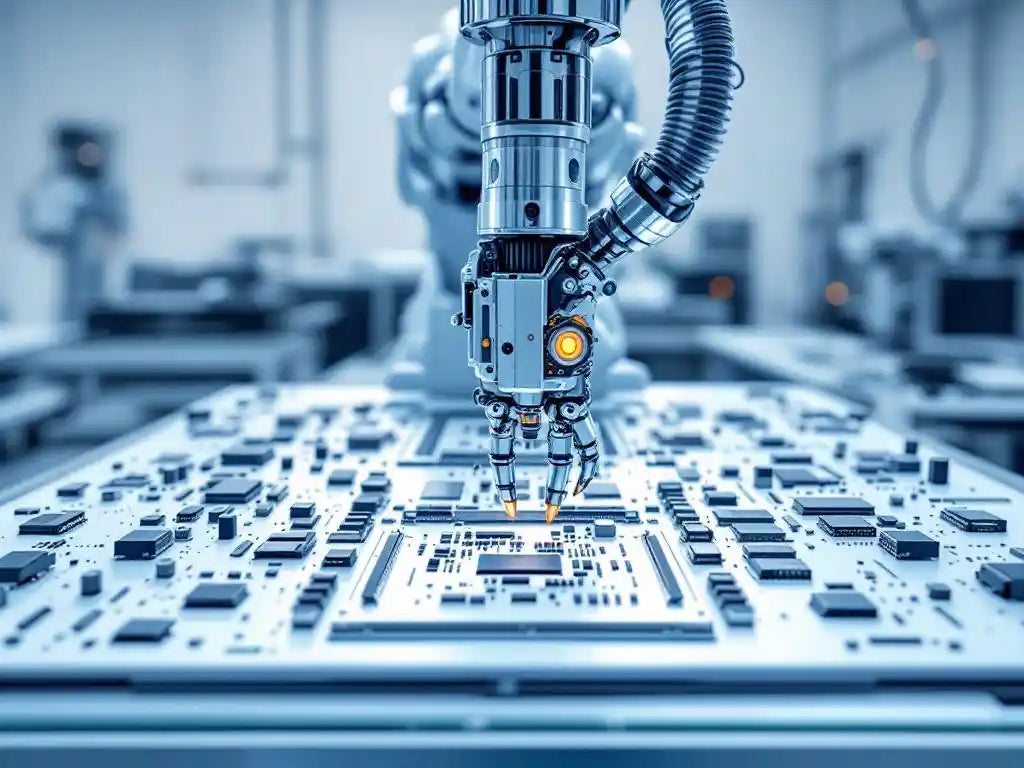
In industrial automation, programmable logic controllers (PLCs) serve as the core intelligence of modern factory automation and distributed control systems (DCS). Understanding how a PLC transitions between modes is vital for maintenance engineers. Typically, a PLC operates across four primary modes: Run, Stop, Start-Up, and Hold. When power is applied, the system immediately boots into Stop mode before initiating the Start-Up sequence. If the controller encounters a critical error during execution, it automatically reverts to Stop mode to prevent equipment damage. Therefore, monitoring these state transitions helps technicians maintain high system availability.
Comprehensive Guide to Servo Motor Drive Control Techniques in Industrial Automation
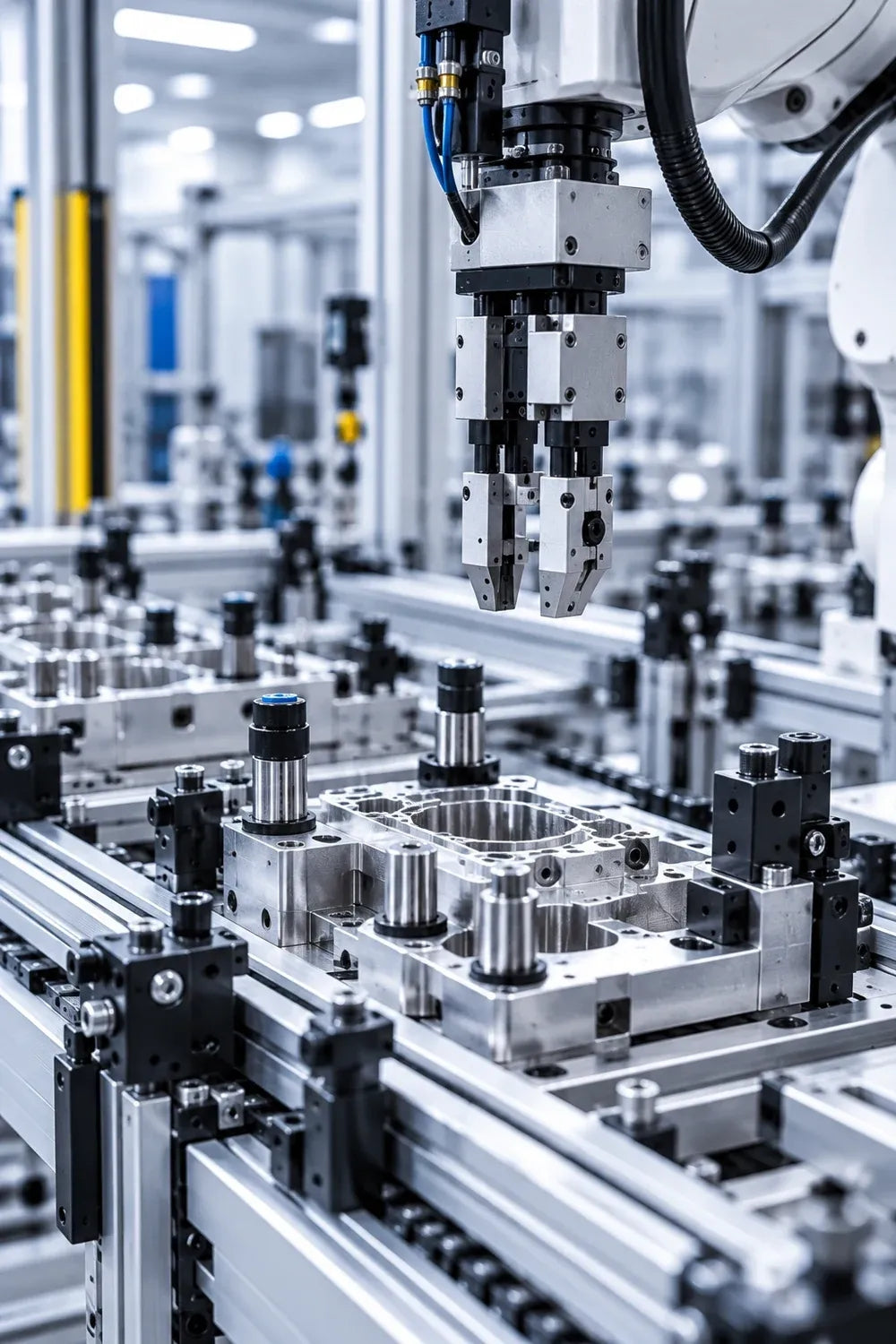
Precision motion control systems drive high-throughput manufacturing across modern industrial automation environments. Unlike standard induction motors running on basic variable frequency drives, servo motor systems deliver sub-millimeter positioning accuracy and fast dynamic response.