Product Details
Product Overview
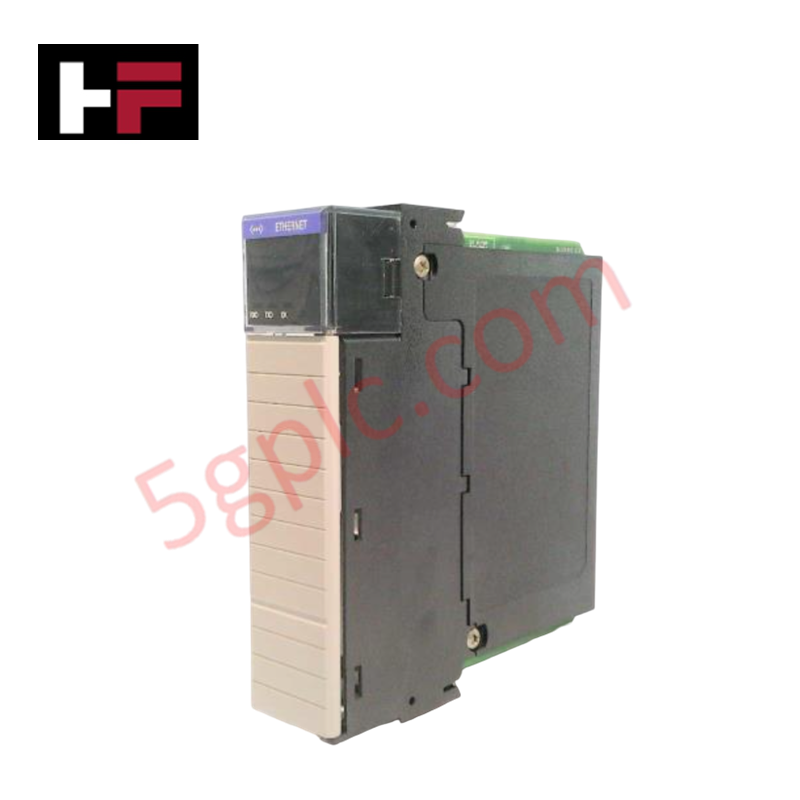
The Allen Bradley 1756-ENET acts as a foundational Ethernet communication interface for the ControlLogix platform. This module enables high-level messaging and data exchange between controllers, computers, and other Ethernet-capable devices. Despite its discontinued status in the broader market, we provide this unit as 100% Brand New original stock. It provides a vital bridge for legacy systems requiring linear topology support and reliable 10 Mbps data transfer speeds without forcing a total system overhaul.
Technical Specifications
| Feature | Specification |
| Manufacturer | Allen Bradley / Rockwell Automation |
| Product Line | ControlLogix |
| Module Type | Ethernet Communication Module |
| Ports | 1 Ethernet Port; 1 AUI Port |
| Data Transfer Rate | 10 Mbps |
| Backplane Current (5.1V DC) | 900 mA |
| Backplane Current (24V DC) | 350 mA |
| Power Dissipation | 13.3 Watts (Maximum) |
| Slot Width | 1-Slot (Fits any chassis slot) |
| Operating Temperature | 0 to 60 °C (32 to 140 °F) |
| Chassis Compatibility | 1756-A4, -A7, -A10, -A13 (Series A & B) |
Engineering Advantages
-
Legacy Infrastructure Support: The 1756-ENET facilitates continued operation of Series A and B ControlLogix chassis. It allows engineers to maintain existing network architectures while ensuring the PLC communicates effectively with HMI and SCADA software.
-
Dual Connection Versatility: This module features both a standard Ethernet port and a 15-pin AUI port. This dual-interface design provides flexible physical layer connectivity options for older industrial transceiver hardware.
-
Instant Diagnostic Feedback: Three dedicated LEDs (TXD, RXD, OK) provide immediate visual status of network traffic and module health. This reduces troubleshooting time by allowing technicians to verify hardware functionality at a glance.
-
Chassis Flexibility: The module fits into any available slot in a ControlLogix chassis. This unrestricted placement simplifies panel layout and allows for optimized thermal management within the enclosure.
FAQs
-
Can I use the 1756-ENET for high-speed I/O control? While this module supports messaging and adapter functions, it operates at 10 Mbps. For high-speed distributed I/O, consider the 1756-ENBT or newer modules; however, the 1756-ENET remains the standard for maintaining legacy messaging links.
-
Is this module compatible with newer Series C chassis? The 1756-ENET specifically supports Series A and B chassis (e.g., 1756-A4 through 1756-A13). Always verify your backplane revision before installation to ensure full electrical compatibility.
-
How do I address the module on the network? The module utilizes BOOTP or DHCP for initial IP assignment. Use the Rockwell Automation BOOTP/DHCP utility to set a static IP address for permanent integration into your industrial subnet.
-
Does this product come in original packaging? Yes. We supply only 100% Brand New units in their original factory boxes, ensuring the hardware has never seen service and meets all original engineering specifications.
Additional Information
- 100% Genuine Parts: All products are original and authentic, ensuring reliable industrial performance.
- 30-Day Refund Guarantee: Return any in-stock item within 30 days in original, unopened packaging for a full refund (excluding shipping and fees).
- 12-Month Warranty: Covers defects in materials or workmanship; excludes misuse, normal wear, or unauthorized modifications.
- Worldwide Shipping: We ship via USPS, UPS, FedEx, and DHL. Delivery times vary by country and may be subject to customs or import fees.
- Support & Contact: Technical and warranty assistance is available anytime. Contact us here: Contact.
- Purchase Guidance: Check product specifications and compatibility carefully before ordering to ensure proper application.
Tech & Buying Guide

Importance of Safety Barriers in PLC and DCS Control Systems

Static UPS vs. Rotary UPS: Technical Evaluation for Industrial Automation