










Product Details
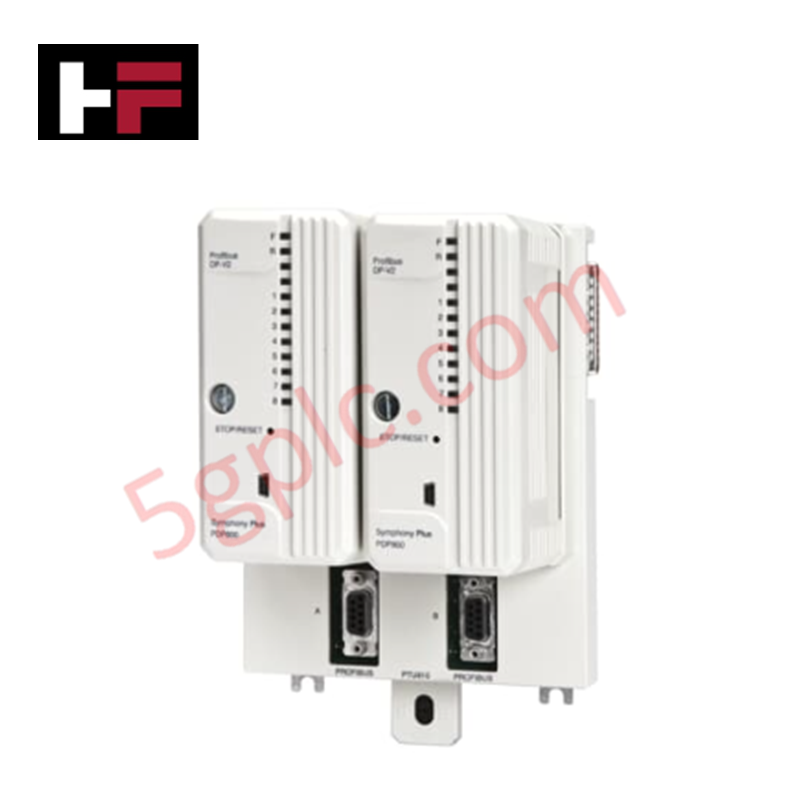
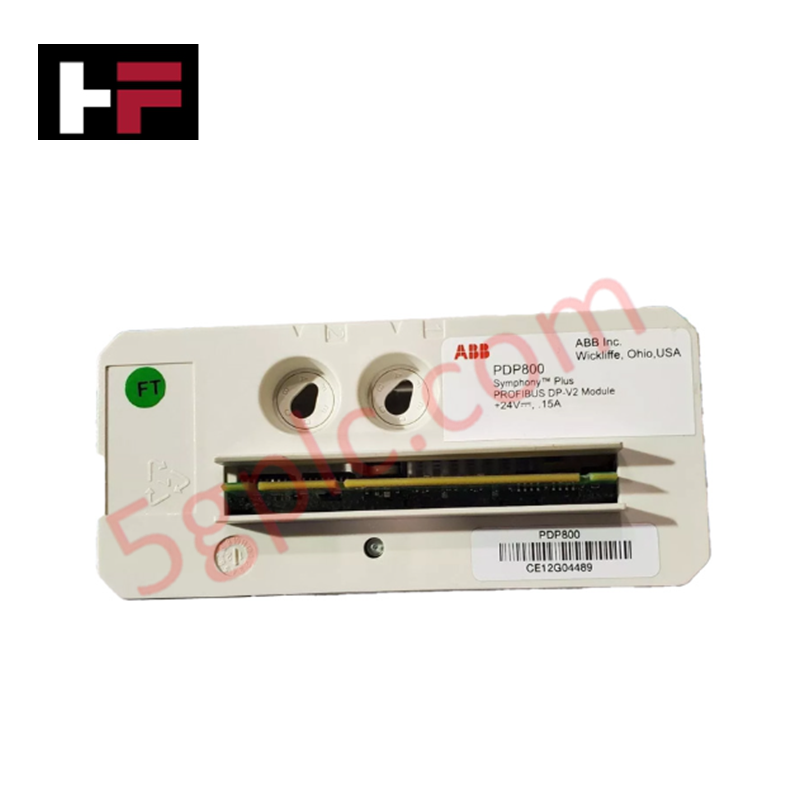
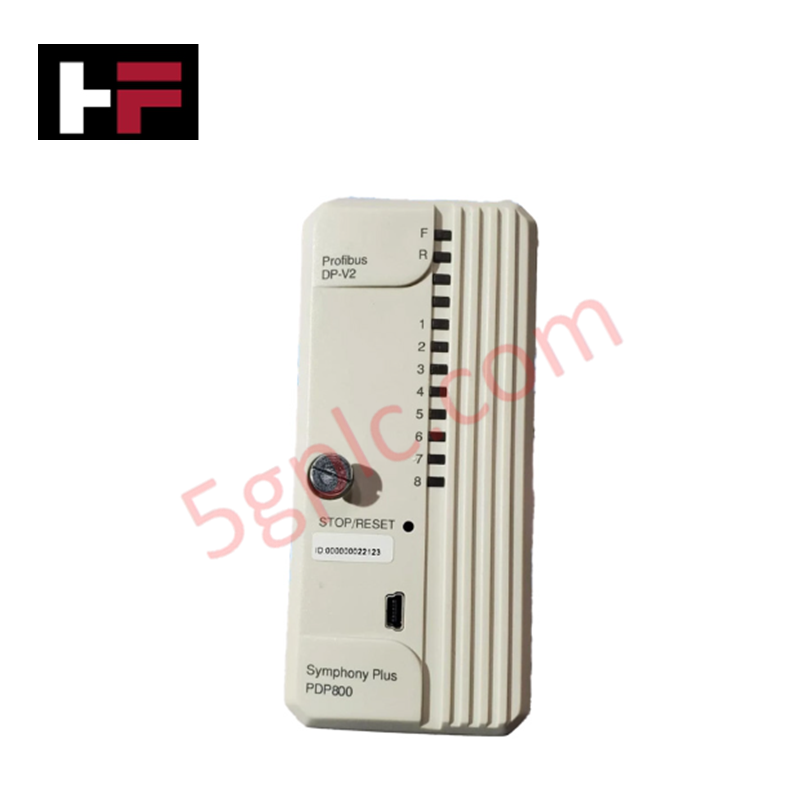
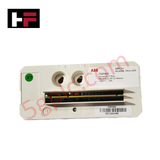
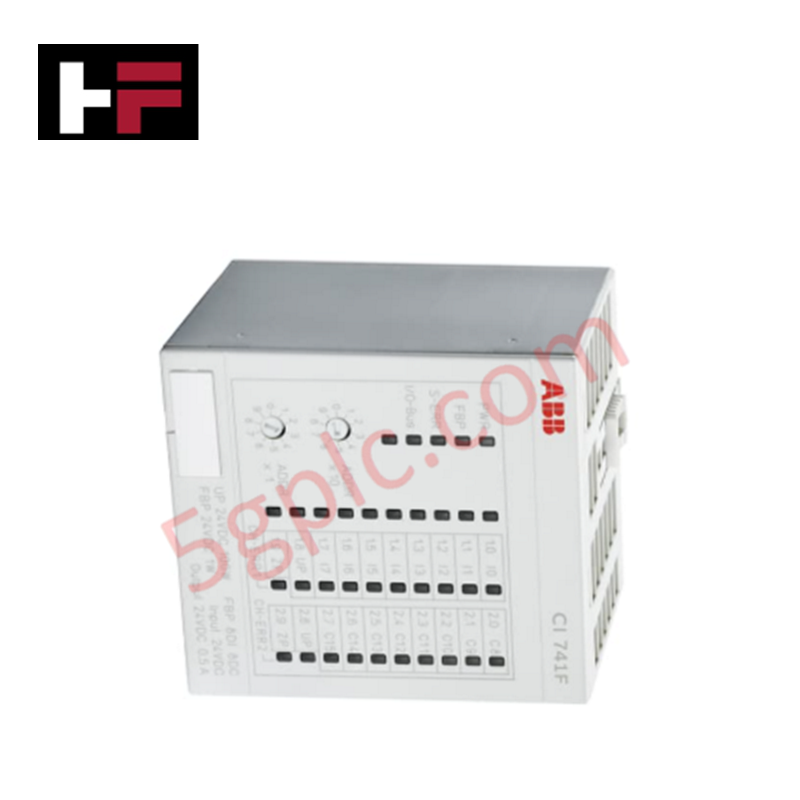
The ABB PDP800, also cataloged as the PDP800 Communication Module, operates as a dedicated hardware component for Profibus network orchestration and cyclical fieldbus data exchange within ABB automation systems.
Hardware Specifications
| Parameter | Specification |
|---|---|
| Model | PDP800 |
| Brand | ABB |
| Origin | Lithuania |
| Weight | 0.85 kg (Standard module baseline; net weight omitted in raw logistics logs) |
| Dimensions | 170.18 mm x 73.66 mm x 243.84 mm |
| Operating Temp | 0 to +60 deg C (Standard industrial parameters) |
| Power Consumption | Internally derived via backplane interface assembly |
| Product Type | Communication Modules |
| Protocol Support | Profibus DP V0 / V1 / V2 Master implementation |
| RoHS Compliance | Following EU Directive 2011/65/EU |
| WEEE Category | 5. Small Equipment (No External Dimension More Than 50 cm) |
Profinet / EtherNet/IP Deterministic Networks and I/O Density Scaling
The internal processor architecture of the PDP800 coordinates the master schedule for cyclic (DP V0) and acyclic (DP V1/V2) slave telemetry over the physical bus layout. This subsystem isolates local transmission cycles from the host backplane bus communication velocity, mitigating communication jitter. When integrated into multi-protocol architectures adjacent to Profinet / EtherNet/IP deterministic networks, the master module maps slave register registers directly to host variables without modifying controller processing loops. This processing layer ensures firmware flash compatibility with upstream systems while allowing expanded I/O density scaling across a maximum network slave allocation.
Frequently Asked Questions
Q: Does the PDP800 master module permit online hot-swap extraction under active polling states?
A: Physical extraction of the master module while the network is active is restricted. Unless a redundant master module configuration is specifically implemented on the backplane, unmounting the active master drops the entire fieldbus network loop, resulting in immediate slave communication diagnostics errors.
Q: How is firmware flash compatibility verified when executing a field replacement?
A: The system software cross-references the internal firmware revision block stored within the module EEPROM against the host controller software version. Parity must be verified through the hardware configuration editor before downloading active network logic maps to the new module.
Q: Are individual physical slave node configurations preserved locally inside the PDP800 hardware?
A: No. The master module functions as an execution interface; all slave node configurations, GSD parameters, and register mapping architectures are pushed down to the volatile register arrays of the module from the host processor during initial startup initialization.
Field Installation Guidelines
- Chassis Insertion Alignment: Insert the card vertically into the assigned backplane chassis sub-slot. Slide the unit smoothly along the integrated guide tracks until the rear edge connectors seat into the backplane pin matrix.
- Network Cable Shielding Terminal: Terminate the Profibus copper media shield braid through the grounded outer ring of the DB9 connection plug. Ground the communication bus directly to the common cabinet earthing strip to prevent line distortion.
- Line Termination Selection: Ensure that active termination networks are switched on at both physical ends of the Profibus cable segment. Failure to properly terminate the line induces signal reflection waves that corrupt the DP V0/V1/V2 communication frames.
- Thermal Boundary Clearances: Verify that adjacent equipment placement maintains the standard ventilation layout around the 73.66 mm housing dimension. Air circulation must be clear to prevent thermal stress within the enclosure.
Additional Information
- 100% Genuine Parts: All products are original and authentic, ensuring reliable industrial performance.
- 30-Day Refund Guarantee: Return any in-stock item within 30 days in original, unopened packaging for a full refund (excluding shipping and fees).
- 12-Month Warranty: Covers defects in materials or workmanship; excludes misuse, normal wear, or unauthorized modifications.
- Worldwide Shipping: We ship via USPS, UPS, FedEx, and DHL. Delivery times vary by country and may be subject to customs or import fees.
- Support & Contact: Technical and warranty assistance is available anytime. Contact us here: Contact.
- Purchase Guidance: Check product specifications and compatibility carefully before ordering to ensure proper application.






Tech & Buying Guide

Marshalling Cabinet Preventive Maintenance: Essential Healthiness Checks for PLC, DCS, and ESD Systems
Marshalling cabinets serve as the vital interface between field instrumentation and control room electronics in modern process facilities. Regular preventive maintenance of these cabinets ensures signal integrity across programmable logic controllers (PLCs), distributed control systems (DCS), and emergency shutdown (ESD) networks. System technicians must execute structured inspection protocols to mitigate environmental risks, identify loose wiring, and maintain continuous operational readiness.

Spatial Computing in Industrial Automation: Elevating PLC and DCS Operations with AR and VR
Industry 4.0 integrates digital intelligence into field operations, transforming factory automation landscapes worldwide. Spatial technologies—specifically Augmented Reality (AR) and Virtual Reality (VR)—redefine how engineers interact with industrial control systems. By bridging computer-generated CAD models with real-time operational technology (OT) data, immersive displays enable intuitive monitoring, rapid diagnostics, and safer maintenance across complex processing facilities.

Master Acceptance Testing: Understanding FAT and SAT in Industrial Control Systems
Factory Acceptance Testing (FAT) and Site Acceptance Testing (SAT) serve as critical quality assurance gateways in complex industrial control systems. Both procedures verify that programmable logic controllers (PLCs), distributed control systems (DCS), and associated field devices meet strict functional specifications. However, executing these tests effectively requires clear delineation between off-site staging and final field commissioning.