










Product Details
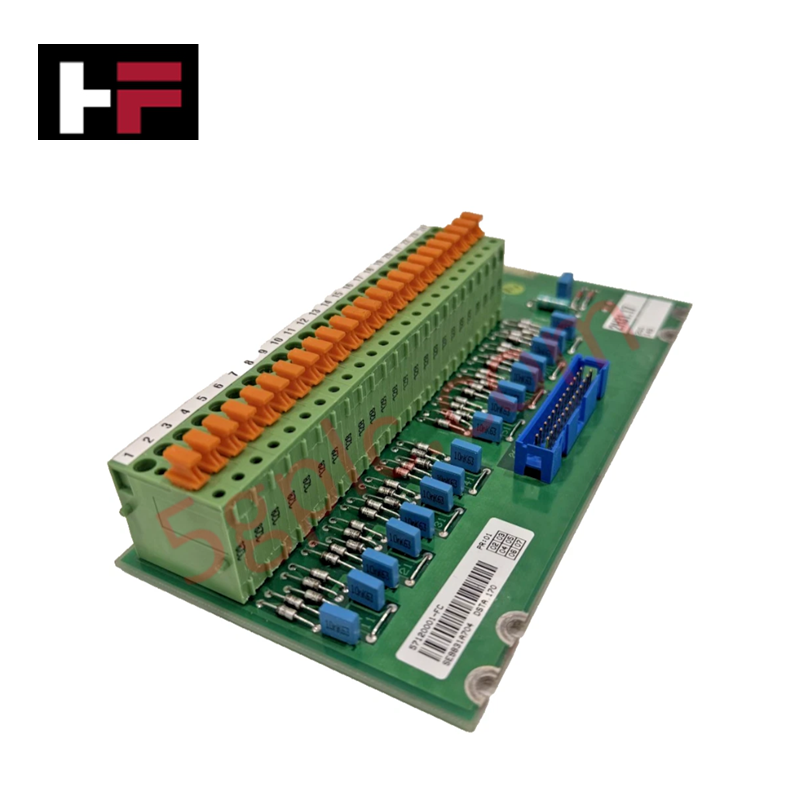
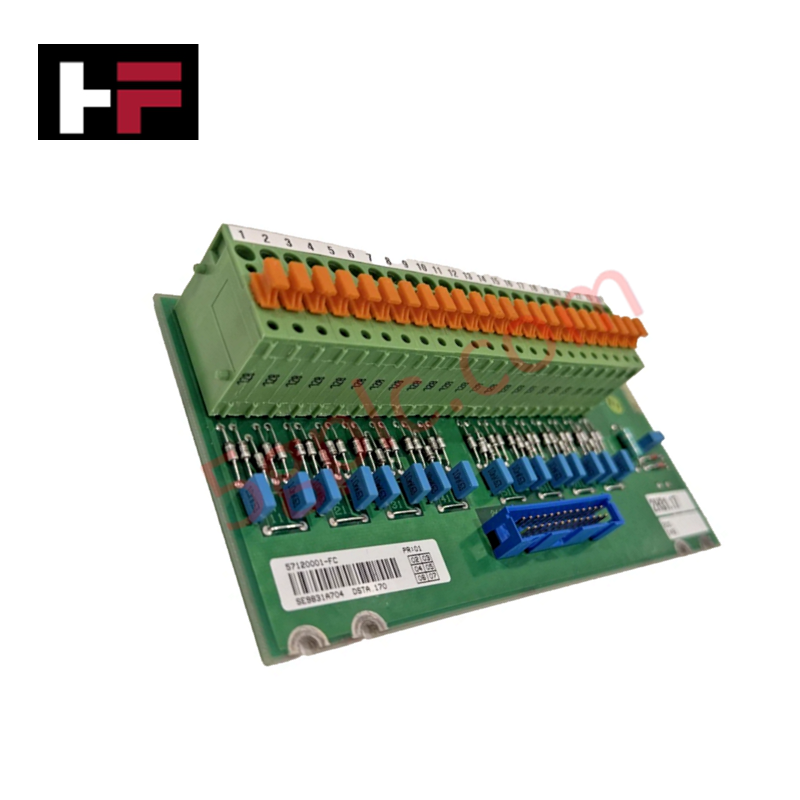
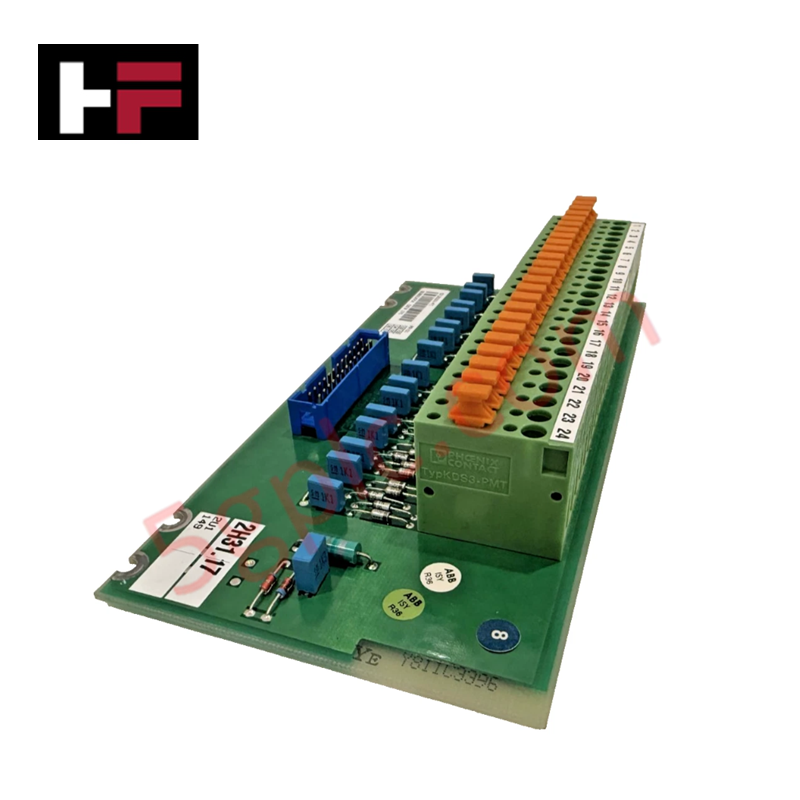
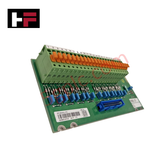
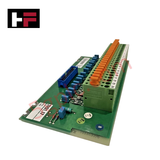
The ABB DSTA 170 57120001-FC, also cataloged as the DSTA 170 Connection Unit, operates as a dedicated hardware component for field wiring termination and signal routing to analog output modules within ABB control system racks. The physical assembly converts backplane signals into screw-terminal routing pathways, securing continuous loop continuity for analog control outputs. Internal traces route analog voltage and current loops directly between the host controller output module and field actuator terminal blocks.
Hardware Specifications
| Parameter | Specification |
|---|---|
| Model | DSTA 170 57120001-FC |
| Brand | ABB |
| Origin | Sweden |
| Weight | 0.185 kg (0.41 lbs) |
| Dimensions | 90 mm x 157.5 mm x 31.5 mm (3.54 in x 6.20 in x 1.24 in) |
| Operating Temp | 0 to +55 deg C |
| Power Consumption | Passive pass-through assembly (no active backplane power draw) |
| Functional Type | Connection Unit for Analog Output Unit |
| Exchange Part Number | EXC57120001-FC |
| Environmental Compliance | Exempted from scope of 2011/65/EU (RoHS); WEEE Category 5 |
Deterministic Signal Integrity and I/O Density Scaling
The DSTA 170 connection unit establishes direct physical execution for high-density analog output channels without adding transmission propagation delay or loop noise. Through optimized PCB trace layout and ground plane routing, the board prevents channel-to-channel crosstalk across high-density backplane bus lines. Firmware flash compatibility on connected primary controller cards ensures transparent signal mapping through the unit, sustaining deterministic analog update cycles under varying load conditions.
Frequently Asked Questions
Q: Does the DSTA 170 connection unit require an external power supply to operate?
A: No. The DSTA 170 functions as a passive interface unit, routing analog signals and drive power directly from the host analog output card to field devices.
Q: What precautions should be taken when replacing a DSTA 170 unit in a live panel?
A: Field loop power connected to the terminal blocks should be isolated prior to disconnection to prevent accidental short circuits or current spikes to the host analog output module.
Field Installation Guidelines
- Inspect the DSTA 170 assembly for physical damage and ensure all terminal screws are backed out before inserting conductor wires.
- Mount the connection unit firmly onto the designated sub-rack or carrier frame inside the enclosure using standard mounting hardware.
- Strip field wiring insulation to 6 mm to 8 mm. Insert conductors into the appropriate terminal points and torque screw clamps to 0.5 Nm.
- Verify that signal cable shielding is grounded at a single earth point near the enclosure entry gland to prevent ground loop currents across analog outputs.
- Confirm mechanical alignment of the multi-pin connector prior to mating with the ribbon cable or backplane connection of the analog output module.
Additional Information
- 100% Genuine Parts: All products are original and authentic, ensuring reliable industrial performance.
- 30-Day Refund Guarantee: Return any in-stock item within 30 days in original, unopened packaging for a full refund (excluding shipping and fees).
- 12-Month Warranty: Covers defects in materials or workmanship; excludes misuse, normal wear, or unauthorized modifications.
- Worldwide Shipping: We ship via USPS, UPS, FedEx, and DHL. Delivery times vary by country and may be subject to customs or import fees.
- Support & Contact: Technical and warranty assistance is available anytime. Contact us here: Contact.
- Purchase Guidance: Check product specifications and compatibility carefully before ordering to ensure proper application.






Tech & Buying Guide

Spatial Computing in Industrial Automation: Elevating PLC and DCS Operations with AR and VR
Industry 4.0 integrates digital intelligence into field operations, transforming factory automation landscapes worldwide. Spatial technologies—specifically Augmented Reality (AR) and Virtual Reality (VR)—redefine how engineers interact with industrial control systems. By bridging computer-generated CAD models with real-time operational technology (OT) data, immersive displays enable intuitive monitoring, rapid diagnostics, and safer maintenance across complex processing facilities.

Master Acceptance Testing: Understanding FAT and SAT in Industrial Control Systems
Factory Acceptance Testing (FAT) and Site Acceptance Testing (SAT) serve as critical quality assurance gateways in complex industrial control systems. Both procedures verify that programmable logic controllers (PLCs), distributed control systems (DCS), and associated field devices meet strict functional specifications. However, executing these tests effectively requires clear delineation between off-site staging and final field commissioning.

Industrial Networking Essentials: Demystifying Hubs, Switches, and Routers in Control Systems
Industrial automation relies heavily on robust networking infrastructure to connect programmable logic controllers (PLCs), distributed control systems (DCS), and human-machine interfaces (HMIs). Modern factory automation environments generate vast amounts of real-time operational data across deterministic networks. Understanding the structural differences between hubs, switches, and routers ensures optimal traffic segmentation, minimizes latency, and maintains high network availability.