










Product Details
Description
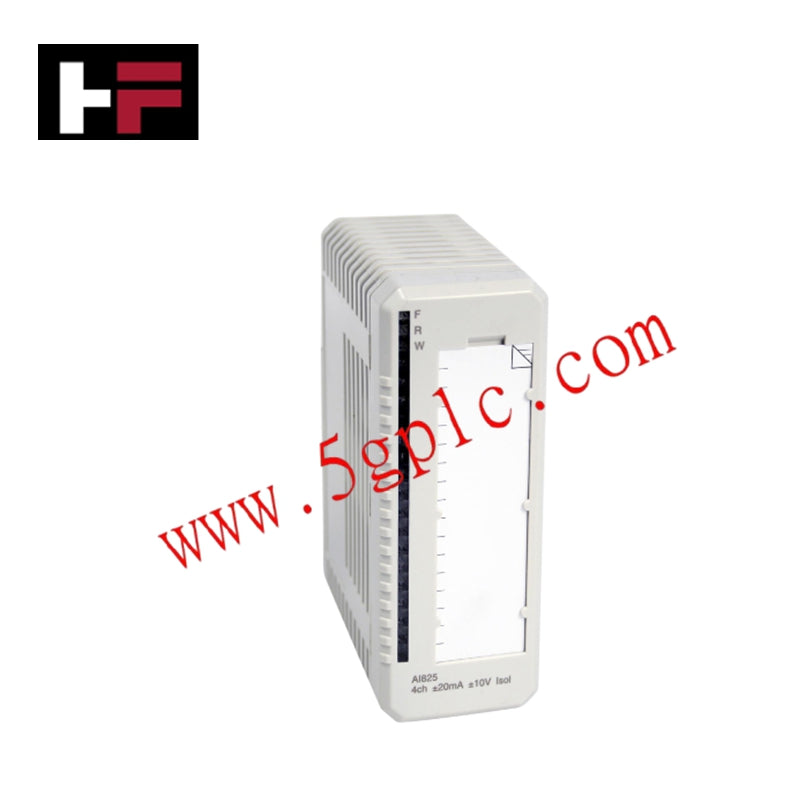
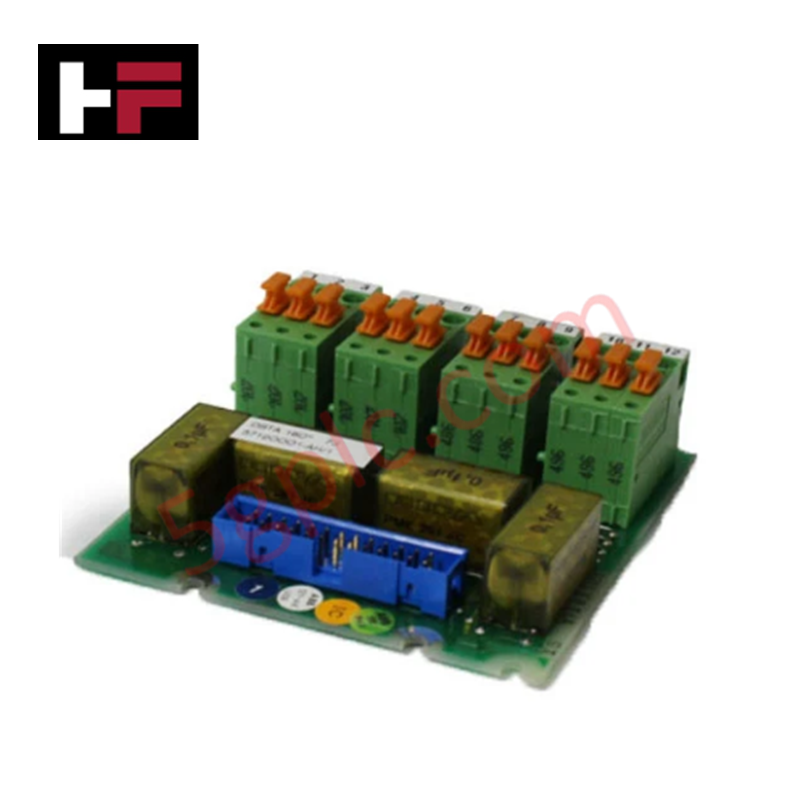
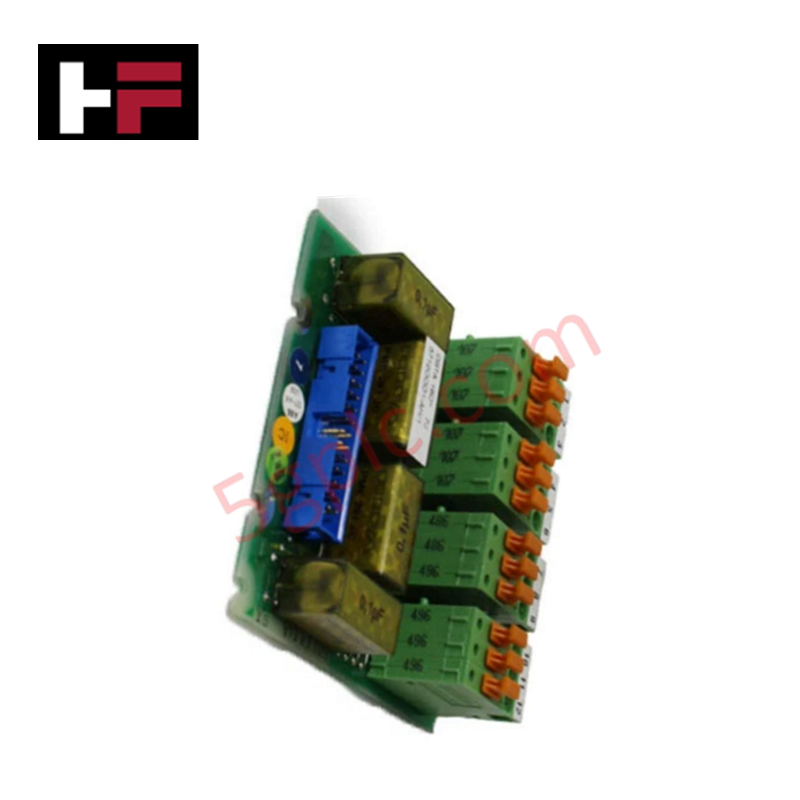
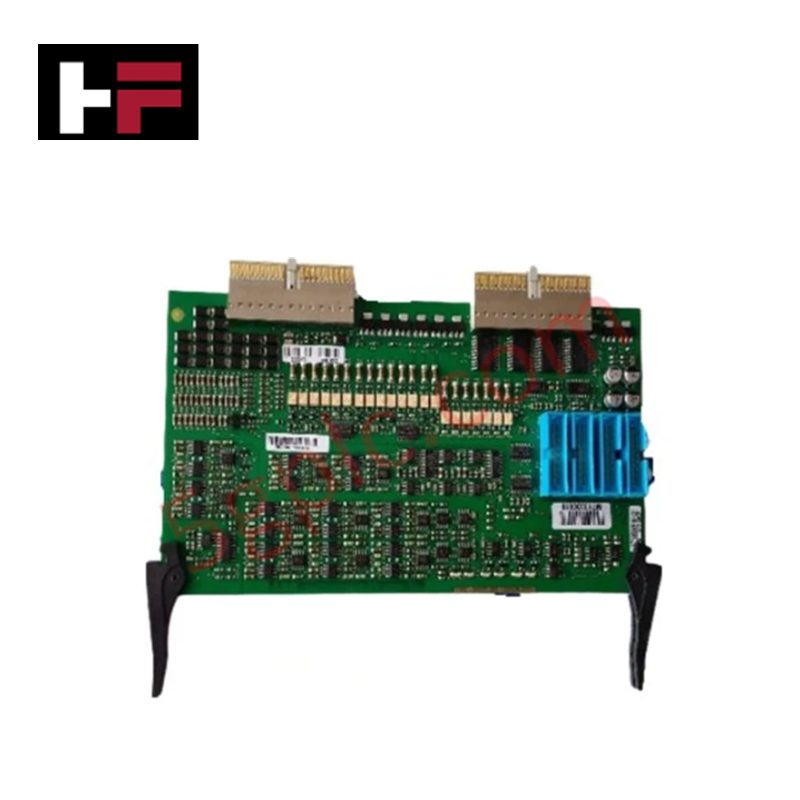
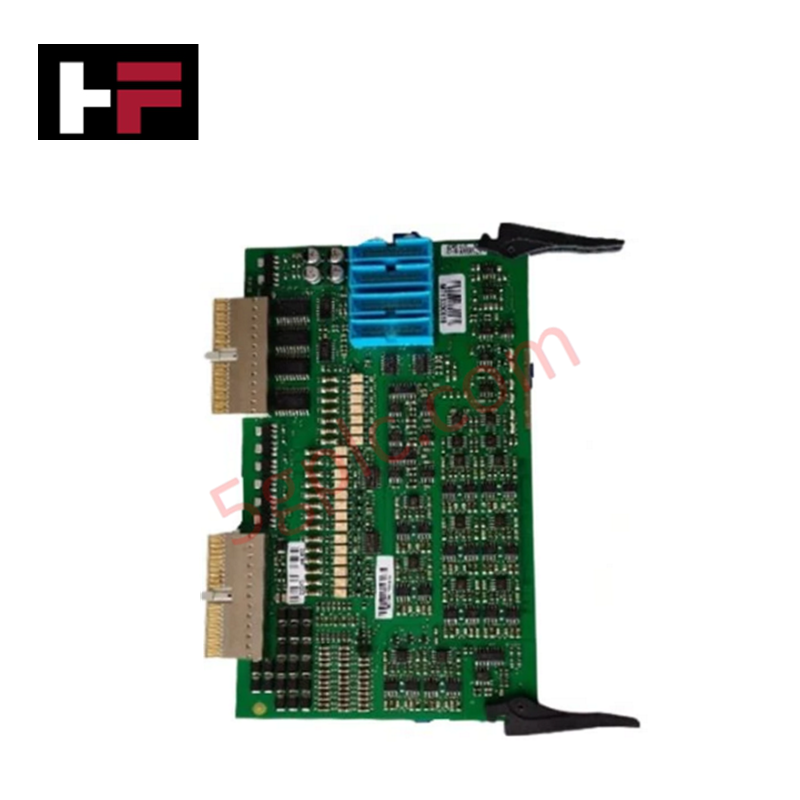
The ABB AI825 is a high-performance analog input module belonging to the S800 I/O family, specifically engineered for demanding industrial environments. It provides four channels of individual galvanic isolation, allowing for the precise measurement of voltage and current signals while protecting the control system from ground loops, electrical noise, and cross-channel interference.
Specifications
-
Manufacturer: ABB.
-
Country of Origin: Sweden.
-
Model Number: AI825 (3BSE036456R1).
-
Input Configuration: 4 channels, individually galvanically isolated.
-
Signal Ranges: ±10 V, ±5 V, 0 to 10 V, 0 to 20 mA, and 4 to 20 mA.
-
A/D Resolution: 14 bits plus sign.
-
Isolation Rating: 50 V continuous channel-to-channel and channel-to-system.
-
Power Supply: 24 VDC nominal.
-
Dimensions: 119 mm x 45 mm x 102 mm.
-
Physical Weight: Approximately 0.22 kg (0.48 lbs).
Features
-
Superior Galvanic Isolation: Provides dedicated isolation for every channel to ensure maximum signal integrity and prevent fault propagation between field devices.
-
Bipolar Signal Support: Accommodates both positive and negative voltage ranges, offering flexibility for complex sensing applications such as motor speed or directional flow.
-
Comprehensive Fault Detection: Includes integrated diagnostics for over-range, under-range, and hardware failure, reporting status directly to the controller.
-
High Common Mode Rejection: Effectively filters out electromagnetic interference (EMI) commonly found in heavy industrial processing areas.
-
Hot-Swap Capability: Allows the module to be removed or replaced without powering down the I/O station, significantly reducing system downtime.
-
S800 System Integration: Designed for seamless plug-and-play operation within the System 800xA and Advant OCS architectures via the ModuleBus interface.
Additional Information
- 100% Genuine Parts: All products are original and authentic, ensuring reliable industrial performance.
- 30-Day Refund Guarantee: Return any in-stock item within 30 days in original, unopened packaging for a full refund (excluding shipping and fees).
- 12-Month Warranty: Covers defects in materials or workmanship; excludes misuse, normal wear, or unauthorized modifications.
- Worldwide Shipping: We ship via USPS, UPS, FedEx, and DHL. Delivery times vary by country and may be subject to customs or import fees.
- Support & Contact: Technical and warranty assistance is available anytime. Contact us here: Contact.
- Purchase Guidance: Check product specifications and compatibility carefully before ordering to ensure proper application.
Tech & Buying Guide

Engineering MCC Signal Interface Terminations in Modern Process Automation
Industrial manufacturing plants rely on Motor Control Centers (MCC) to drive critical electrical loads. Plant engineers must interface these MCC motor starters and drives with central control systems. Standardizing the Signal Interface Termination (SIT) architecture ensures seamless command delivery and feedback monitoring between field equipment and process automation platforms.

Layer-2 vs. Layer-3 Network Switches in Industrial Control Systems
Modern factory automation relies heavily on robust Industrial Ethernet communications. Control system engineers deploy managed Ethernet switches to connect programmable logic controllers (PLCs), distributed control systems (DCS), human-machine interfaces (HMIs), and field I/O devices. Selecting between Layer-2 and Layer-3 switching architecture directly impacts network throughput, routing capabilities, and overall cybersecurity defense in operational technology (OT) networks.

Understanding OpenTelemetry in Industrial Automation: Architecture, Observability, and Operational Benefits
Modern industrial control systems (PLCs, DCS, edge nodes) are rapidly adopting cloud-native architectures, generating vast operational data. OpenTelemetry offers an open-source framework that unifies metrics, logs, and execution traces, enabling standardized observability across industrial automation and IT systems.