








Product Details
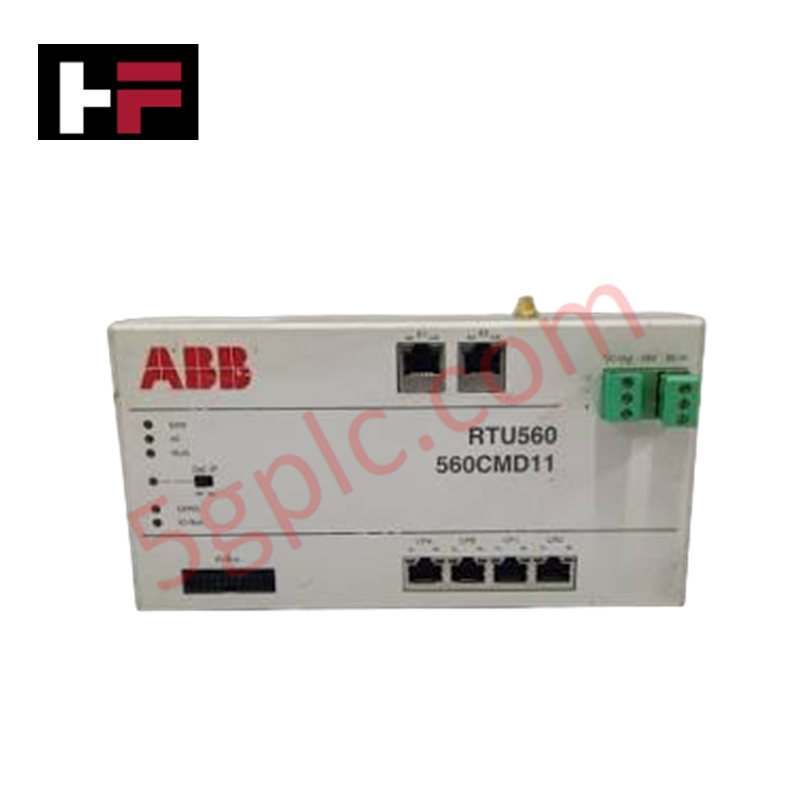
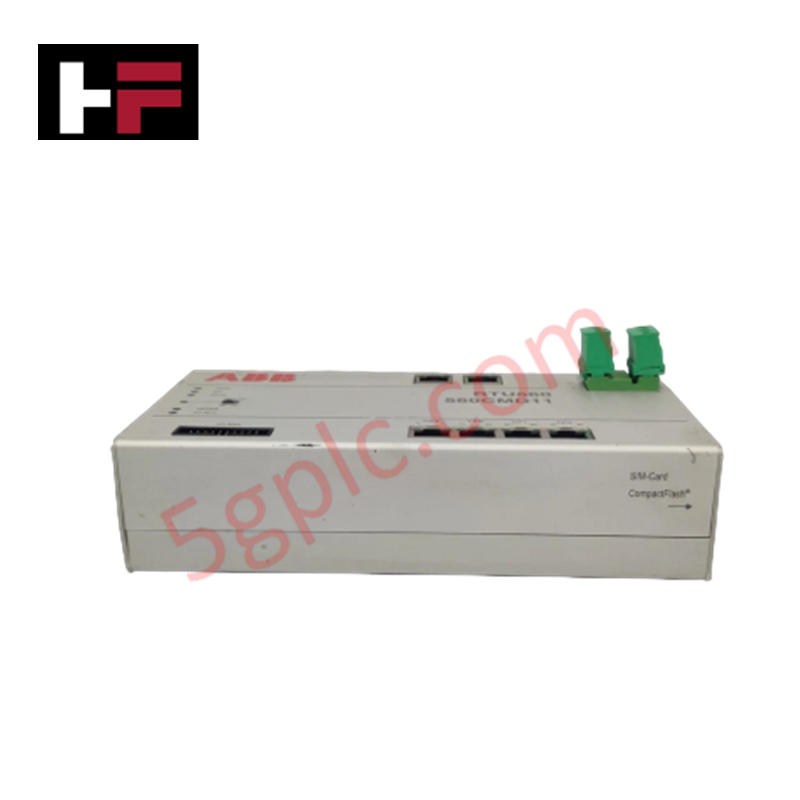
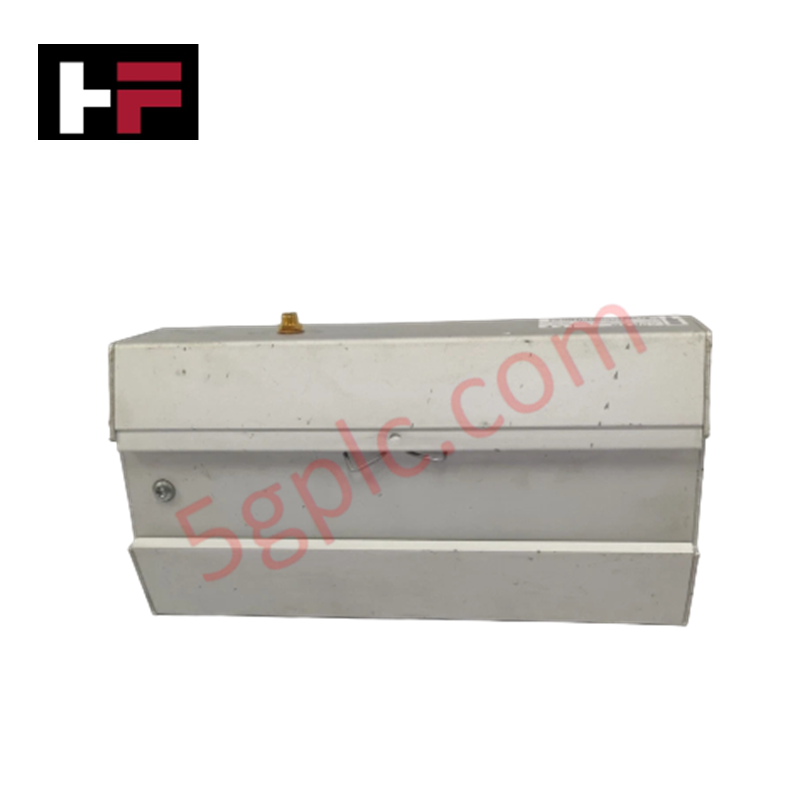
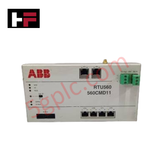
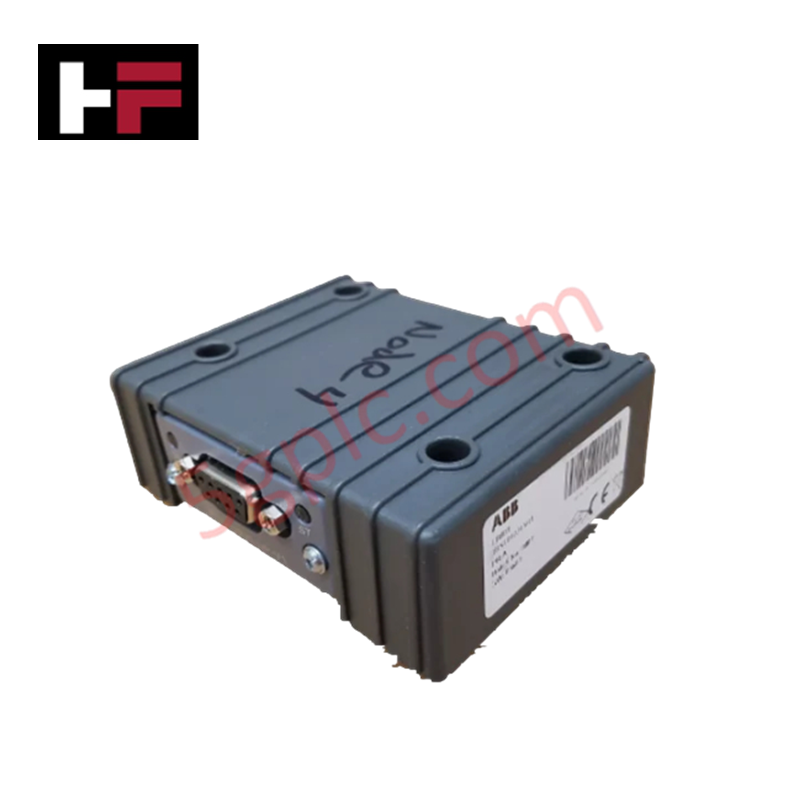
The ABB 560CMD11 1KGT023400R0011, also cataloged as the 560CMD11 Communication Module, operates as a dedicated hardware component for multi-protocol serial and Ethernet data processing within ABB RTU560 platforms. The DIN rail-mounted module manages telecontrol data exchange across 4 configurable RS-232/RS-485 serial interfaces and 2 high-speed 10/100BaseT Ethernet ports under a nominal 24 VDC power supply.
Hardware Specifications
| Parameter | Specification |
|---|---|
| Model | 560CMD11 (1KGT023400R0011) |
| Brand | ABB |
| Origin | Germany |
| Weight | Approximately 1 kg |
| Dimensions | 22 cm x 13 cm x 8.5 cm |
| Operating Temp | Standard industrial operating limits |
| Power Consumption | Power supplied via 24 VDC nominal feed |
| Module Type | Communication Module |
| Serial Interfaces | 4 ports (configurable RS-232 / RS-485) |
| Ethernet Interfaces | 2 ports (10/100BaseT RJ45) |
| Mounting Type | Standard DIN rail mounting |
| Compliance | Industrial EMC and communication standards |
Deterministic Substation Bus and Backplane Communication
The 560CMD11 communication processing unit provides deterministic protocol conversion and serial-to-Ethernet bridging across RTU560 subrack topologies. Backplane bus communication velocity Licences and internal firmware flash compatibility enable high-throughput real-time telemetry, event recording, and command execution.
Integrated channel-to-channel processing offloads protocol translation tasks from the central subrack controller. The dual Ethernet ports facilitate redundant network topology integration, while the serial interfaces provide software-selectable RS-232 or RS-485 physical layer operation for field device polling.
Frequently Asked Questions
Q: What power input voltage is required for operating the 560CMD11 communication module?
A: The module operates on a standard nominal 24 VDC industrial power feed.
Q: How many physical serial and Ethernet communication ports are provided on the front interface?
A: The unit features 4 serial ports configurable for RS-232 or RS-485 communication, along with 2 10/100BaseT Ethernet ports.
Q: What physical mounting method is utilized for installing the 560CMD11 housing?
A: The module is designed for standard industrial DIN rail mounting inside enclosure cabinets.
Field Installation Guidelines
- Snap the module securely onto the 35 mm DIN rail inside the enclosure, ensuring the grounded metal DIN rail clip establishes proper chassis contact.
- Connect the 24 VDC power supply leads to the designated terminal block, verifying correct voltage polarity prior to energizing the module.
- Route serial (RS-232/RS-485) and Ethernet cables separately from high-voltage AC power lines to suppress electromagnetic interference.
- Terminate all RS-485 serial communication runs with 120-ohm bus termination resistors at both physical line endpoints to mitigate signal reflections.
- Connect all cable shielding braid directly to the cabinet earth ground bar, ensuring the shield remains isolated at the field device end to avoid ground loops.
Additional Information
- 100% Genuine Parts: All products are original and authentic, ensuring reliable industrial performance.
- 30-Day Refund Guarantee: Return any in-stock item within 30 days in original, unopened packaging for a full refund (excluding shipping and fees).
- 12-Month Warranty: Covers defects in materials or workmanship; excludes misuse, normal wear, or unauthorized modifications.
- Worldwide Shipping: We ship via USPS, UPS, FedEx, and DHL. Delivery times vary by country and may be subject to customs or import fees.
- Support & Contact: Technical and warranty assistance is available anytime. Contact us here: Contact.
- Purchase Guidance: Check product specifications and compatibility carefully before ordering to ensure proper application.
Tech & Buying Guide

Engineering a Process Control System Philosophy: Principles and Operational Impact
A Process Control System (PCS) Philosophy serves as the foundational blueprint for modern plant engineering. During the design and construction phases, this document establishes clear guidelines for instrumentation and control (I&C) teams. Consequently, a well-defined philosophy directly dictates overall operational stability, maintenance efficiency, and future expansion capabilities across heavy process industries.

Engineering MCC Signal Interface Terminations in Modern Process Automation
Industrial manufacturing plants rely on Motor Control Centers (MCC) to drive critical electrical loads. Plant engineers must interface these MCC motor starters and drives with central control systems. Standardizing the Signal Interface Termination (SIT) architecture ensures seamless command delivery and feedback monitoring between field equipment and process automation platforms.

Layer-2 vs. Layer-3 Network Switches in Industrial Control Systems
Modern factory automation relies heavily on robust Industrial Ethernet communications. Control system engineers deploy managed Ethernet switches to connect programmable logic controllers (PLCs), distributed control systems (DCS), human-machine interfaces (HMIs), and field I/O devices. Selecting between Layer-2 and Layer-3 switching architecture directly impacts network throughput, routing capabilities, and overall cybersecurity defense in operational technology (OT) networks.