










Product Details
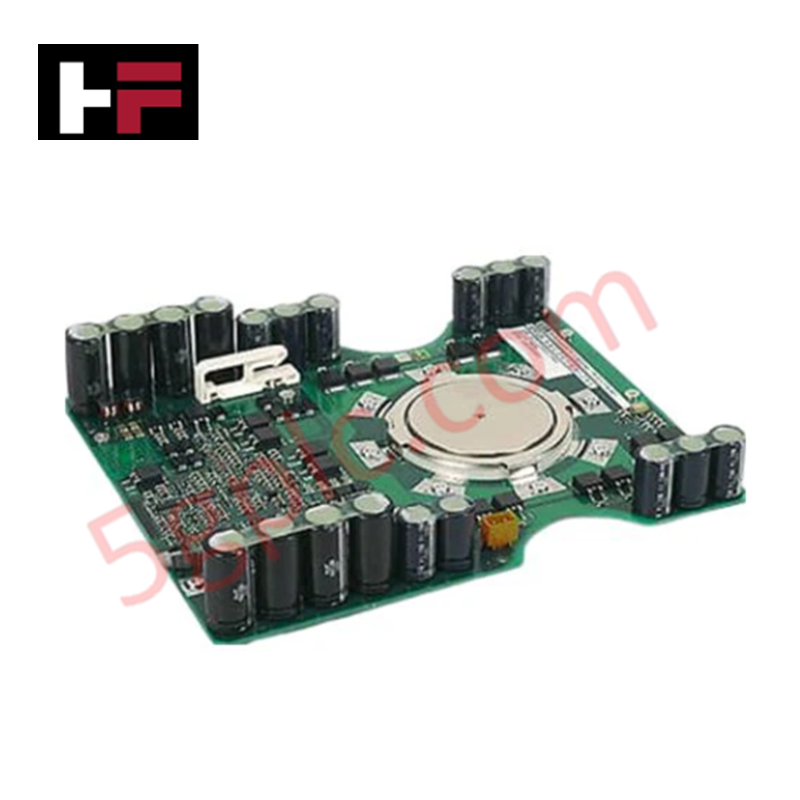
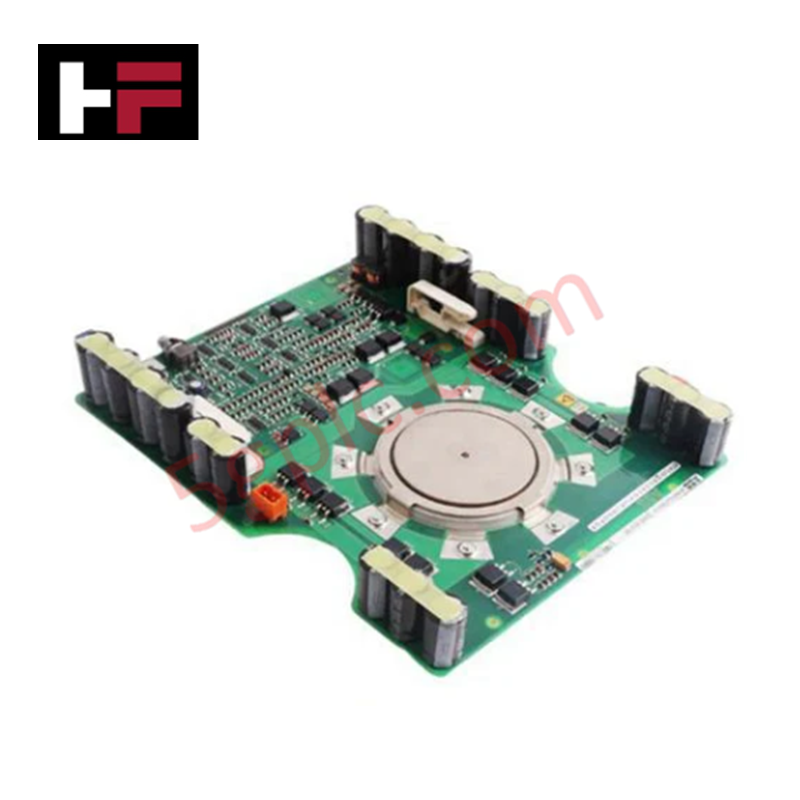
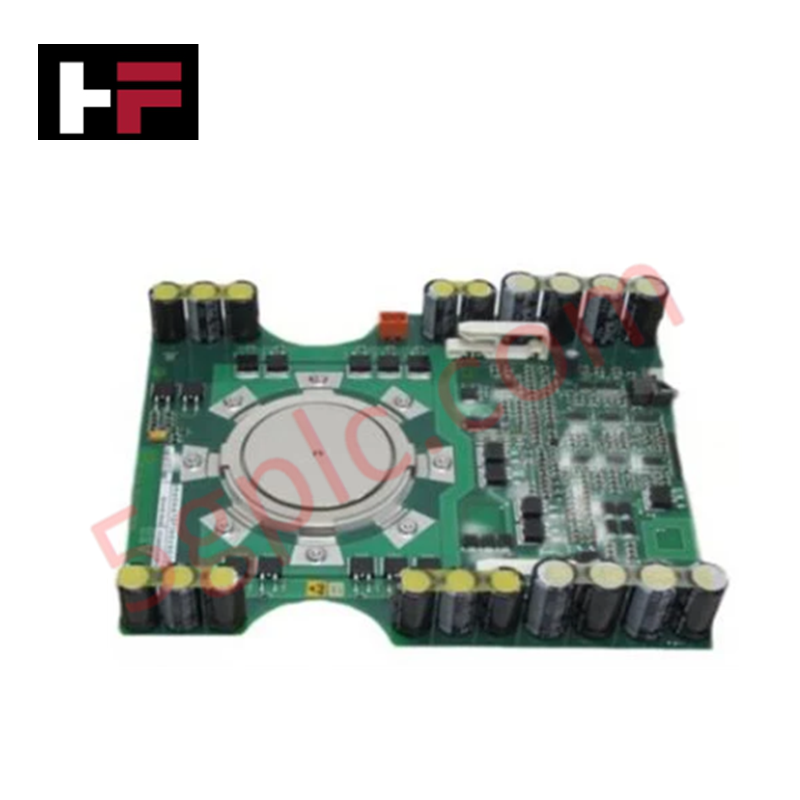
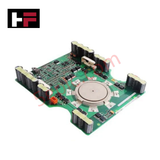
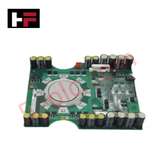
The ABB 3BHL000392R0101, also cataloged as the 5SHX1060H0001 IGCT Module, operates as a dedicated hardware component for high-power semiconductor switching within industrial control and drive platforms. This Integrated Gate-Commutated Thyristor (IGCT) module integrates a fast-switching power semiconductor gate structure with an electronic drive circuit, providing immediate execution of current commutation sequences under direct digital control from the host processor backplane.
Hardware Specifications
| Parameter | Specification |
|---|---|
| Model | 3BHL000392R0101 (Type 5SHX1060H0001 / Cross-ref: 3BHB003230R0101) |
| Brand | ABB |
| Origin | Czech Republic |
| Weight | 2.11 kg |
| Dimensions | 199 mm Width x 61 mm Height x 240 mm Depth |
| Operating Temp | -40 deg C to +70 deg C (Standard power semiconductor envelope) |
| Power Consumption | Determined by gate unit driving frequency and loop load requirements |
| Component Type | Integrated Gate-Commutated Thyristor (IGCT) |
| HS Tariff Code | 85413000 |
Industrial Drives & Backplane Technical Attributes
The semiconductor sub-assembly interfaces with the host platform via deterministic networks to guarantee synchronized gate triggering pulses. The local gate unit requires high-velocity internal data pathways to ensure microsecond-level turn-on and turn-off propagation delays, preventing thermal overload conditions during high-frequency operation. Firmware flash compatibility checks are mandatory when replacing modules within parallel or multi-phase configurations to maintain absolute uniformity in switching times. This synchronization directly affects power factor profiles and regulates I/O density scaling across large drive assemblies.
Frequently Asked Questions
Q: What condition limits the hot-swap replacement of this IGCT module?
A: Hot-swapping is strictly prohibited. The main DC-link capacitors must be completely discharged, and the control gate voltage must be isolated before disconnecting or installing the module to avoid catastrophic arc flash or gate drive destruction.
Q: How do firmware flash discrepancies between parallel-connected units impact performance?
A: Mismatched gate drive control timing disrupts the simultaneous commutation of the semiconductors, causing uneven current distribution, localized thermal spikes, and immediate overcurrent tripping.
Q: Is external cooling required for this specific module weight and density profile?
A: Yes. Given its 2.11 kg power semiconductor composition, it must be mounted directly onto an engineered liquid-cooled or forced-air heatsink assembly to maintain junction temperatures below critical design thresholds.
Field Installation Guidelines
- Ensure all upstream medium-voltage and low-voltage power sources are locked out, tagged out, and verified dead.
- Confirm that the cooling plate interface is clear of oxide layers, deep scratches, or foreign debris.
- Apply a uniform layer of high-thermal-conductivity non-silicone compound across the back mounting plane.
- Align the 199 mm x 240 mm chassis over the fixation points and tighten all mounting fasteners in a crosswise pattern using a calibrated torque wrench to the exact manufacturer Newton-meter specifications.
- Connect the fiber optic control leads securely into the gate driver optical ports, maintaining the minimum specified bend radius to prevent signal attenuation or light-path fracture.
Additional Information
- 100% Genuine Parts: All products are original and authentic, ensuring reliable industrial performance.
- 30-Day Refund Guarantee: Return any in-stock item within 30 days in original, unopened packaging for a full refund (excluding shipping and fees).
- 12-Month Warranty: Covers defects in materials or workmanship; excludes misuse, normal wear, or unauthorized modifications.
- Worldwide Shipping: We ship via USPS, UPS, FedEx, and DHL. Delivery times vary by country and may be subject to customs or import fees.
- Support & Contact: Technical and warranty assistance is available anytime. Contact us here: Contact.
- Purchase Guidance: Check product specifications and compatibility carefully before ordering to ensure proper application.









Tech & Buying Guide

Mastering the Siemens PLC Scan Cycle: How the CPU Executes Automation Programs
Industrial automation relies heavily on programmable logic controllers (PLCs) to manage complex manufacturing processes. Many engineers dive straight into programming without mastering the underlying architecture. However, understanding how a PLC CPU executes a program ensures reliable system design. Therefore, mastering the scan cycle optimizes both performance and troubleshooting in modern control systems.

How to Connect to Siemens S7 PLCs: 5 Essential Communication Methods
Establishing a reliable hardware link between a programming terminal and a Siemens SIMATIC controller is essential for engineering workflows. Field engineers rely on distinct physical layers, ranging from legacy serial connections to high-speed Industrial Ethernet protocols. Modern factory automation environments prioritize fast data transfer and seamless driver integration. Selecting the correct connection method simplifies program downloads, online monitoring, and system troubleshooting in complex control systems.

Will PLCs Become Obsolete? The Future of Control Systems in Industry 4.0
Modern manufacturing is undergoing a rapid technological transformation driven by Industry 4.0 innovations. Technologies like Artificial Intelligence (AI), Machine Learning (ML), and the Industrial Internet of Things (IIoT) are dominating discussions across the factory automation sector. Consequently, many engineers wonder if these advanced digital tools will eventually replace traditional Programmable Logic Controllers (PLCs). However, evaluating the core physics of industrial operations reveals a very different reality for control systems.