










Product Details
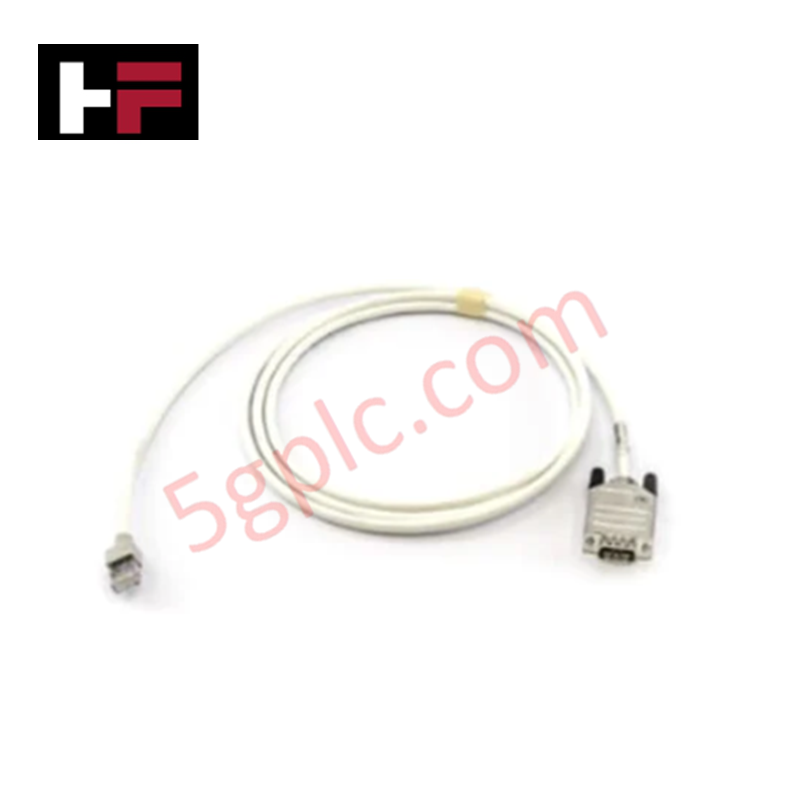
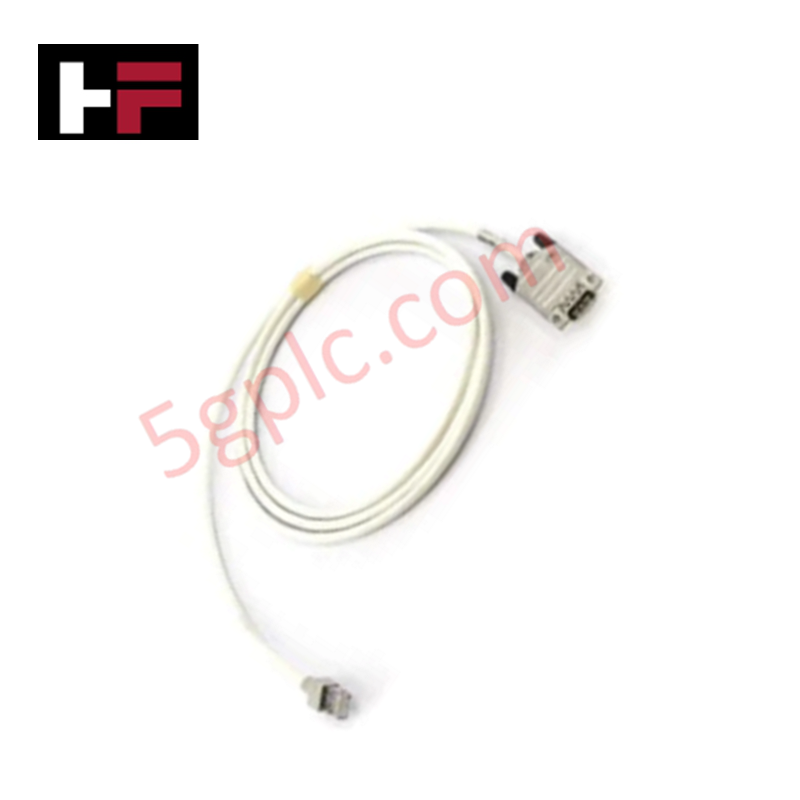
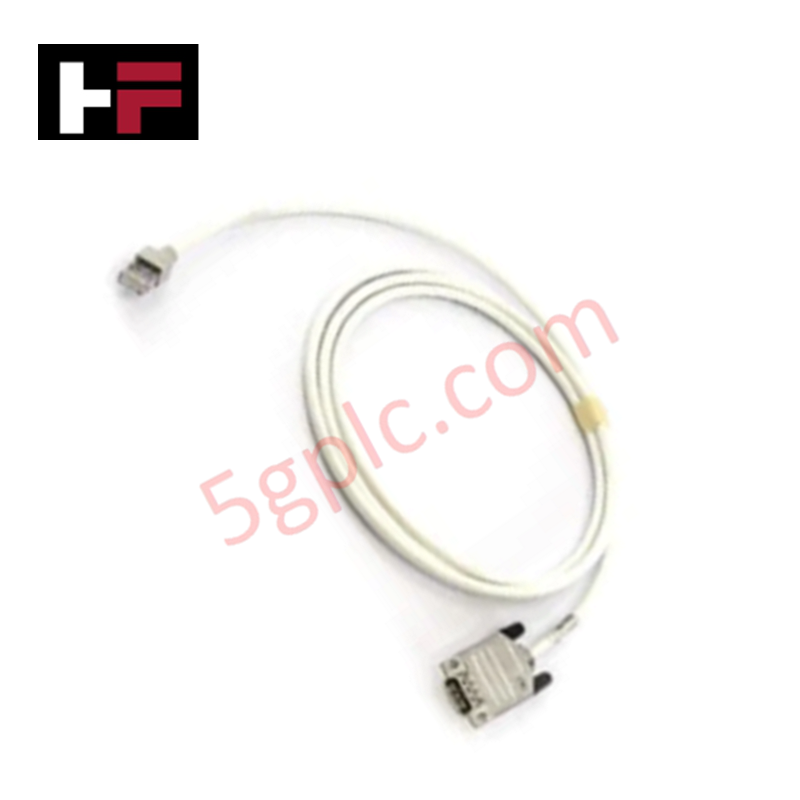
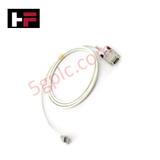
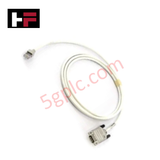
The ABB 2RCA025073P0003, also cataloged as the 630 LHMI Cable (3m) Cable Assembly, operates as a dedicated hardware component for serial/data interconnection between the Local Human Machine Interface (LHMI) and protection relay processing units within Relion 630 series platforms.
Hardware Specifications
| Parameter | Specification |
| Model | 2RCA025073P0003 (630: LHMI Cable) |
| Brand | ABB |
| Origin | Estonia (EE) |
| Weight | 0.12 kg (Net / Gross) |
| Dimensions | 3.0 m length profile (Standard physical execution) |
| Operating Temp | -25 to +70 deg C (Standard baseline parameter) |
| Power Consumption | Passive data conductor (0 W internal load) |
| Product Type | Spare Parts / Cable Assembly |
| Connector Type | 2 x RJ45 |
| Customs Tariff Number | 85444210 |
| WEEE Category | Product Not in WEEE Scope |
Profinet / EtherNet/IP Deterministic Networks and Signal Propagation
The internal twisted-pair architecture of this 3 m cable maintains structured impedance matching across high-speed terminal connections. This physical integrity prevents signal attenuation when operating adjacent to Profinet / EtherNet/IP deterministic networks. The continuous shielding framework mitigates electromagnetic coupling into the internal data pairs, preserving backplane bus communication velocity metrics and maintaining error-free firmware flash compatibility between the primary terminal controller logic and the local door-mounted display module.
Frequently Asked Questions
Q: Does the physical composition of this cable permit live hot-swap connection?
A: Yes. The passive RJ45 pin assignments permit hot-swapping of the LHMI interface console. However, momentary communication loss faults will register in the main relay diagnostics log during the physical disconnection interval.
Q: What defines the shielding grounding path for this specific module?
A: Electrical grounding for the cable assembly is established directly through the metal-shrouded RJ45 connector housings, bonding the cable shield matrix to the chassis earth of the host relay and LHMI frame upon insertion.
Q: Can the 3 m physical length be arbitrarily segmented or extended using standard inline couplings?
A: Modifying or extending the factory 3 m length alters the characteristic loop impedance and signal propagation delay parameters, which can induce packet corruption during high-density I/O matrix data synchronization.
Field Installation Guidelines
-
Connector Engagement: Insert the RJ45 connectors into the designated LHMI and relay communication ports. Verify that the plastic locking tabs snap completely into position to prevent intermittent physical connection dropouts under mechanical vibration.
-
Bend Radius Limits: Maintain a minimum structural bend radius of 30 mm along the 3 m run inside the enclosure doors. Sharp kinks alter the geometry of the twisted pairs and cause signal reflection errors.
-
Cable Track Routing: Run the cable bundle isolated from parallel high-voltage AC or DC trip circuit lines inside the cabinet wiring channels to eliminate inductive transient noise interference.
-
Hinged Door Clearance: Provide an explicit slack loop across the enclosure door hinge area to eliminate mechanical tensile stress on the RJ45 terminal interfaces during routine swing door operations.
Additional Information
- 100% Genuine Parts: All products are original and authentic, ensuring reliable industrial performance.
- 30-Day Refund Guarantee: Return any in-stock item within 30 days in original, unopened packaging for a full refund (excluding shipping and fees).
- 12-Month Warranty: Covers defects in materials or workmanship; excludes misuse, normal wear, or unauthorized modifications.
- Worldwide Shipping: We ship via USPS, UPS, FedEx, and DHL. Delivery times vary by country and may be subject to customs or import fees.
- Support & Contact: Technical and warranty assistance is available anytime. Contact us here: Contact.
- Purchase Guidance: Check product specifications and compatibility carefully before ordering to ensure proper application.






Tech & Buying Guide

Industrial Fiber Optic Cables: Principles, Connectors, and Fusion Splicing Techniques
Modern factory automation relies heavily on fiber optic cables for high-speed industrial data transmission. Fiber optic cables transmit light pulses instead of electrical signals, eliminating electromagnetic interference (EMI) risks completely. Each optical strand consists of a high-purity glass core surrounded by a protective cladding layer. The difference in refractive index between core and cladding enables total internal reflection. Protective resin buffers, Kevlar strength members, and rugged outer jackets safeguard delicate glass cores in harsh environments. Consequently, automation engineers prefer fiber backbones for reliable noise-free communication in industrial control systems.

Comprehensive Guide to Instrumentation and Control (I&C) Design Basis
Instrumentation and Control (I&C) Design Basis serves as the foundational technical document for modern plant engineering. Project teams rely on this master specification to govern engineering deliverables across front-end engineering design (FEED) and detailed execution phases. A well-constructed I&C design basis ensures seamless integration among field instrumentation, safety systems, and main control systems. Furthermore, establishing clear technical standards early mitigates execution risks and prevents costly re-engineering during plant commissioning.

The Shift to Flexible IO Modules in Modern Industrial Automation
Traditional control systems rely on dedicated Input Output (IO) cards for industrial automation. Each conventional module processes a single signal type, such as Digital Input (DI), Digital Output (DO), Analog Input (AI), or Analog Output (AO). A standard 16-channel card accepts only one specific channel type across all ports. This inflexible hardware design often creates severe engineering bottlenecks during project execution. Engineers frequently must install entirely new cards to accommodate a single extra sensor. Consequently, late design changes increase control cabinet space requirements and drive up project costs.