












Product Details
Overview
The Allen-Bradley 1771-OMD is a 16-point AC output module designed for the PLC-5 series, providing reliable control of 220V AC loads. It offers precise switching, robust surge handling, and strong electrical isolation to ensure stable operation in demanding industrial environments. Its compatibility with multiple I/O chassis makes it suitable for diverse automation systems such as manufacturing, utilities, and process control.
Key Features
• Outputs: Sixteen individually controlled AC points for flexible load switching
• Voltage Range: 184 to 250V AC at 47–63Hz
• Current Rating: 2A per output, total 8A maximum per module
• Surge Capacity: 25A per output or per module for 100ms duration
• On-State Voltage Drop: 1.5V at 2A (maximum)
• Off-State Leakage: 4mA at 220V AC (maximum)
• Switching Speed: 1.0ms (off to on), 8.3–9.1ms (on to off) at 60Hz
• Power Dissipation: 3.7W minimum, 17.3W maximum
• Thermal Dissipation: 12.6–59.0 BTU/hr
• Backplane Current: 700mA at 5V DC ±5%
Electrical and Safety Specifications
• Isolation Voltage: Meets UL 508 and CSA C22.2 No.142 standards
• Minimum Load Current: 10mA per output at 220V AC, 60Hz
• Fuse Rating: 10A, 250V rectifier fuse (Littelfuse PN 322010 3AB)
• Wiring Arms: Standard 1771-WH or fused 1771-WHF / 1771-WHFB options
• Wire Size: Up to 14 AWG (2mm²) stranded conductors
• Insulation Thickness: Maximum 1.2mm (3/64 inch)
• Screw Torque: 7–9 inch-pounds
Environmental Ratings
• Operating Temperature: 0 to 60°C (32 to 140°F)
• Storage Temperature: -40 to 85°C (-40 to 185°F)
• Relative Humidity: 5 to 95% non-condensing
Compatible Chassis
• Supported Models: 1771-A1B through 1771-A4B or later
• Additional Options: 1771-AM1 and 1771-AM2 I/O chassis
Applications
The 1771-OMD module is widely used in industrial automation and control systems where precise AC switching is required.
• Process Control: Ideal for automated manufacturing and assembly lines
• Motor & Solenoid Control: Suitable for high-reliability actuation systems
• Power Management: Integrates into energy and equipment distribution setups
• HVAC Systems: Used in environmental and building automation
Advantages
• Reliability: Stable performance under continuous heavy load operation
• Protection: Excellent surge handling for extended service life
• Installation: Compatible with standard and fused wiring arms for flexibility
• Integration: Fully supports existing PLC-5 architectures
FAQ
Q1: Can the 1771-OMD operate with mixed voltage sources?
A1: No. All outputs must share the same AC voltage source within 184–250V AC.
Q2: Does the module have integrated fuses?
A2: The standard version uses the unfused 1771-WH wiring arm. For additional protection, fused wiring arms 1771-WHF or 1771-WHFB are available.
Q3: What wire specifications are recommended?
A3: Use stranded copper conductors up to 14 AWG with insulation not exceeding 1.2mm thickness.
Q4: What certifications does this module meet?
A4: The 1771-OMD complies with UL 508 and CSA C22.2 No.142 industrial control standards.
Additional Information
- 100% Genuine Parts: All products are original and authentic, ensuring reliable industrial performance.
- 30-Day Refund Guarantee: Return any in-stock item within 30 days in original, unopened packaging for a full refund (excluding shipping and fees).
- 12-Month Warranty: Covers defects in materials or workmanship; excludes misuse, normal wear, or unauthorized modifications.
- Worldwide Shipping: We ship via USPS, UPS, FedEx, and DHL. Delivery times vary by country and may be subject to customs or import fees.
- Support & Contact: Technical and warranty assistance is available anytime. Contact us here: Contact.
- Purchase Guidance: Check product specifications and compatibility carefully before ordering to ensure proper application.
Tech & Buying Guide

Understanding Marshalling Cabinets in Industrial Automation and Control Systems
Marshalling cabinets serve as the crucial connection hub between field instruments and centralized processing units. In large DCS and PLC control system architectures, hundreds of multipair field cables run from local junction boxes to the central instrument equipment room. The marshalling cabinet houses field terminal blocks, surge arresters, intrinsic safety isolation barriers, and interposing relays. By segregating field field-wiring terminations from sensitive processor hardware, engineers protect expensive controller backplanes from high-voltage transients. Consequently, this modular separation dramatically streamlines maintenance workflows and simplifies system expansion.

Essential Best Practices for PLC Wiring and Installation in Industrial Automation
Successful control system deployment begins with thoroughly reviewing manufacturer technical documentation. Controllers from major brands like Allen-Bradley, Siemens, and Schneider Electric feature unique terminal layouts. Engineers must verify voltage requirements before connecting power cables to prevent catastrophic equipment damage. Standard line connections require strict adherence to regional electrical codes and proper wire color coding. Furthermore, panel builders should always establish a robust low-impedance ground connection using at least 16-AWG copper conductor tied directly to the main plant grounding grid.
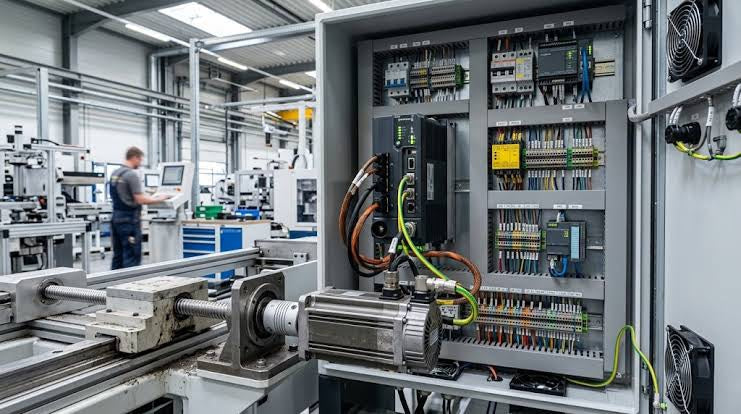
Demystifying Programmable Logic Controllers: Comprehensive Guide to PLC Classification and Selection in Industrial Automation
Modern industrial automation heavily relies on Programmable Logic Controllers (PLCs) to drive factory floor efficiency. Over my 15 years as an industrial automation expert working with DCS, TSI, and control systems, I have seen PLCs evolve into the central nervous system of modern manufacturing. Selecting the right controller requires a deep understanding of PLC types based on physical size, hardware architecture, and power supply configurations.