










Product Details
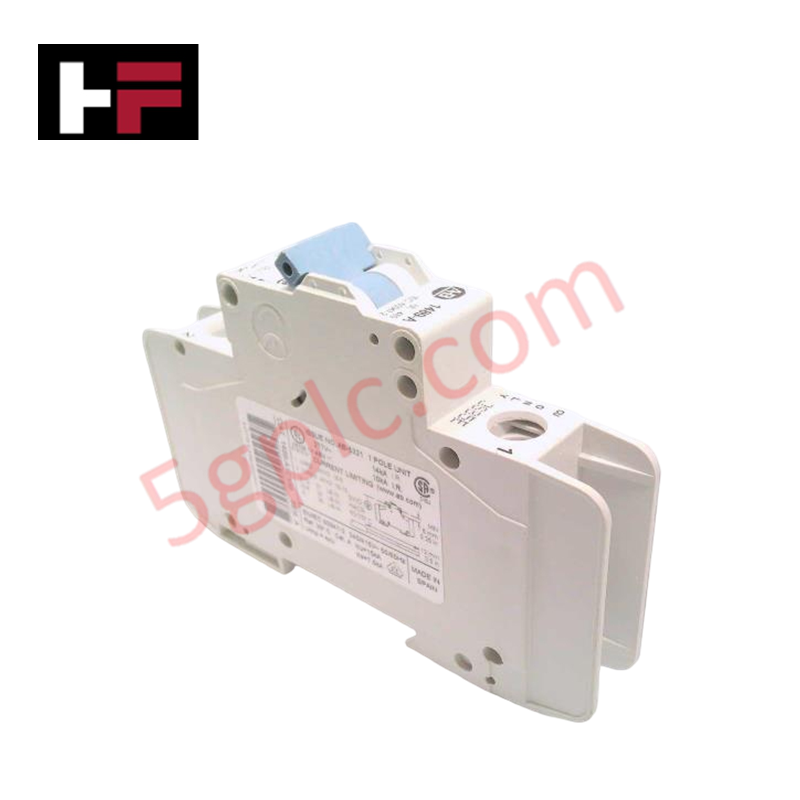
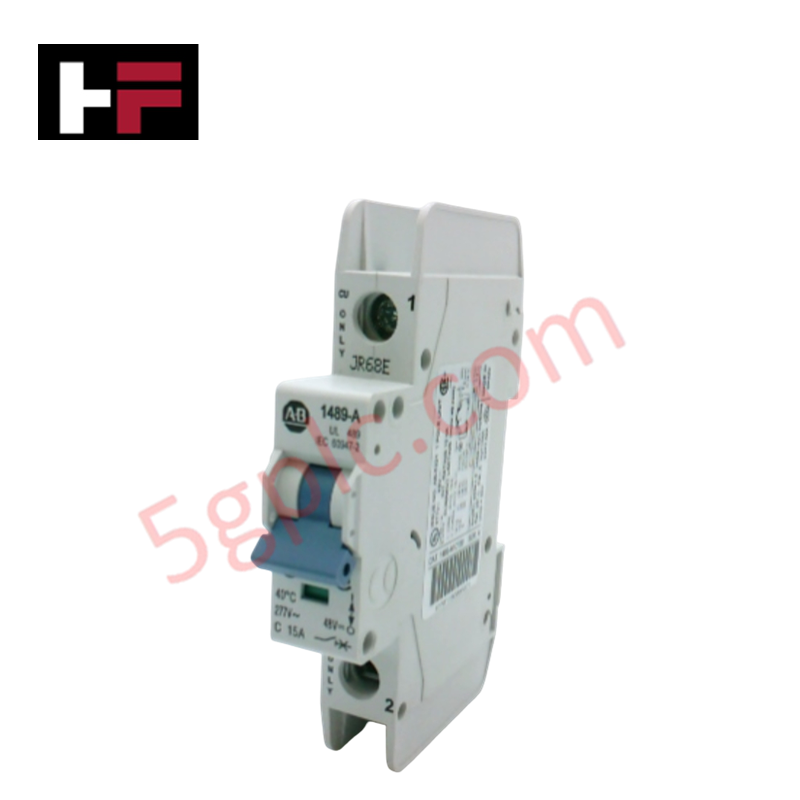
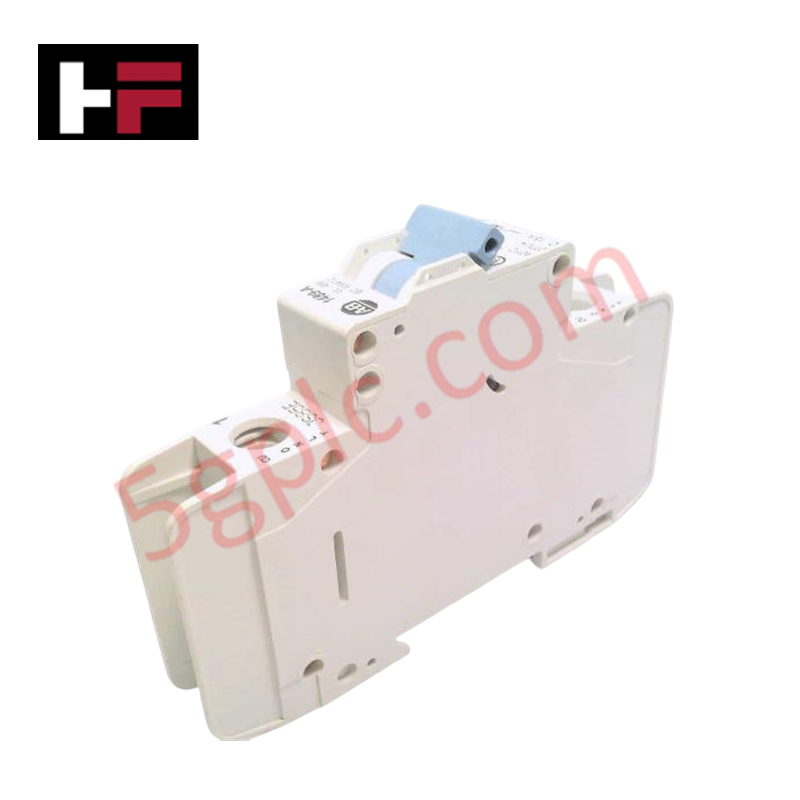
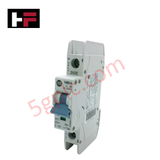
Configured for overcurrent protection in control circuit branches, the Allen-Bradley 1489-A1C100 (1489-A1C100 Miniature Circuit Breaker) provides direct physical/electrical execution of single-pole circuit interruption under overload and short-circuit conditions.
Hardware Specifications
| Parameter | Specification |
|---|---|
| Model | 1489-A1C100 |
| Brand | Allen-Bradley |
| Origin | USA |
| Weight | 0.11 kg |
| Dimensions | Not Specified |
| Operating Temp | Not Specified |
| Power Consumption | Not Applicable |
| Current Rating | 10 A |
| Voltage Rating | 277 VAC / 48 VDC |
| Trip Curve | C-Curve |
Profinet / EtherNet/IP Deterministic Networks
The 1489-A1C100 utilizes a C-curve trip characteristic, engineered to accommodate the moderate inrush currents typical of standard control devices while providing rapid disconnect during fault events. Within modular control architectures, this device is installed on DIN rails to facilitate organized I/O density scaling. While this mechanical protector does not exchange data via industrial networks, it maintains the electrical integrity required for downstream components that operate on deterministic networks. Firmware flash compatibility is not applicable, though users should ensure that the interrupt capacity is coordinated with the total fault current available at the specific branch to prevent nuisance tripping.
Frequently Asked Questions
Q: Can this 1-pole circuit breaker be used in DC control loops?
A: The device is rated for 48 VDC. Ensure that the specific DC circuit load characteristics do not exceed the arc-quenching capability of the single-pole contact structure, as breaking capacity in DC applications is significantly different from AC.
Q: Is this device compatible with standard auxiliary contact blocks?
A: The 1489-A series is designed to accept field-mountable auxiliary contacts and signal switches to provide status telemetry to a PLC or external monitoring system. Consult the component documentation for specific accessory part numbers.
Field Installation Guidelines
- Secure the breaker onto a standard 35 mm DIN rail; confirm that the mechanical latch is fully locked to ensure stability.
- Route line-side supply conductors to the top terminals and load-side conductors to the bottom terminals, observing proper conductor sizing for a 10 A load.
- Apply manufacturer-specified torque to terminal clamps to prevent localized overheating caused by loose connections.
- Route secondary control circuit wiring away from high-power AC lines or VFD output cables to minimize electromagnetic interference.
- Inspect the surrounding enclosure to ensure it provides sufficient environmental protection and that no conductive dust or debris is present.
- Perform a continuity check after installation to confirm the breaker successfully transitions between "ON" and "OFF" states before energizing the load circuit.
Additional Information
- 100% Genuine Parts: All products are original and authentic, ensuring reliable industrial performance.
- 30-Day Refund Guarantee: Return any in-stock item within 30 days in original, unopened packaging for a full refund (excluding shipping and fees).
- 12-Month Warranty: Covers defects in materials or workmanship; excludes misuse, normal wear, or unauthorized modifications.
- Worldwide Shipping: We ship via USPS, UPS, FedEx, and DHL. Delivery times vary by country and may be subject to customs or import fees.
- Support & Contact: Technical and warranty assistance is available anytime. Contact us here: Contact.
- Purchase Guidance: Check product specifications and compatibility carefully before ordering to ensure proper application.
Tech & Buying Guide

Demystifying the DDE Protocol in Legacy Industrial Automation Systems
Modern control systems rely heavily on seamless interprocess communication to exchange operational data between software programs. Microsoft first introduced the Dynamic Data Exchange (DDE) protocol in 1987 to enable real-time data sharing. In factory automation, DDE served as an early bridge between control software and Windows desktop applications. Therefore, understanding DDE mechanics provides crucial insights into how legacy industrial networks established software-level connectivity.

Demystifying CPU Communication Ports in Siemens PLC Architectures
Industrial automation relies heavily on robust data exchange between devices. Without seamless connectivity, field instruments, network switches, human-machine interfaces, and programmable logic controllers cannot coordinate effectively. Therefore, understanding the various CPU communication ports available in Siemens hardware ensures efficient factory automation design and seamless system integration.

Mastering the Siemens PLC Scan Cycle: How the CPU Executes Automation Programs
Industrial automation relies heavily on programmable logic controllers (PLCs) to manage complex manufacturing processes. Many engineers dive straight into programming without mastering the underlying architecture. However, understanding how a PLC CPU executes a program ensures reliable system design. Therefore, mastering the scan cycle optimizes both performance and troubleshooting in modern control systems.