












Product Details
Product Overview
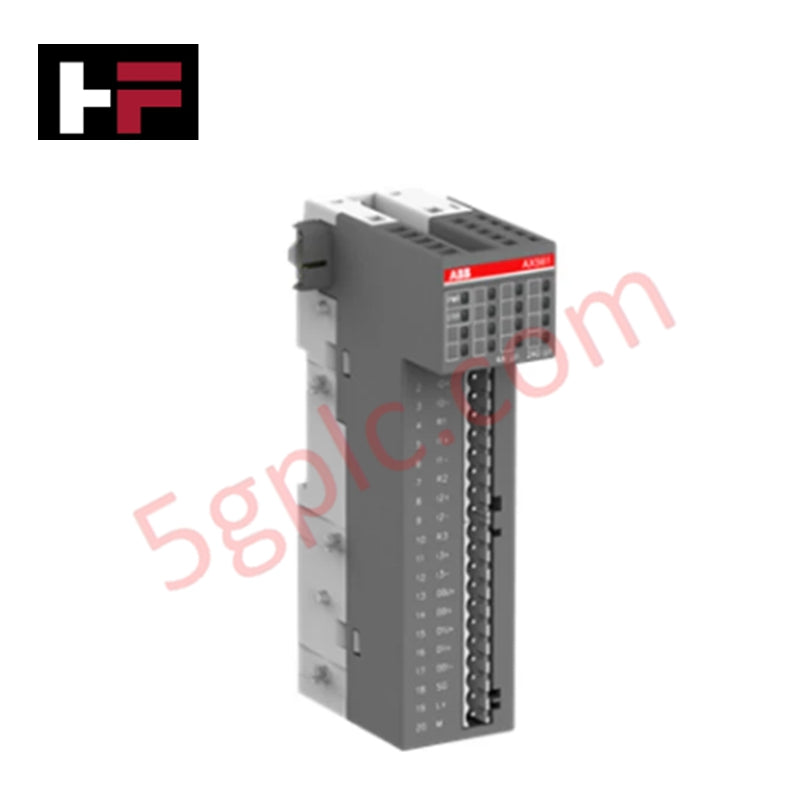
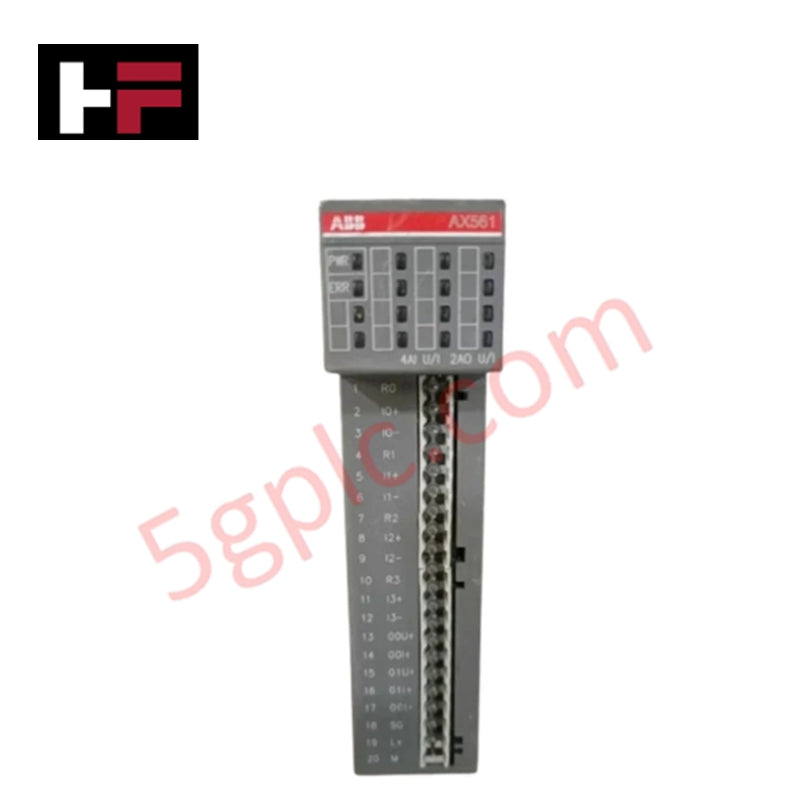
The ABB DI571 (1TNE968902R2103) functions as a high-voltage digital sensing interface within the AC500-eCo PLC family. This module monitors 8 discrete AC signals ranging from 100V to 240V AC, allowing direct integration of line-voltage field devices without the need for interposing relays or step-down transformers. It utilizes a 2-wire connection scheme and a slim 34mm footprint to maximize cabinet density while providing robust signal isolation. We supply this module as 100% Brand New and Original, ensuring your automation architecture maintains factory-certified safety and logic accuracy.
Technical Specifications
The DI571 processes high-voltage AC signals through the following hardware parameters:
-
Number of Digital Inputs: 8 Channels
-
Input Voltage Range: 100V AC to 240V AC (Maximum range 0V to 264V AC)
-
Input Voltage Type: AC
-
Input Current: 8 mA per channel
-
Delay Time ($\tau$): 15 ms to 30 ms
-
Connection Type: Pluggable terminal blocks
-
Degree of Protection: IP20
-
Net Dimensions: 34 mm (W) x 74 mm (H) x 135 mm (D)
-
Operating Temperature: 0 °C to +60 °C
-
Net Weight: 0.129 kg
Engineering Advantages
-
Direct High-Voltage Interfacing: The DI571 accepts 100-240V AC inputs directly. This eliminates the hardware costs and cabinet space associated with installing external relays to convert high-voltage field signals to 24VDC logic.
-
Enhanced Signal Stability: An integrated delay time of 15-30 ms effectively filters out high-frequency noise and AC zero-crossing fluctuations common in industrial power lines. This ensures the PLC CPU receives stable, debounced logic states from limit switches and pushbuttons.
-
Optimized Slim-Line Profile: Occupying only 34 mm of DIN rail width, this module allows for high-density I/O clusters in restricted enclosures. It provides 8 high-voltage points while maintaining a compact footprint essential for decentralized control skids.
-
Rapid Maintenance with Pluggable Terminals: The pluggable connector system facilitates fast module replacement. Technicians leave the 240V field wiring intact on the connector, which prevents wiring errors and significantly reduces Mean Time to Repair (MTTR) during hardware swaps.
-
Broad Operational Range: The module operates reliably up to 264V AC, providing sufficient headroom to handle fluctuations in industrial power grids. The IP20-rated housing ensures safe mounting on standard TH35-15 DIN rails in horizontal or vertical orientations.
FAQs
-
Can the DI571 detect 24V DC signals?
No. The DI571 specifically senses high-voltage AC signals (100-240VAC). It will not recognize 24V DC inputs as a "High" state. For DC applications, please use the DI561 or DI562 modules.
-
Does this module require a separate Terminal Base for the AC500-eCo series?
The AC500-eCo series, including the DI571, typically utilizes a direct-pluggable terminal block system. You do not need the separate TU series terminal bases used by the standard AC500 modules, which simplifies the assembly process.
-
How do I handle the common neutral for the AC inputs?
The DI571 requires a common neutral reference for its 8 input channels. You should refer to the specific wiring diagram provided in the AC500-eCo hardware manual to ensure correct grouping of the AC phases and neutrals.
-
Is it safe to swap the module while the 240V AC power is active?
While the pluggable connectors offer some protection, you must always follow local safety regulations and de-energize high-voltage circuits before performing hardware maintenance to prevent electric shock or equipment damage.
Additional Information
- 100% Genuine Parts: All products are original and authentic, ensuring reliable industrial performance.
- 30-Day Refund Guarantee: Return any in-stock item within 30 days in original, unopened packaging for a full refund (excluding shipping and fees).
- 12-Month Warranty: Covers defects in materials or workmanship; excludes misuse, normal wear, or unauthorized modifications.
- Worldwide Shipping: We ship via USPS, UPS, FedEx, and DHL. Delivery times vary by country and may be subject to customs or import fees.
- Support & Contact: Technical and warranty assistance is available anytime. Contact us here: Contact.
- Purchase Guidance: Check product specifications and compatibility carefully before ordering to ensure proper application.


Tech & Buying Guide

Spatial Computing in Industrial Automation: Elevating PLC and DCS Operations with AR and VR
Industry 4.0 integrates digital intelligence into field operations, transforming factory automation landscapes worldwide. Spatial technologies—specifically Augmented Reality (AR) and Virtual Reality (VR)—redefine how engineers interact with industrial control systems. By bridging computer-generated CAD models with real-time operational technology (OT) data, immersive displays enable intuitive monitoring, rapid diagnostics, and safer maintenance across complex processing facilities.

Master Acceptance Testing: Understanding FAT and SAT in Industrial Control Systems
Factory Acceptance Testing (FAT) and Site Acceptance Testing (SAT) serve as critical quality assurance gateways in complex industrial control systems. Both procedures verify that programmable logic controllers (PLCs), distributed control systems (DCS), and associated field devices meet strict functional specifications. However, executing these tests effectively requires clear delineation between off-site staging and final field commissioning.

Industrial Networking Essentials: Demystifying Hubs, Switches, and Routers in Control Systems
Industrial automation relies heavily on robust networking infrastructure to connect programmable logic controllers (PLCs), distributed control systems (DCS), and human-machine interfaces (HMIs). Modern factory automation environments generate vast amounts of real-time operational data across deterministic networks. Understanding the structural differences between hubs, switches, and routers ensures optimal traffic segmentation, minimizes latency, and maintains high network availability.