










Product Details
Overview
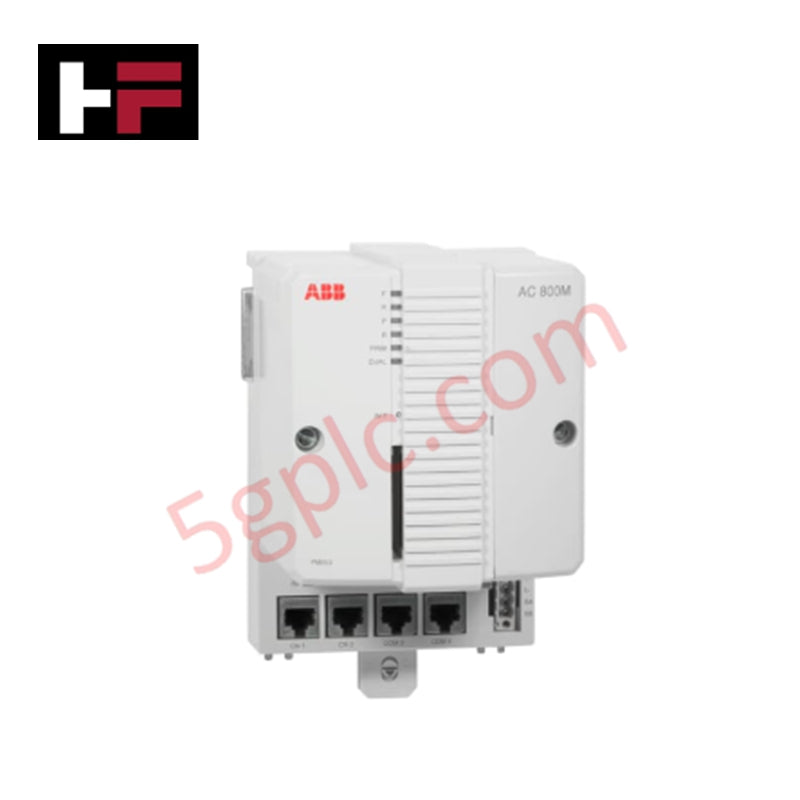
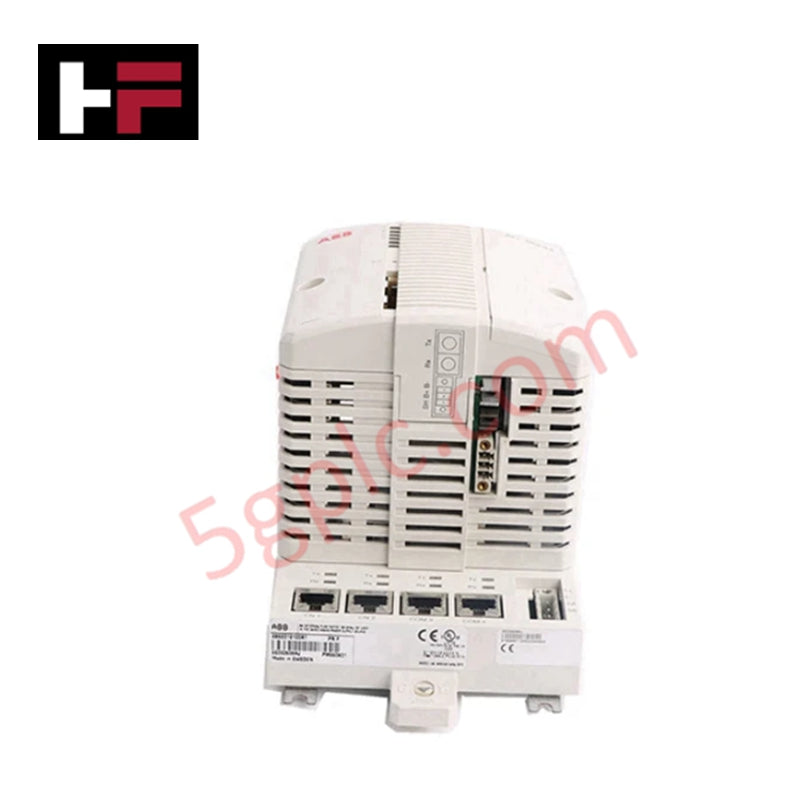
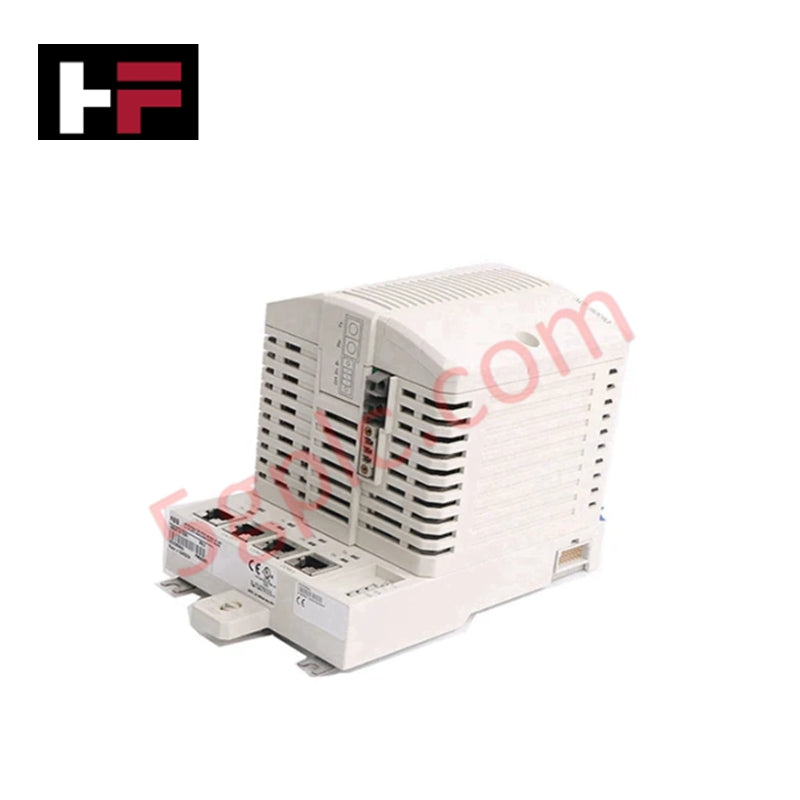
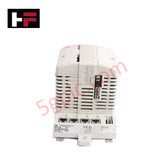
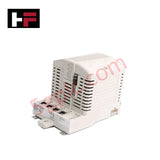
The ABB PM862K01 (3BSE076940R1) is an advanced processor unit designed for the AC 800M controller family, offering reliable performance for distributed and process automation. Based on the MPC866 processor, it supports demanding control environments with high-speed execution, redundant operation, and flexible communication capabilities. Its design ensures consistent performance, short failover times, and precise synchronization across networked controllers.
Core Specifications
-
Processor Type: MPC866 microprocessor
-
System Redundancy: Supported, with maximum switch-over time of 10 ms
-
Controller Capacity:
-
32 applications per controller
-
64 programs per application
-
128 function diagrams per application
-
32 tasks per controller
-
Cycle Times: Up to 32 different cycles, with a minimum execution time of 1 ms per program
-
Firmware Storage: 4 MB Flash PROM
-
Backup Battery: Built-in 3.6 V lithium cell for memory retention
-
Clock Synchronization: 1 ms precision between controllers via CNCP protocol
Electrical Characteristics
-
Power Supply: 24 V DC (operating range 19.2–30 V DC)
-
Current Consumption: 210 mA typical, 360 mA maximum
-
Power Dissipation: 5.1 W typical, 8.6 W maximum
-
Redundant Power Input Monitoring: Supported
Communication Interfaces
-
Ethernet Ports: Two RJ-45 connections (IEEE 802.3, 10 Mbit/s)
-
Supported Network Protocols: MMS (Manufacturing Message Service) and IAC (Inter Application Communication)
-
Recommended Backbone: 100 Mbit/s switched Ethernet network
-
OPC Event Handling:
-
Event queue: up to 3000 events per OPC client
-
Transfer speed: 36–86 events/sec, 113–143 data messages/sec
-
CEX Bus Support: Up to 12 communication modules
-
CEX Bus Current: Max 2.4 A
I/O and Bus Configuration
-
I/O Clusters (Non-Redundant CPU): 1 electrical + 7 optical
-
I/O Clusters (Redundant CPU): 7 optical
-
Maximum I/O Capacity: 96 modules (single CPU) or 84 modules (redundant configuration)
-
ModuleBus Scan Rate: 0–100 ms, depending on I/O load
-
Electrical ModuleBus Supply:
-
24 V: up to 1.0 A
-
5 V: up to 1.5 A
Additional Features
-
RS-232C Interfaces: Two ports (one general-purpose, one service port)
-
COM3: Non-isolated, 75–19,200 baud, full RTS/CTS support
-
COM4: Optically isolated, 9,600 baud, no RTS/CTS support
-
Real-Time Clock Stability: 100 ppm (approx. one hour drift per year)
Application Scenarios
The PM862K01 is suited for:
-
Large-scale industrial automation and process control systems
-
Power generation, petrochemical, and water treatment facilities
-
Applications requiring redundancy, high-speed data handling, and deterministic performance
FAQ
Q: How does the PM862K01 differ from the PM858K01?
A: The PM862K01 offers similar CPU architecture but improved redundancy handling and optimized performance stability for mission-critical control systems.
Q: Can this processor be used in non-redundant mode?
A: Yes. The PM862K01 functions effectively as both a single and redundant controller within AC 800M networks.
Additional Information
- 100% Genuine Parts: All products are original and authentic, ensuring reliable industrial performance.
- 30-Day Refund Guarantee: Return any in-stock item within 30 days in original, unopened packaging for a full refund (excluding shipping and fees).
- 12-Month Warranty: Covers defects in materials or workmanship; excludes misuse, normal wear, or unauthorized modifications.
- Worldwide Shipping: We ship via USPS, UPS, FedEx, and DHL. Delivery times vary by country and may be subject to customs or import fees.
- Support & Contact: Technical and warranty assistance is available anytime. Contact us here: Contact.
- Purchase Guidance: Check product specifications and compatibility carefully before ordering to ensure proper application.
Tech & Buying Guide

Spatial Computing in Industrial Automation: Elevating PLC and DCS Operations with AR and VR
Industry 4.0 integrates digital intelligence into field operations, transforming factory automation landscapes worldwide. Spatial technologies—specifically Augmented Reality (AR) and Virtual Reality (VR)—redefine how engineers interact with industrial control systems. By bridging computer-generated CAD models with real-time operational technology (OT) data, immersive displays enable intuitive monitoring, rapid diagnostics, and safer maintenance across complex processing facilities.

Master Acceptance Testing: Understanding FAT and SAT in Industrial Control Systems
Factory Acceptance Testing (FAT) and Site Acceptance Testing (SAT) serve as critical quality assurance gateways in complex industrial control systems. Both procedures verify that programmable logic controllers (PLCs), distributed control systems (DCS), and associated field devices meet strict functional specifications. However, executing these tests effectively requires clear delineation between off-site staging and final field commissioning.

Industrial Networking Essentials: Demystifying Hubs, Switches, and Routers in Control Systems
Industrial automation relies heavily on robust networking infrastructure to connect programmable logic controllers (PLCs), distributed control systems (DCS), and human-machine interfaces (HMIs). Modern factory automation environments generate vast amounts of real-time operational data across deterministic networks. Understanding the structural differences between hubs, switches, and routers ensures optimal traffic segmentation, minimizes latency, and maintains high network availability.