Master FIFO and LIFO Sequences for Advanced PLC Logic
- 〡
- 〡 by WUPAMBO
In the sphere of industrial automation, managing data flow is just as vital as controlling physical hardware. Professional engineers often use sequential logic to organize how a system processes information or physical parts. Among the most effective tools for this task are FIFO and LIFO sequences. Understanding these concepts allows you to build more efficient control systems for complex sorting and inventory tasks.
How FIFO Logic Optimizes Factory Automation
FIFO stands for "First In, First Out." This logic dictates that the first piece of data entered into the register is the first one retrieved. You can compare this to a queue at a warehouse loading dock. The first truck to arrive is the first one to leave. In a PLC, a FIFO block typically manages a stack of data words. When the "retrieval" input triggers, the controller moves the oldest stored value to the destination register.
Technical Implementation of FIFO Registers
Modern controllers from brands like Allen-Bradley or Siemens utilize specific instructions to handle FIFO stacks. These blocks usually feature three primary control inputs: Reset, Storage, and Retrieval. A rising edge on the Storage input saves the current data into the memory stack. Moreover, the block tracks the sequence accurately, even as the stack grows. Status bits like "Full" or "Empty" help prevent data overflow and ensure the factory automation process remains stable.
Understanding LIFO: The Last-In, First-Out Principle
LIFO logic operates on the "Last In, First Out" principle, similar to a stack of trays in a cafeteria. The most recent item added to the top is the first one someone removes. In industrial automation, LIFO is less common than FIFO but remains essential for specific nesting or recursive tasks. The controller retrieves the most recently stored word first when it receives a retrieval command. Consequently, LIFO is ideal for applications where the most current data has the highest priority.
Key Considerations for Sequence Programming
When implementing these sequences, you must manage your trigger inputs carefully. Programmers should avoid pulsing storage and retrieval inputs simultaneously, as this can cause logic errors. Furthermore, different hardware handles power cycles differently. For instance, a PLC cold restart might clear the entire register, while a warm restart could keep data intact. Always verify the memory retentivity settings in your specific control system to avoid data loss during a power failure.
Professional Insight: Selecting the Right Sequence for the Job
From a strategic perspective, your choice between FIFO and LIFO depends entirely on the physical process. FIFO is the industry standard for conveyor sorting, buffer management, and production line tracking. However, LIFO can be quite effective for "stacking" processes where physical access is limited to the top item. I recommend using FIFO for most material handling applications to ensure a "first-ready, first-served" workflow, which generally improves overall plant throughput.
Application Scenario: Automated Warehouse Sorting
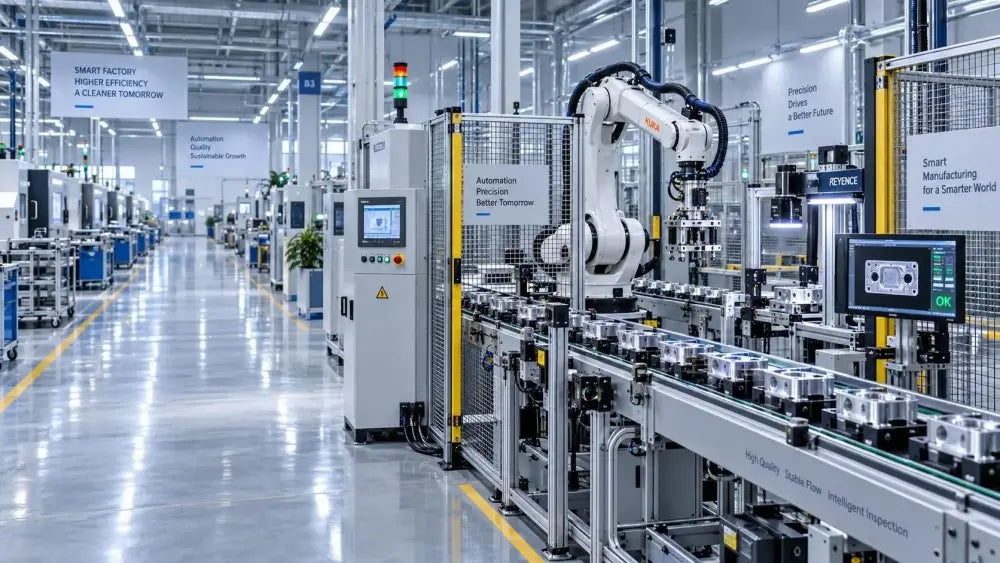
Imagine a distribution center using a DCS to coordinate multiple conveyor belts. As boxes pass a barcode scanner, the PLC stores the destination codes in a FIFO register. When the boxes reach the diversion gate, the controller retrieves the codes in the exact order they were scanned. This ensures each box moves to the correct shipping lane. By using FIFO, the system maintains perfect synchronization between the physical position of the goods and the digital tracking data.
- Posted in:
- B2B Automation Strategy
- Data Register
- FIFO Sequence
- Industrial Automation
- LIFO Logic
- PLC
- Programming Best Practices
- Sequential Logic