










Détails du produit
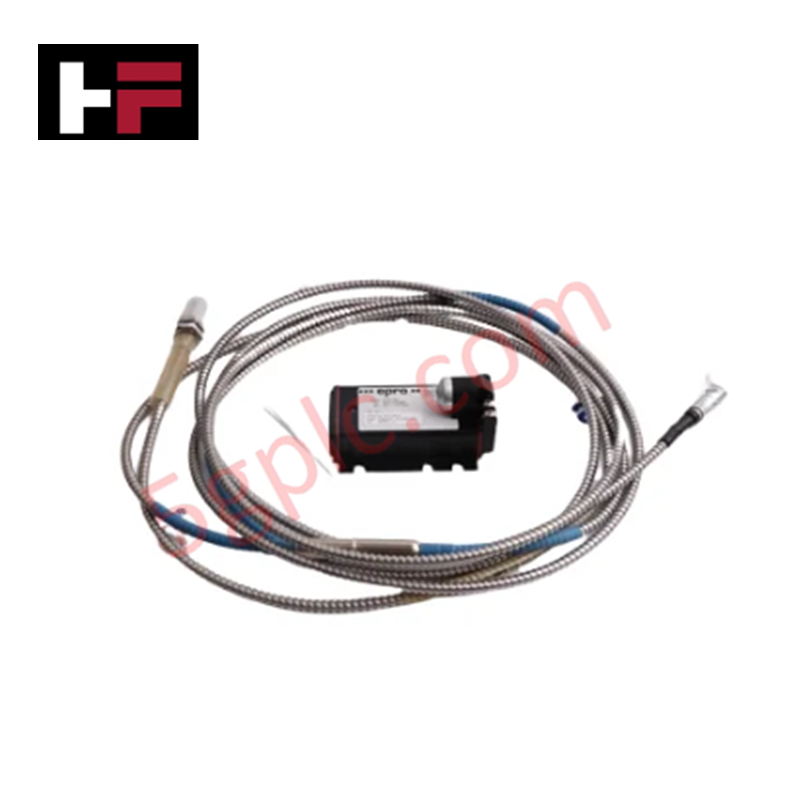
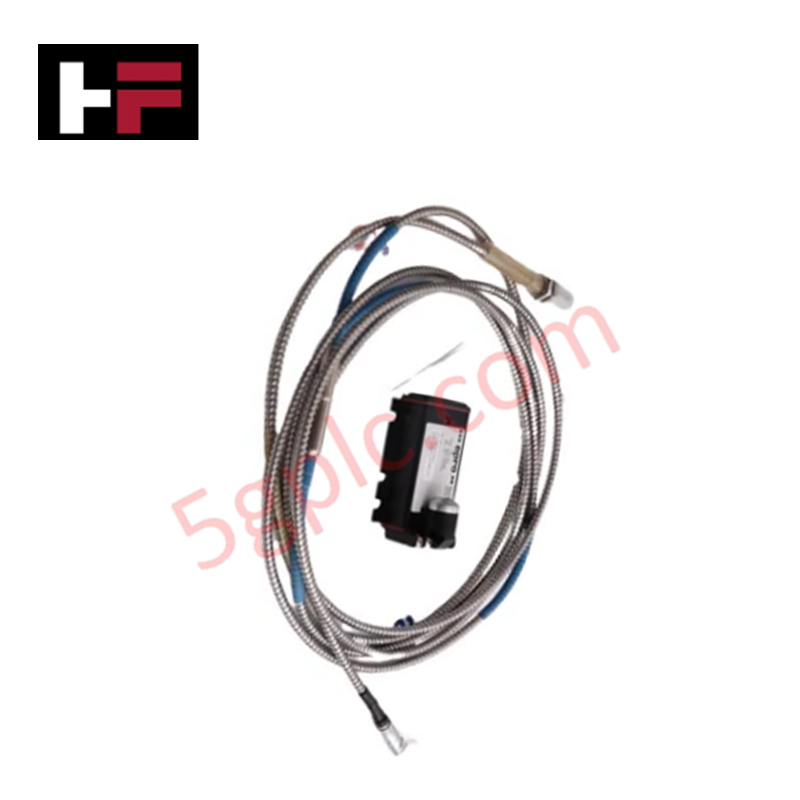
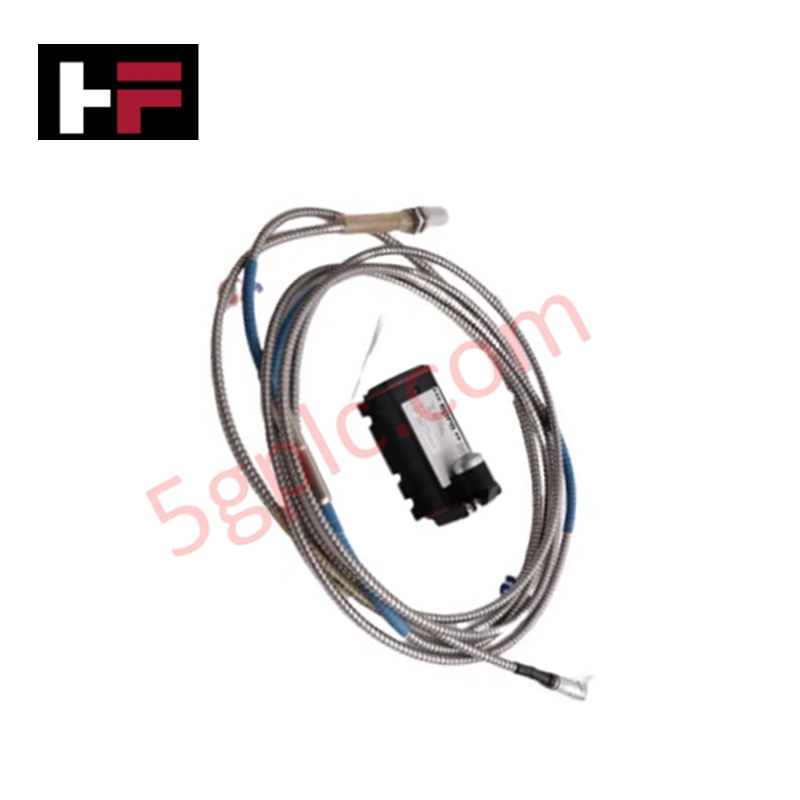
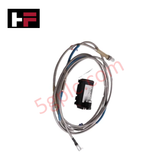
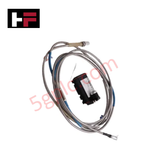
Configuré pour le conditionnement de signaux de vibration haute fréquence dans les systèmes de surveillance de turbomachines, le convertisseur Epro CON021/916-240 (CON021/916-240) associé au transducteur PR6426/010-140 (PR6426/010-140) offre une exécution physique/électrique directe.
Spécifications matérielles
| Paramètre | Spécification |
|---|---|
| Modèle | CON021/916-240 + PR6426/010-140 |
| Marque | Epro (Emerson) |
| Origine | Allemagne |
| Poids | 0,92 kg (combiné) |
| Dimensions | Boîtier standard de sonde et convertisseur LMgSi 0,5 F22 |
| Température de fonctionnement | -30 °C à +175 °C |
| Consommation électrique | Dépendante de la tension d'entrée -21 VDC à -32 VDC |
| Plage de mesure | 24,0 mm |
| Précision | +/- 1,5 % (sensibilité du capteur) |
| Signal de sortie | -4 VDC à -20 VDC ou -2 VDC à -18 VDC |
Validation de la tension de l’écart (-10 VDC cibles)
Le système utilise un circuit oscillateur pour piloter la sonde du transducteur. Pour garantir une linéarisation précise sur la plage de mesure étendue de 24,0 mm, le système nécessite une validation précise de la tension de l’écart. Le convertisseur centre sa caractéristique de sortie autour d’une cible nominale de -10 VDC, qui représente le point médian de l’écart de mesure physique. Le maintien de cette référence de -10 VDC est obligatoire lors de la mise en service statique ; des écarts importants indiquent un désalignement mécanique, une saturation du transducteur ou une dégradation de la surface conductrice de la cible.
Questions fréquemment posées
Q : Le convertisseur CON021/916-240 peut-il être utilisé avec des capteurs à plage plus courte ?
R : Non. Le convertisseur est calibré spécifiquement pour la plage de 24,0 mm de la série PR6426. L’utilisation d’un transducteur différent entraînera des erreurs de linéarité importantes dépassant le seuil spécifié de 3,5 %.
Q : Le système peut-il fonctionner dans des environnements pressurisés ?
R : La tête du capteur PR6426 est conçue pour résister à une pression allant jusqu’à 6 500 hPa (94 psi). Assurez-vous que les filetages d’installation sont correctement étanchéifiés pour l’environnement de pression de l’application.
Consignes d’installation sur site
- Fixez le boîtier du convertisseur à l’aide de quatre vis M5x20 sur une surface rigide et mise à la terre pour garantir l’intégrité structurelle.
- Installez la sonde PR6426 dans le support de montage, en assurant un dégagement d’au moins 200 mm de diamètre d’arbre et un espacement adéquat par rapport aux structures métalliques adjacentes pour éviter les interférences.
- Terminez le câblage d’alimentation et de sortie en utilisant des embouts de câble de haute qualité sur les bornes à vis, en veillant à ce que la section des conducteurs ne dépasse pas 1,5 mm².
- Vérifiez la polarité de l’alimentation avant d’appliquer la tension, car l’unité nécessite une entrée logique négative de -21 VDC à -32 VDC.
- Mettez à la terre la gaine du câble de signal uniquement au niveau du rack du système de surveillance (DCS/TSI) pour éviter l’injection de boucles de masse de bruit électromagnétique à 50/60 Hz.
Informations supplémentaires
- Pièces 100 % d'origine : Tous les produits sont originaux et authentiques, garantissant des performances industrielles fiables.
- Garantie de remboursement de 30 jours : Retournez tout article en stock dans les 30 jours dans son emballage d'origine non ouvert pour un remboursement complet (hors frais de port et frais).
- Garantie de 12 mois : Couvre les défauts de matériaux ou de fabrication ; exclut les mauvais usages, l'usure normale ou les modifications non autorisées.
- Expédition mondiale : Nous expédions via USPS, UPS, FedEx et DHL. Les délais de livraison varient selon le pays et peuvent être soumis à des frais de douane ou d'importation.
- Assistance & Contact : Une assistance technique et garantie est disponible à tout moment. Contactez-nous ici : Contact.
- Conseils d'achat : Vérifiez attentivement les spécifications et la compatibilité du produit avant de commander pour assurer une application correcte.





Guide technique et d'achat

Le passage aux modules d’E/S flexibles dans l’automatisation industrielle moderne
Les systèmes de contrôle traditionnels reposent sur des cartes d’entrées/sorties (E/S) dédiées pour l’automatisation industrielle. Chaque module conventionnel traite un seul type de signal, tel qu’une entrée numérique (DI), une sortie numérique (DO), une entrée analogique (AI) ou une sortie analogique (AO). Une carte standard à 16 canaux n’accepte qu’un seul type de canal spécifique sur l’ensemble de ses ports. Cette conception matérielle rigide crée souvent d’importants goulots d’étranglement techniques lors de l’exécution des projets. Les ingénieurs doivent fréquemment installer de nouvelles cartes complètes pour prendre en charge un seul capteur supplémentaire. Par conséquent, les modifications tardives de conception augmentent l’espace requis dans l’armoire de commande et font grimper les coûts du projet.

Étapes de mise en service d’un DCS dans les projets d’automatisation industrielle
La mise en service d’un système de contrôle-commande distribué (DCS) constitue une étape cruciale lors du déploiement d’une infrastructure moderne d’automatisation des procédés. Les ingénieurs de terrain doivent effectuer des vérifications systématiques afin de faire passer des équipements de contrôle complexes de l’installation statique au pilotage dynamique de l’usine. Une mise en service rigoureuse garantit que les contrôleurs, les modules d’E/S, les commutateurs réseau et les logiciels IHM fonctionnent en stricte conformité avec les spécifications de conception technique avant l’introduction des fluides de procédé.

Stratégie de pièces de rechange pour les systèmes de contrôle PLC et DCS : directives d’ingénierie
L’automatisation industrielle moderne repose sur des dorsales à fibre optique haut débit pour relier les systèmes de contrôle répartis dans des environnements industriels fortement soumis aux interférences. Contrairement au câblage en cuivre, les fibres optiques transmettent les données par impulsions lumineuses, ce qui les rend totalement insensibles aux interférences électromagnétiques (IEM). Les ingénieurs de terrain doivent maîtriser les techniques d’assemblage des câbles optiques et d’épissurage par fusion afin de garantir une transmission de données à faible perte entre les nœuds critiques des automates programmables (PLC) et des systèmes de contrôle distribués (DCS).