










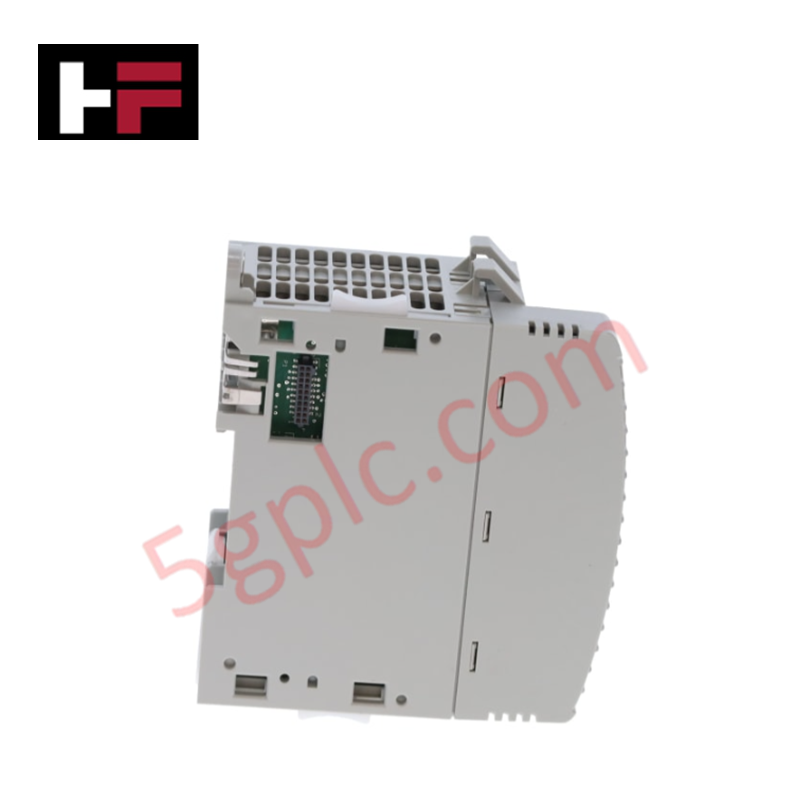
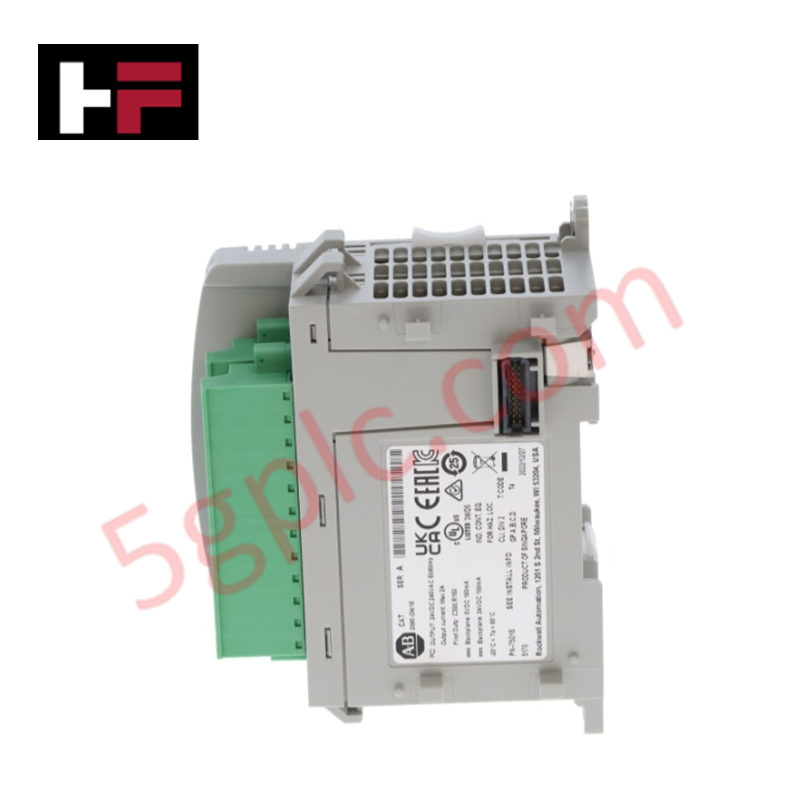
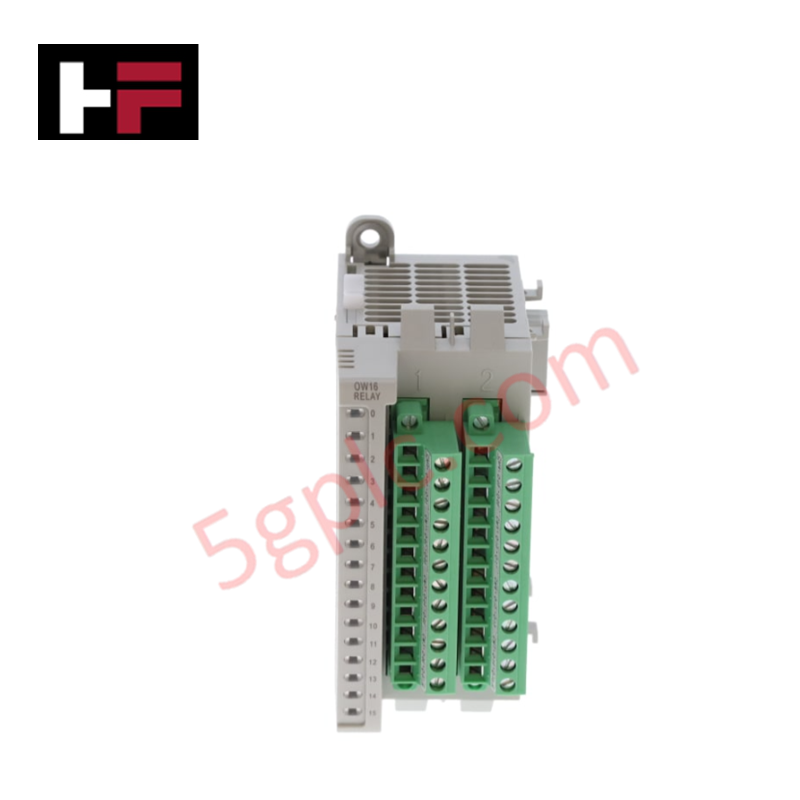
Détails du produit
Présentation du produit
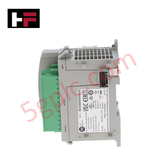
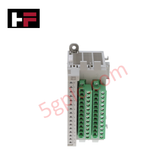
Le Allen-Bradley 2085-OW16 est un module d’extension de sortie relais haute densité à 16 points, conçu spécifiquement pour la famille de PLC Micro800. Il étend parfaitement la capacité de sortie des contrôleurs Micro850 et Micro870, permettant aux ingénieurs de commuter directement une grande variété de charges AC et DC. Avec une intensité nominale robuste de 2A par canal et une compatibilité avec des tensions allant de 24V DC à 240V AC, ce module offre un contrôle polyvalent et isolé pour les solénoïdes, démarreurs de moteur et voyants indicateurs. Nous fournissons cet article en unité 100 % neuve, scellée en usine.
Spécifications techniques
| Paramètre | Spécification |
|---|---|
| Fabricant | Allen-Bradley (Rockwell Automation) |
| Gamme de produits | Micro800 (Compatible avec Micro850 / Micro870) |
| Type de produit | Module d’extension E/S |
| Sorties | 16 sorties relais |
| Courant de sortie | 2A par canal |
| Tension de fonctionnement | 24V DC, 125V DC, 120V AC, 240V AC |
| Consommation du bus (5,0V) | 120 mA |
| Consommation du bus (24V) | 50 mA |
| Dissipation de puissance | 2,72 Watts |
| Section de câble | 0,25 - 2,5 mm² (22 - 14 AWG) |
| Poids | 0,56 lbs (0,26 kg) |
Avantages techniques
Commutation polyvalente de charges AC/DC
Le 2085-OW16 offre une flexibilité exceptionnelle en supportant une large plage de tensions de fonctionnement, incluant 24V DC, 125V DC, 120V AC et 240V AC. Cela permet aux spécialistes de l’automatisation de contrôler divers équipements de terrain — des solénoïdes basse tension DC aux contacteurs moteurs haute tension AC — avec un seul module d’extension, simplifiant considérablement la gestion des pièces de rechange et la conception des armoires.
Extension de sortie haute densité
En fournissant 16 sorties relais indépendantes dans un encombrement compact, ce module maximise la capacité de contrôle des systèmes Micro850 et Micro870. Chaque canal supporte jusqu’à 2A, ce qui le rend idéal pour les applications nécessitant de nombreux signaux de commande discrets sans recourir à des relais d’interface externes volumineux.
Isolation électrique et sécurité
Les sorties relais mécaniques assurent une isolation électrique intrinsèque entre la logique du PLC et le câblage de terrain. Cette isolation robuste protège l’électronique sensible du contrôleur contre les surtensions, les parasites électriques et les courts-circuits côté charge, garantissant la longévité et la stabilité de votre système d’automatisation dans des environnements industriels électriquement bruyants.
FAQ
Q : Quels contrôleurs PLC sont compatibles avec le 2085-OW16 ?
R : Ce module d’extension est spécialement conçu pour la famille Allen-Bradley Micro800. Il est entièrement compatible avec les contrôleurs Micro850 et Micro870, permettant une extension système sans faille.
Q : Quelle est la tension et l’intensité nominale des sorties ?
R : Chacune des 16 sorties relais est conçue pour 2 ampères. Le module supporte une plage de tension polyvalente, incluant 24V DC, 125V DC, 120V AC et 240V AC, pour des charges AC et DC.
Q : Quelle est la consommation électrique de ce module sur le bus PLC ?
R : Le 2085-OW16 consomme 120 mA à 5,0V DC et 50 mA à 24V DC sur le bus arrière du contrôleur. Veillez à prendre en compte cette consommation dans votre budget énergétique lors de la conception de votre système.
Q : Quel type de câble doit être utilisé pour l’installation ?
R : Vous devez utiliser un câble cuivre rigide ou souple, classé pour 75°C (167°F) ou plus. La section de câble acceptable varie de 0,25 à 2,5 mm² (22 à 14 AWG) avec un diamètre d’isolation maximal de 1,2 mm.
Informations supplémentaires
- Pièces 100 % d'origine : Tous les produits sont originaux et authentiques, garantissant des performances industrielles fiables.
- Garantie de remboursement de 30 jours : Retournez tout article en stock dans les 30 jours dans son emballage d'origine non ouvert pour un remboursement complet (hors frais de port et frais).
- Garantie de 12 mois : Couvre les défauts de matériaux ou de fabrication ; exclut les mauvais usages, l'usure normale ou les modifications non autorisées.
- Expédition mondiale : Nous expédions via USPS, UPS, FedEx et DHL. Les délais de livraison varient selon le pays et peuvent être soumis à des frais de douane ou d'importation.
- Assistance & Contact : Une assistance technique et garantie est disponible à tout moment. Contactez-nous ici : Contact.
- Conseils d'achat : Vérifiez attentivement les spécifications et la compatibilité du produit avant de commander pour assurer une application correcte.


Guide technique et d'achat

Comprendre les types de bruit dans les circuits électroniques et les systèmes de contrôle
L'intégrité du signal détermine directement la précision des mesures et la stabilité des boucles dans les environnements d'automatisation industrielle. Le bruit électronique introduit des interférences stochastiques indésirables dans les boucles analogiques, les lignes de retour des capteurs et les réseaux de bus de terrain numériques. Comprendre comment le bruit électronique intrinsèque et les interférences électromagnétiques externes se manifestent permet aux ingénieurs de contrôle d'optimiser le conditionnement du signal et de protéger efficacement les instruments sensibles.
Pourquoi les alimentations 24V DC standardisent l'automatisation industrielle moderne
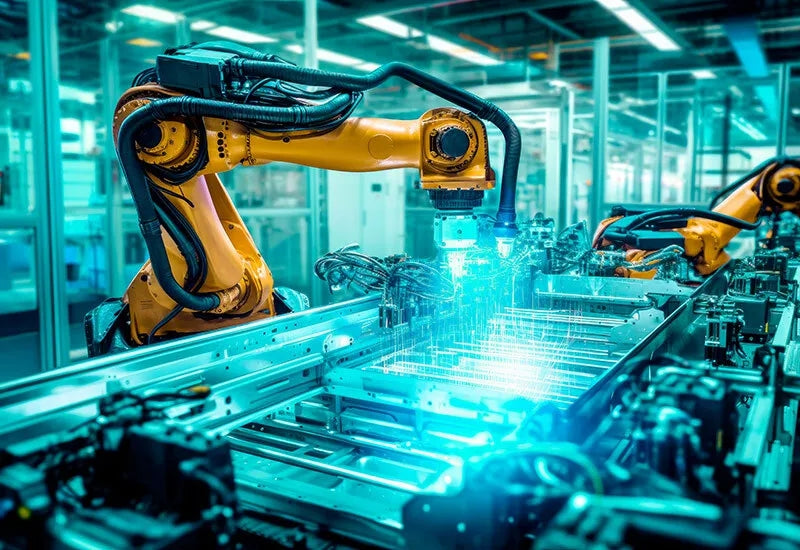
Les armoires de contrôle industrielles dans le monde entier utilisent le 24V DC comme norme universelle d'alimentation pour les instruments de terrain, les capteurs et les contrôleurs. En entrant dans n'importe quelle usine, vous trouverez des automates programmables (PLC), des interfaces homme-machine (IHM) et des actionneurs intelligents fonctionnant en courant continu à très basse tension. La standardisation sur le 24V DC améliore la sécurité opérationnelle, réduit l'encombrement des armoires et maintient une performance de contrôle stable à travers les réseaux d'usine.

Commandes essentielles de contrôle de mouvement : un guide pratique pour les ingénieurs
Les ingénieurs en automatisation s'appuient souvent sur un contrôle précis de la position et de la vitesse pour piloter les machines modernes des usines. Les systèmes industriels modernes, tels que les automates programmables (API) et les systèmes de contrôle distribués (DCS), dépendent fortement des instructions de mouvement standardisées. Maîtriser ces commandes garantit la sécurité opérationnelle, protège les composants mécaniques et optimise les temps de cycle sur les lignes de production.