










Détails du produit
Présentation du produit
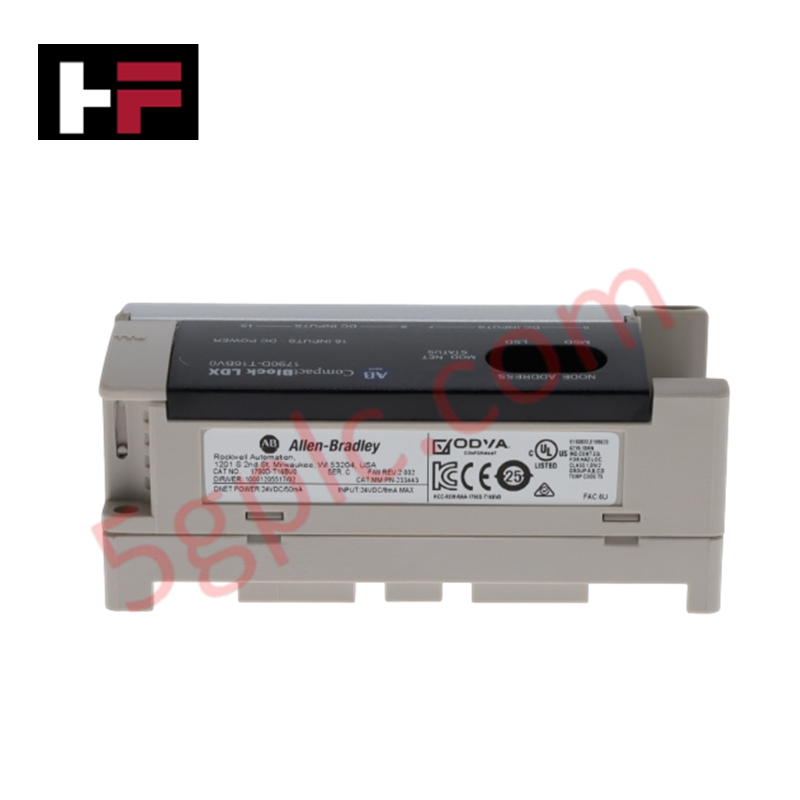
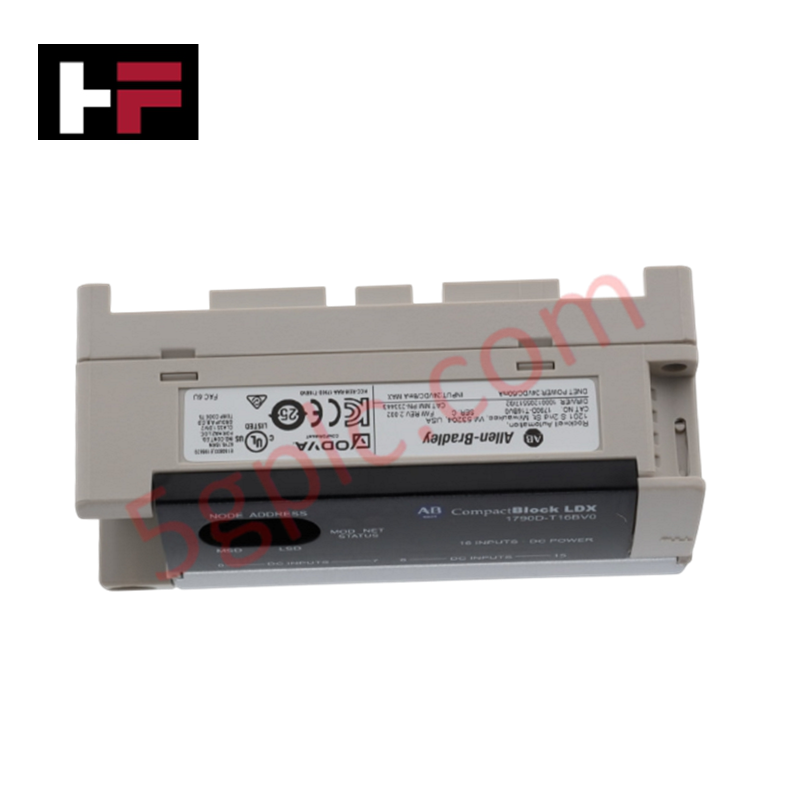
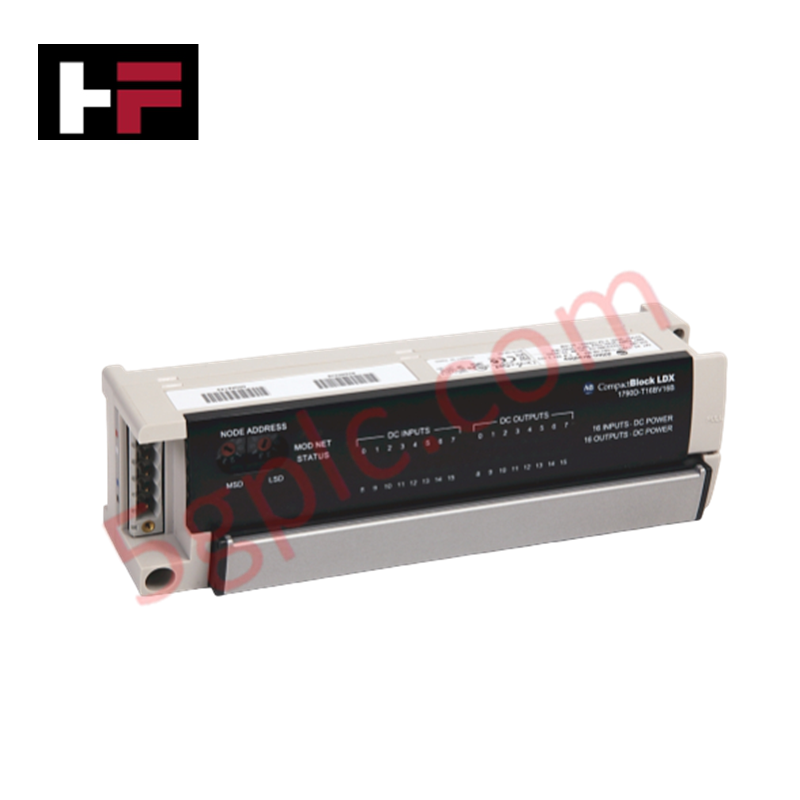
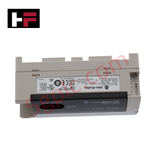
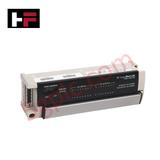
Le Allen-Bradley 1790D-T16BV0 est un bloc d'entrée DC universel robuste à 16 points, conçu spécifiquement pour le système d'E/S distribuées CompactBlock LDX. Cet appareil offre une flexibilité de câblage exceptionnelle en supportant à la fois les configurations sinking et sourcing sur ses entrées 24V DC, permettant une intégration fluide avec une grande variété de capteurs et interrupteurs de terrain. Conçu pour des environnements industriels difficiles, il résiste à des vibrations et chocs importants, ce qui le rend idéal pour les applications d'automatisation au niveau machine. Nous fournissons cet article en unité 100 % neuve, scellée en usine.
Spécifications techniques
| Paramètre | Spécification |
|---|---|
| Fabricant | Allen-Bradley (Rockwell Automation) |
| Gamme de produits | CompactBlock LDX |
| Type d’appareil | Bloc d'entrée DC universel |
| Nombre d’entrées | 16 entrées numériques |
| Type d’entrée | 24V DC Sink / Source (Universel) |
| Tension nominale en état actif | 24V DC |
| Plage de tension en état actif | 9,6V DC (min) à 28,8V DC (max) |
| Tension en état inactif | 5V DC (max) |
| Courant en état actif | 8 mA à 24V DC par canal |
| Courant en état inactif | 1,5 mA à 5V DC (max) |
| Température de fonctionnement | 0 à 60°C (32 à 140°F) |
| Choc de fonctionnement | 30 g en pic |
| Vibrations | 5 g de 10 à 500 Hz |
| Humidité | 5 à 90 % (sans condensation) |
| Poids | 3,00 lbs (1,36 kg) |
Avantages techniques
Flexibilité universelle sinking et sourcing
Le 1790D-T16BV0 élimine les solutions de câblage complexes en acceptant à la fois les signaux 24V DC sinking et sourcing sur le même module. Cette capacité d’entrée universelle permet aux ingénieurs de connecter divers dispositifs de terrain — tels que capteurs de proximité PNP et NPN, interrupteurs de fin de course et boutons-poussoirs — sans nécessiter de modules séparés pour différents types de capteurs, simplifiant ainsi considérablement la gestion des stocks et la conception des armoires.
Robustesse pour environnements à fortes vibrations
Conçu pour résister aux exigences physiques de l’automatisation en milieu industriel, ce bloc d’entrée présente une conception mécanique très durable. Il supporte un choc de fonctionnement jusqu’à 30 g en pic et des vibrations continues de 5 g dans une plage de fréquences de 10 à 500 Hz. Cette robustesse garantit une acquisition stable des signaux et évite les déclenchements intempestifs dans des applications dynamiques telles que les machines d’emballage, convoyeurs et lignes d’assemblage automobile.
E/S compactes et évolutives au niveau machine
Faisant partie du système CompactBlock LDX, ce module offre un encombrement réduit idéal pour un montage directement sur ou à proximité des machines. Sa conception modulaire permet de chaîner plusieurs blocs d’E/S, réduisant ainsi la quantité de câblage en étoile vers l’armoire de contrôle principale et permettant des constructions et modernisations de machines plus rapides et économiques.
FAQ
Q : Le 1790D-T16BV0 peut-il gérer à la fois des capteurs sinking et sourcing ?
R : Oui, il s’agit d’un bloc d’entrée DC universel. Il prend en charge entièrement les configurations d’entrée 24V DC sinking et sourcing, vous offrant une flexibilité complète pour intégrer divers capteurs et interrupteurs de terrain.
Q : Quelle est la plage de tension de fonctionnement pour que les entrées soient considérées en état « On » ?
R : Le module détecte de manière fiable un état actif lorsque la tension d’entrée est comprise entre 9,6V DC (minimum) et 28,8V DC (maximum), avec une valeur nominale de 24V DC.
Q : Avec quel système d’E/S le 1790D-T16BV0 est-il compatible ?
R : Ce bloc d’entrée est conçu exclusivement pour le système d’E/S distribuées Allen-Bradley CompactBlock LDX, permettant une expansion et une intégration sans faille avec les adaptateurs réseau compatibles.
Q : Quelle est la consommation de courant de chaque canal d’entrée lorsqu’il est actif ?
R : Chaque canal consomme un maximum de 8 mA à 24V DC en état actif. Veillez à ce que la capacité d’alimentation de votre système prenne en compte la consommation totale de tous les entrées actives.
Informations supplémentaires
- Pièces 100 % d'origine : Tous les produits sont originaux et authentiques, garantissant des performances industrielles fiables.
- Garantie de remboursement de 30 jours : Retournez tout article en stock dans les 30 jours dans son emballage d'origine non ouvert pour un remboursement complet (hors frais de port et frais).
- Garantie de 12 mois : Couvre les défauts de matériaux ou de fabrication ; exclut les mauvais usages, l'usure normale ou les modifications non autorisées.
- Expédition mondiale : Nous expédions via USPS, UPS, FedEx et DHL. Les délais de livraison varient selon le pays et peuvent être soumis à des frais de douane ou d'importation.
- Assistance & Contact : Une assistance technique et garantie est disponible à tout moment. Contactez-nous ici : Contact.
- Conseils d'achat : Vérifiez attentivement les spécifications et la compatibilité du produit avant de commander pour assurer une application correcte.


Guide technique et d'achat

Comprendre les types de bruit dans les circuits électroniques et les systèmes de contrôle
L'intégrité du signal détermine directement la précision des mesures et la stabilité des boucles dans les environnements d'automatisation industrielle. Le bruit électronique introduit des interférences stochastiques indésirables dans les boucles analogiques, les lignes de retour des capteurs et les réseaux de bus de terrain numériques. Comprendre comment le bruit électronique intrinsèque et les interférences électromagnétiques externes se manifestent permet aux ingénieurs de contrôle d'optimiser le conditionnement du signal et de protéger efficacement les instruments sensibles.
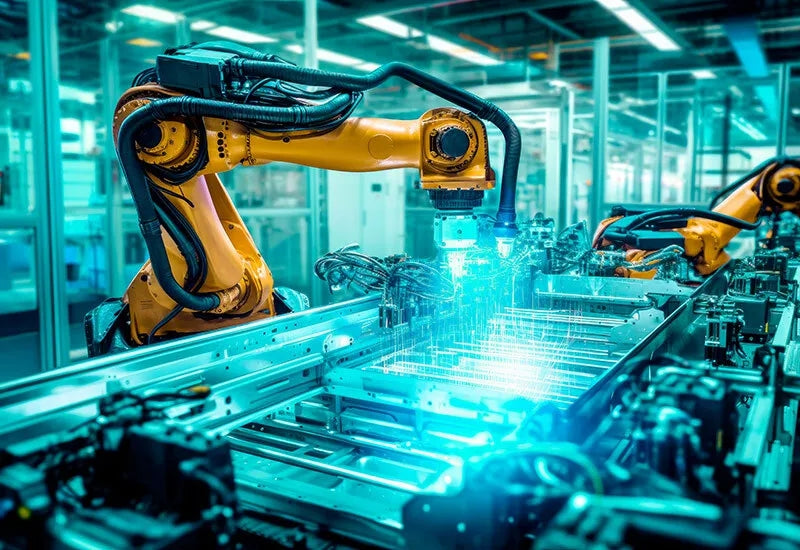
Pourquoi les alimentations 24V DC standardisent l'automatisation industrielle moderne
Les armoires de contrôle industrielles dans le monde entier utilisent le 24V DC comme norme universelle d'alimentation pour les instruments de terrain, les capteurs et les contrôleurs. En entrant dans n'importe quelle usine, vous trouverez des automates programmables (PLC), des interfaces homme-machine (IHM) et des actionneurs intelligents fonctionnant en courant continu à très basse tension. La standardisation sur le 24V DC améliore la sécurité opérationnelle, réduit l'encombrement des armoires et maintient une performance de contrôle stable à travers les réseaux d'usine.

Commandes essentielles de contrôle de mouvement : un guide pratique pour les ingénieurs
Les ingénieurs en automatisation s'appuient souvent sur un contrôle précis de la position et de la vitesse pour piloter les machines modernes des usines. Les systèmes industriels modernes, tels que les automates programmables (API) et les systèmes de contrôle distribués (DCS), dépendent fortement des instructions de mouvement standardisées. Maîtriser ces commandes garantit la sécurité opérationnelle, protège les composants mécaniques et optimise les temps de cycle sur les lignes de production.