










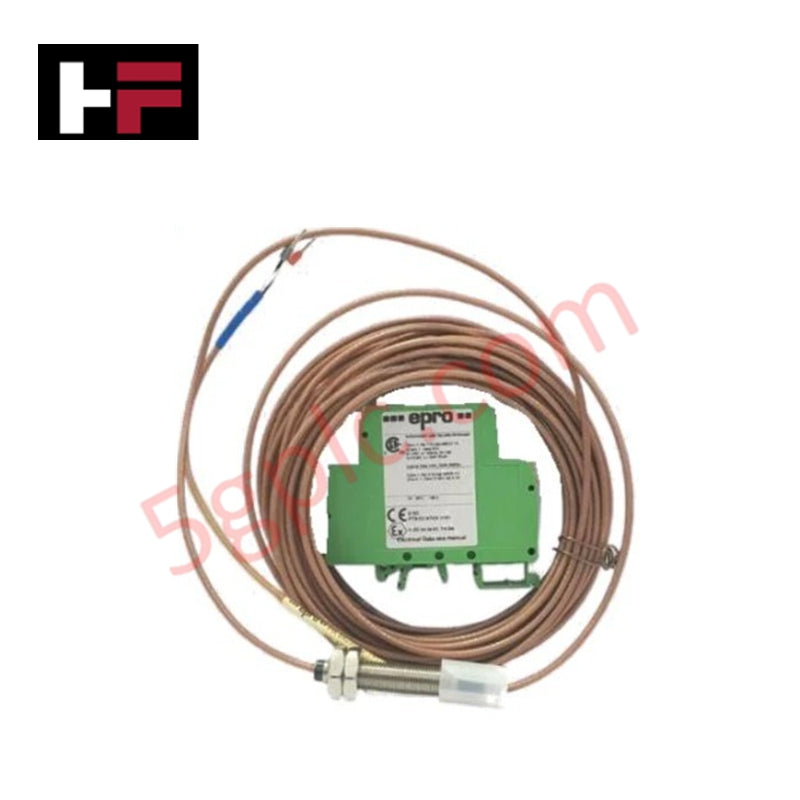
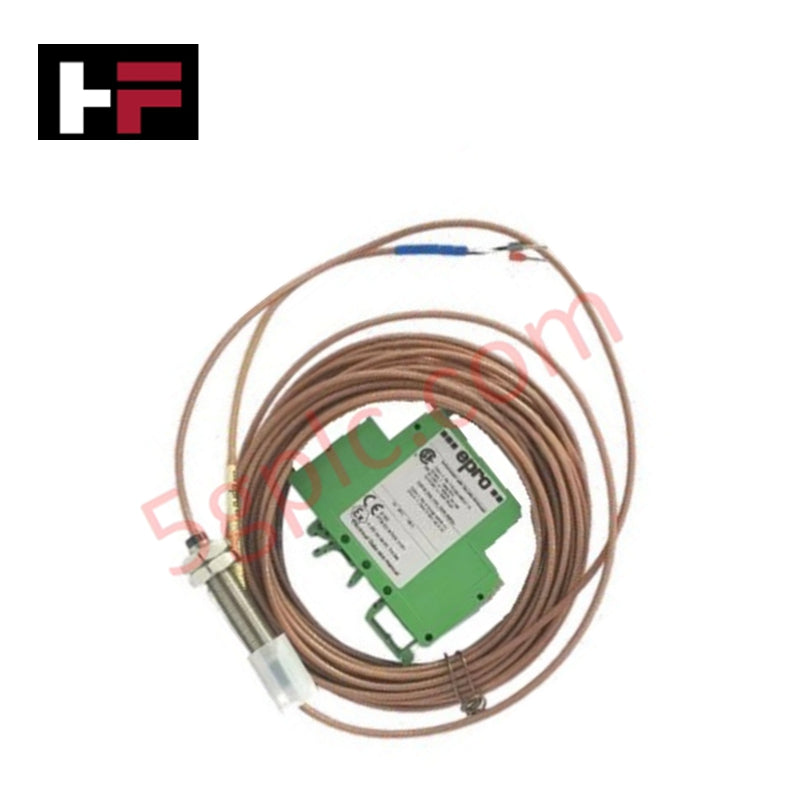
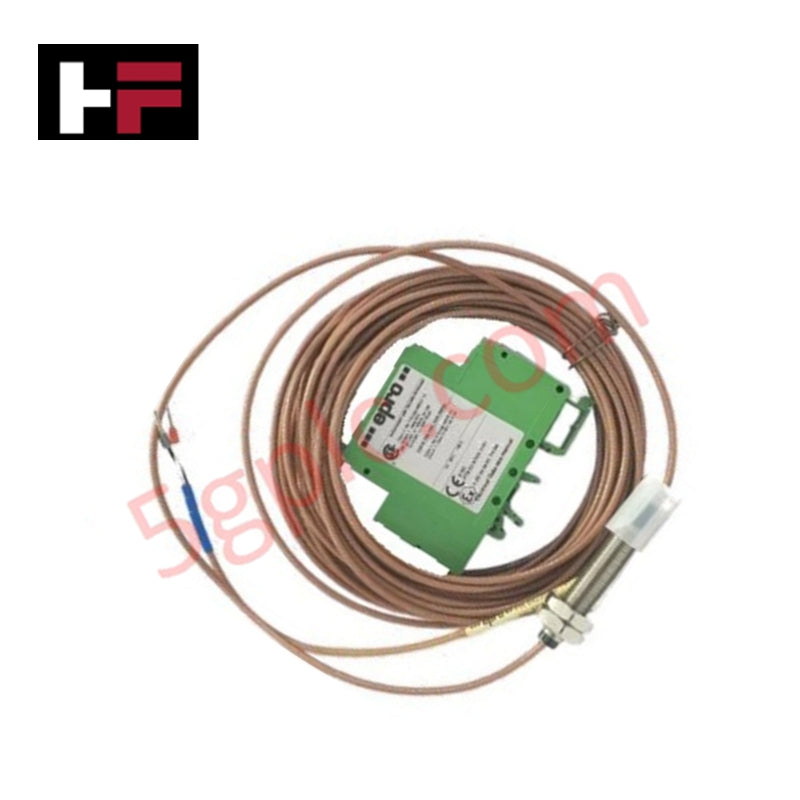
Product Details
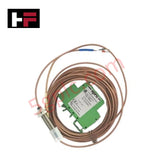
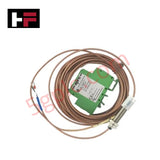
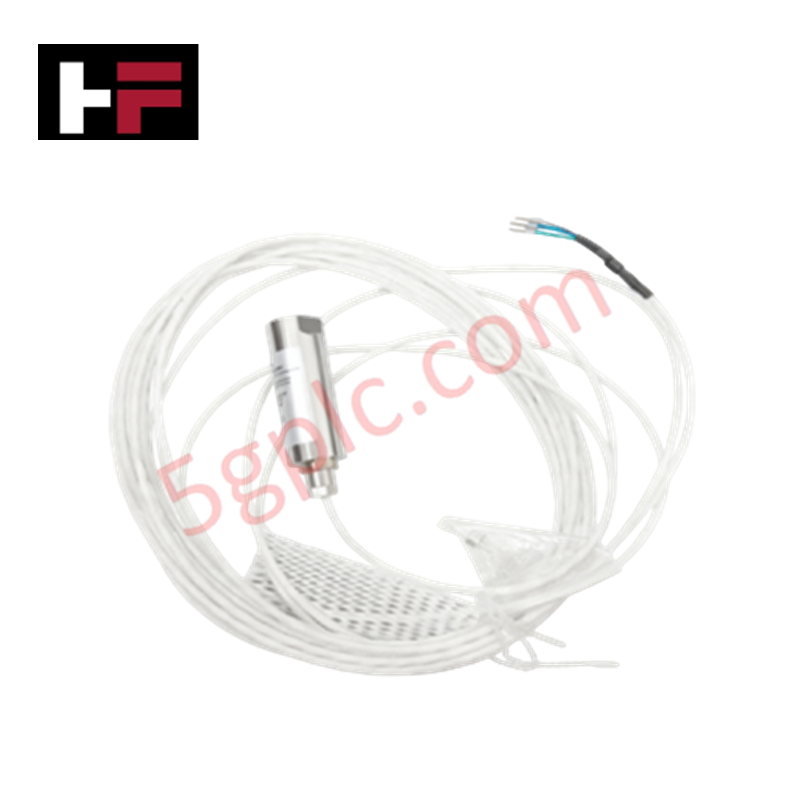
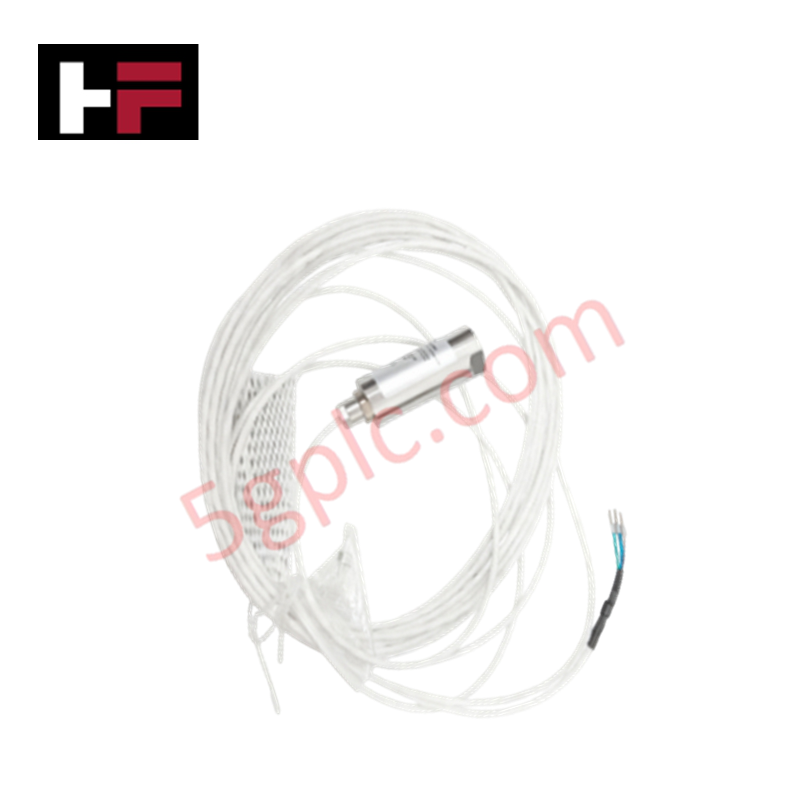
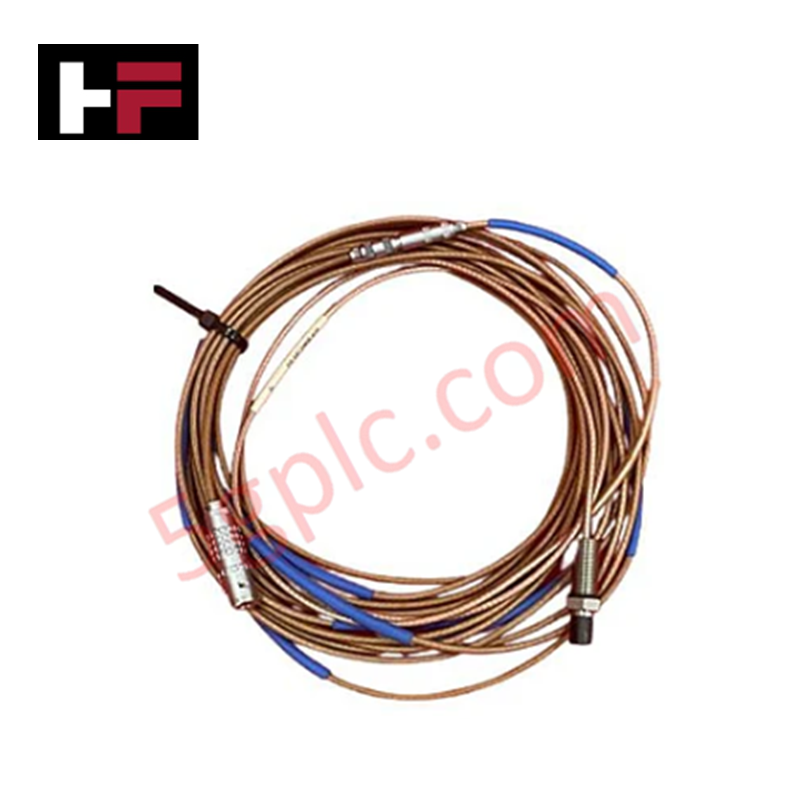
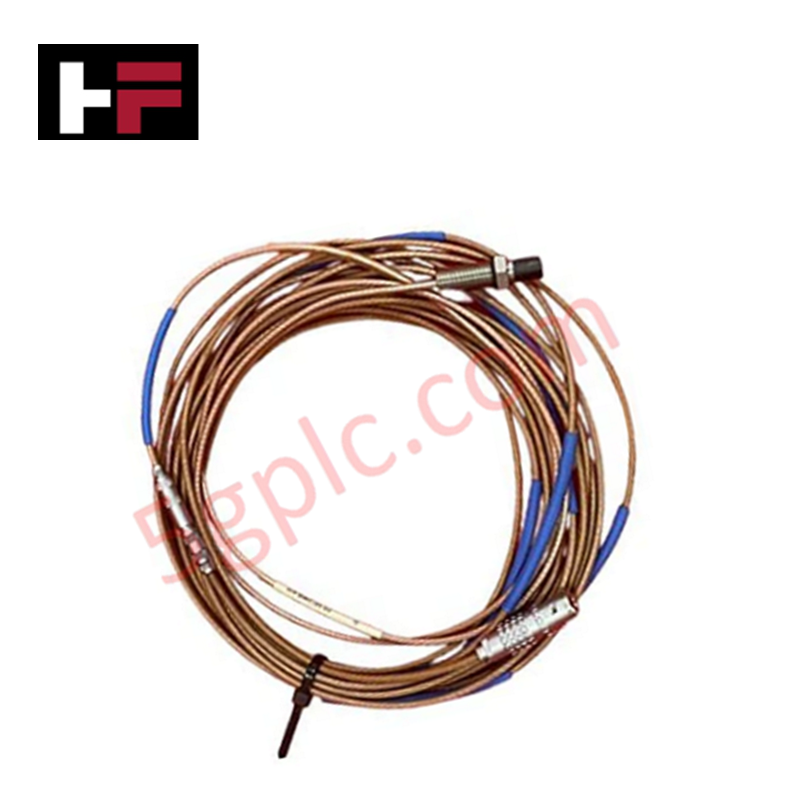
The Emerson PR6426/000-031, also cataloged as the PR6426 20 mm Eddy Current Sensor, operates as a dedicated hardware component for extra-extended range non-contact axial position and differential expansion tracking within Emerson epro machinery monitoring platforms. It generates dynamic electromagnetic field attenuation across an 8 mm linear window to detect mechanical casing and rotor movements.
Suffix Breakdown & Model Matrix
- PR6426: 20 mm tip diameter extra-extended range sensor series.
- 000: 1.0 m unarmored integral cable configuration.
- 031: Threaded M20 x 1.5 mechanical mounting body with specific stud length execution.
Hardware Specifications
| Parameter | Specification |
|---|---|
| Model | PR6426/000-031 |
| Brand | Emerson Epro |
| Origin | Germany |
| Weight | Approx. 0.35 kg |
| Dimensions | Probe Tip Diameter: 20 mm; Thread: M20 x 1.5 |
| Operating Temp | -35 deg C to +180 deg C |
| Power Consumption | Driven via external signal converter (CON 041) |
| Linear Measuring Range | 8.0 mm (2.0 mm to 10.0 mm gap) |
| Output Signal | 4-20 mA HART loop protocol / dynamic voltage (via converter) |
| Frequency Response | 0 Hz to 10 kHz |
| Target Material | Ferromagnetic steel (Standard: AISI 4140) |
| Protection Rating | IP68 (hermetically sealed against oil and steam) |
| Cable Options | 1.0 m unarmored integrated cable |
4-20 mA HART Loop Protocol and Signal Conditioning Integration
The Emerson PR6426/000-031 interfaces directly with dedicated epro signal conditioning units (such as the CON 041) to convert physical gap change into conditioned analog signals. System topologies leverage 4-20 mA HART loop protocol parameters to transmit steady-state differential expansion values back to host DCS architectures while maintaining raw dynamic output access for detailed diagnostic analysis. The 20 mm probe geometry requires precise signal linearization within the converter to preserve output accuracy across the full 8.0 mm measurement range, ensuring immunity against electromagnetic cross-talk in dense installation environments.
Frequently Asked Questions
Q: What primary technical factor dictates using the PR6426/000-031 instead of a PR6424 sensor?
A: The PR6426 features a 20 mm tip providing an 8.0 mm linear measuring range, whereas the PR6424 utilizes a smaller tip limited to a 4.0 mm linear span.
Q: Why must surrounding structural metal maintain strict lateral clearances around the PR6426 tip?
A: The larger 20 mm probe tip projects an expanded high-frequency magnetic field, requiring a minimum of 40 mm lateral side clearance to avoid uncalibrated field damping from nearby metal walls.
Q: Can the 1.0 m unarmored integral cable be shortened during field mounting?
A: Cable length modifications alter total circuit capacitance and inductance, corrupting factory signal driver calibration and causing measurement drift across the 8.0 mm span.
Field Installation Guidelines
- Thread the M20 x 1.5 body into the bracket, ensuring a minimum engagement of 5 full threads before securing with jam nuts.
- Maintain at least 40 mm of clear lateral radial clearance around the 20 mm probe tip to prevent false field damping from adjacent casing structure.
- Route the unarmored 1.0 m integral cable through dedicated grounded protective conduit, respecting a minimum bend radius of 30 mm.
- Ground signal wiring shielding at a single point at the signal converter housing to eliminate potential ground loop noise in high-voltage industrial facilities.
Additional Information
- 100% Genuine Parts: All products are original and authentic, ensuring reliable industrial performance.
- 30-Day Refund Guarantee: Return any in-stock item within 30 days in original, unopened packaging for a full refund (excluding shipping and fees).
- 12-Month Warranty: Covers defects in materials or workmanship; excludes misuse, normal wear, or unauthorized modifications.
- Worldwide Shipping: We ship via USPS, UPS, FedEx, and DHL. Delivery times vary by country and may be subject to customs or import fees.
- Support & Contact: Technical and warranty assistance is available anytime. Contact us here: Contact.
- Purchase Guidance: Check product specifications and compatibility carefully before ordering to ensure proper application.
Tech & Buying Guide

Transforming Shop Floor Data into Actionable Insights: A Deep Dive into MES
Manufacturing Execution Systems serve as the digital backbone of modern factory floors. Positioned at Level 3 of the ISA-95 automation pyramid, MES links enterprise resource planning with real-time shop floor control systems. Today, industrial operators rely on MES software to bridge operational strategy with physical production execution.

Managed Switch vs. Unmanaged Switch: Industrial Ethernet Architecture

Hot Standby vs. Cold Standby Redundancy in Industrial Automation
System availability determines process safety and productivity in industrial automation. Control engineers deploy redundancy to eliminate single points of failure. This technical guide evaluates Hot Standby vs. Cold Standby architectures, comparing failover speeds, memory sync, cost trade-offs, and field selection criteria.