












Product Details
Product Overview
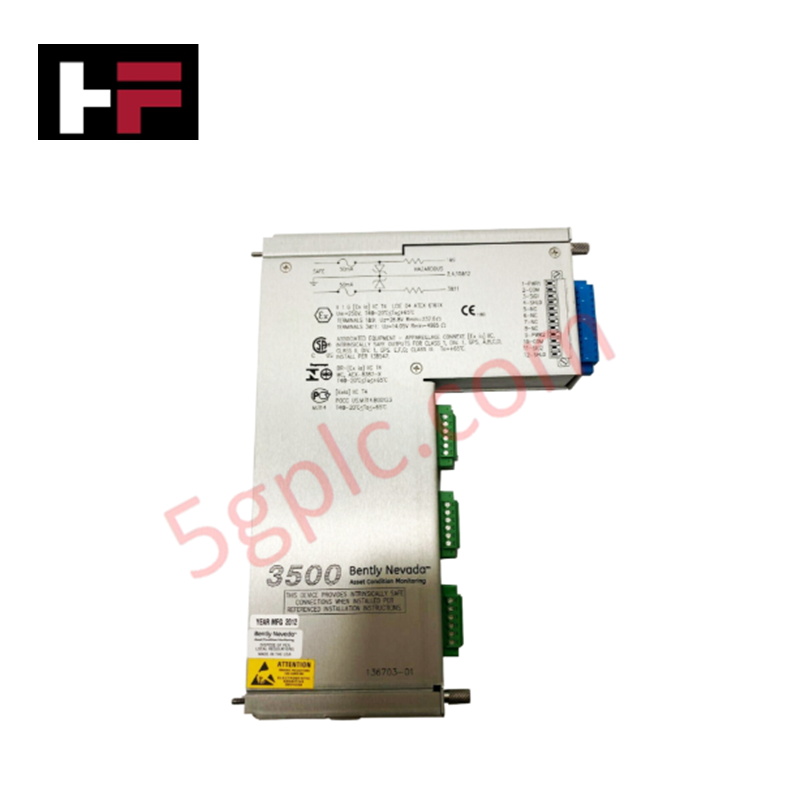
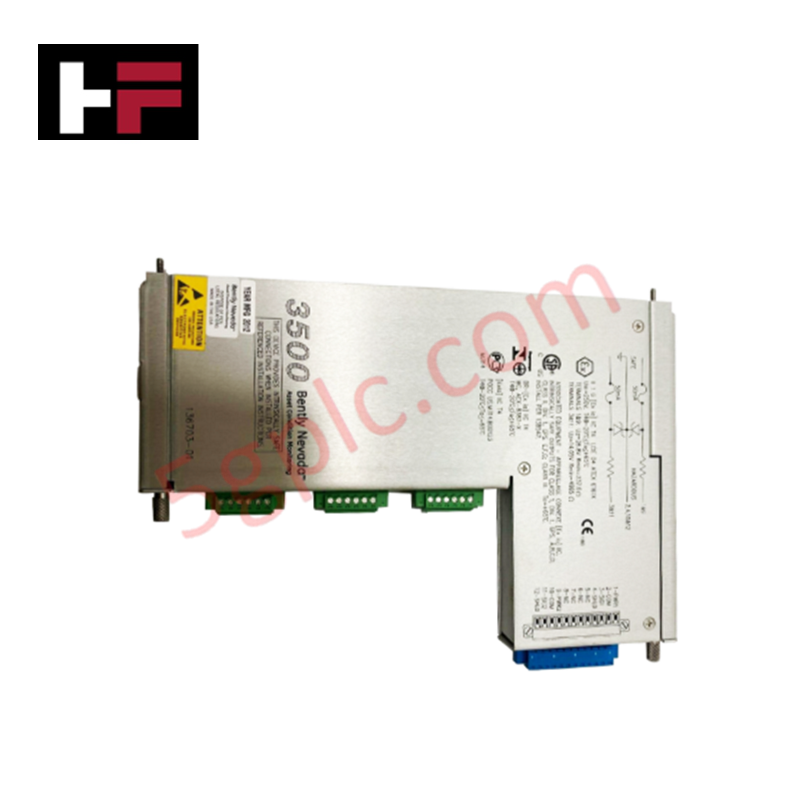
The GE IS220PRTDH1A functions as a high-precision RTD Input I/O Pack specifically engineered for the Mark VIe Distributed Control System. This module interfaces with Resistance Temperature Detectors (RTDs) to provide critical thermal data for turbine bearings, stator windings, and exhaust gases. We supply this unit as 100% Brand New and Original, ensuring your control system utilizes genuine USA-made hardware for mission-critical temperature acquisition. With 8 isolated channels and a broad measurement range, the IS220PRTDH1A maintains superior signal integrity in electrically noisy power generation environments.
Technical Specifications
The IS220PRTDH1A utilizes advanced A/D conversion and reinforced isolation to deliver laboratory-grade accuracy to the industrial floor.
| Feature | Technical Specification |
| Manufacturer | GE (General Electric) |
| Series | Mark VIe |
| Input Channels | 8 Isolated RTD Inputs |
| Sensor Types | PT100 (IEC-751), PT1000 (Optional) |
| Wiring Configuration | 2-, 3-, or 4-wire (Software Selectable) |
| Measurement Range | –200 °C to +850 °C |
| Accuracy | ± 0.1 °C (at 0 °C) |
| Resolution | 0.01 °C |
| Sampling Rate | 10 samples/sec per channel |
| Isolation | Reinforced Channel-to-Channel and Ground |
| Operating Temp | –30 °C to +65 °C |
| Dimensions | 178 × 330 × 160 mm |
Engineering Advantages
-
Reinforced Galvanic Isolation: The module incorporates reinforced isolation between channels and to ground. This architecture prevents ground loops and protects the control network from high-voltage transients, ensuring that a fault on one sensor lead does not compromise the entire I/O rack.
-
Flexible Wiring Topology: Engineers can select 2-, 3-, or 4-wire configurations individually for each channel via software. This flexibility allows the module to compensate for lead-wire resistance automatically, enabling long-distance sensor runs without sacrificing measurement precision.
-
High-Resolution Thermal Tracking: The 0.01 °C resolution and 10 samples/sec sampling rate enable the controller to detect minute thermal trends. This sensitivity facilitates early warning of bearing wear or cooling system inefficiencies before they reach critical alarm thresholds.
-
Rugged Input Protection: Internal overvoltage clamps protect the circuitry against ±35 V surges, while reverse-polarity protection prevents damage during field commissioning. These hardware safeguards minimize the risk of board failure due to accidental miswiring.
-
Optimized Field Connectivity: The right-angle PCB header mates securely with a 52-position pluggable terminal block. This design simplifies maintenance by allowing technicians to replace the I/O pack without disturbing the field wiring, significantly reducing Mean Time to Repair (MTTR).
FAQs
-
Does the IS220PRTDH1A support PT1000 sensors?
Yes. While PT100 is the standard configuration, the module hardware supports PT1000 sensors as an option. You must configure the specific sensor type within the Mark VIe Toolbox software to ensure correct linearization and scaling.
-
Can I mix 3-wire and 4-wire sensors on the same board?
Absolutely. The IS220PRTDH1A allows for independent wiring configuration per channel. This is particularly useful in retrofit applications where existing infrastructure utilizes a mix of different RTD wiring standards.
-
How does the module handle hardware debouncing?
The board utilizes a 4 ms hardware debounce/filter on the inputs. This filter suppresses high-frequency electromagnetic interference (EMI) often generated by nearby motors or high-voltage switchgear, delivering a stabilized signal to the processor.
-
How do I verify that this unit is Brand New?
We deliver every IS220PRTDH1A in its original GE factory-sealed packaging. Each pack features a unique USA-origin serial number and the "H1A" revision label, guaranteeing a genuine, unused component with full factory-spec longevity.
Additional Information
- 100% Genuine Parts: All products are original and authentic, ensuring reliable industrial performance.
- 30-Day Refund Guarantee: Return any in-stock item within 30 days in original, unopened packaging for a full refund (excluding shipping and fees).
- 12-Month Warranty: Covers defects in materials or workmanship; excludes misuse, normal wear, or unauthorized modifications.
- Worldwide Shipping: We ship via USPS, UPS, FedEx, and DHL. Delivery times vary by country and may be subject to customs or import fees.
- Support & Contact: Technical and warranty assistance is available anytime. Contact us here: Contact.
- Purchase Guidance: Check product specifications and compatibility carefully before ordering to ensure proper application.


Tech & Buying Guide

Understanding Types of Noise in Electronic Circuits and Control Systems
Signal integrity directly determines measurement accuracy and loop stability across industrial automation environments. Electronic noise introduces unwanted stochastic interference into analog loops, sensor feedback lines, and digital fieldbus networks. Understanding how intrinsic electronic noise and external electromagnetic interference manifest allows control engineers to optimize signal conditioning and shield sensitive instrumentation effectively.

Why 24V DC Power Supplies Standardize Modern Industrial Automation
Industrial control cabinets worldwide rely on 24V DC as the universal power standard for field instrumentation, sensors, and controllers. Walk into any manufacturing plant, and you will find PLCs, human-machine interfaces (HMIs), and smart actuators running on extra-low voltage DC. Standardizing on 24V DC enhances operational safety, lowers cabinet footprint, and maintains steady control performance across factory networks.

Essential Motion Control Commands: A Practical Guide for Engineers
Automation engineers often rely on precise position and speed control to drive modern factory machinery. Modern industrial systems, such as Programmable Logic Controllers (PLCs) and Distributed Control Systems (DCS), depend heavily on standardized motion instructions. Mastering these commands ensures operational safety, protects mechanical components, and optimizes cycle times across production lines.