












Product Details
Product Overview
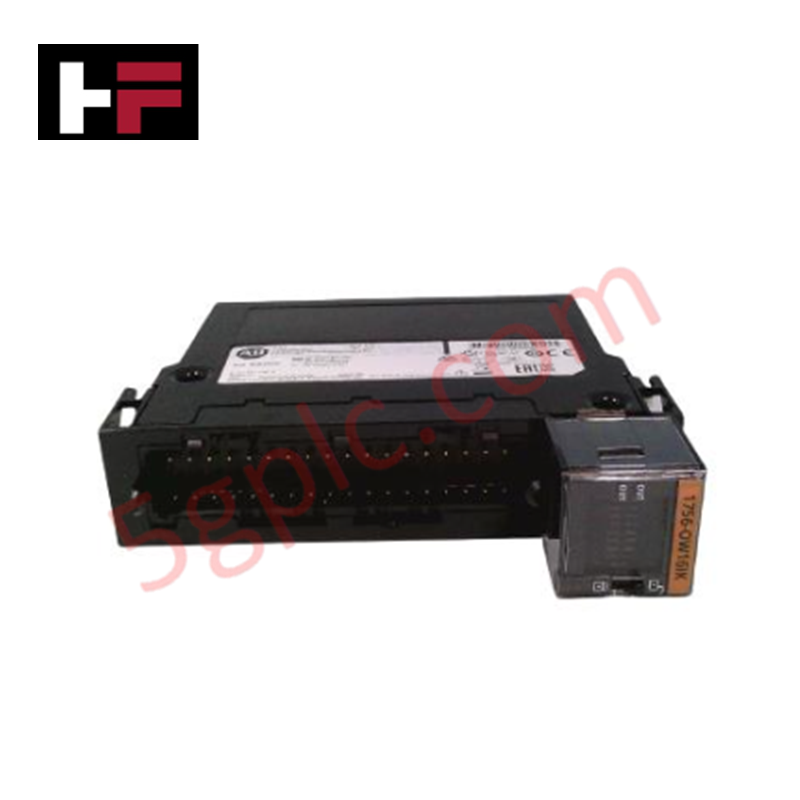
The Allen Bradley 1756-OW16IK serves as a high-density, individually isolated relay output module for the ControlLogix platform. This module provides 16 independent N.O. (Normally Open) contacts, allowing the control system to switch diverse load voltages and polarities within a single chassis slot. The "K" suffix indicates a conformal coating, which protects the internal circuitry from corrosive atmospheric contaminants. We supply this unit as 100% Brand New original factory equipment, ensuring maximum contact life and circuit integrity for your mission-critical switching applications.
Technical Specifications
| Feature | Technical Data |
| Manufacturer | Allen Bradley / Rockwell Automation |
| Module Type | Isolated Relay Output (Conformal Coated) |
| Number of Outputs | 16 Individually Isolated Points |
| Operating Voltage Range | 10–265V AC / 5–150V DC |
| Output Current (Max) | 2A @ 120V AC, 0.5A @ 240V AC, 0.25A @ 150V DC |
| Output Delay Time (Max) | 10 ms (On/Off) |
| Contact Configuration | Normally Open (N.O.) |
| Backplane Current | 150mA @ 5.1V / 150mA @ 24V |
| Power Dissipation | 4.5 Watts @ 60°C |
| Isolation Voltage | 250V (Continuous) |
| Compatible RTB | 1756-TBCH, 1756-TBS6H |
Engineering Advantages
-
Individual Channel Isolation: Each of the 16 outputs maintains electrical isolation from the others. This architecture permits the simultaneous control of multiple voltage sources (e.g., mixing 120V AC and 24V DC) on one module, eliminating the need for interposing relays and reducing panel space requirements.
-
Conformal Coating (K-Suffix): The specialized protective coating shields the PCB from moisture, salt spray, and chemical vapors. This makes the 1756-OW16IK the ideal choice for wastewater treatment, oil and gas, and chemical processing facilities where standard modules might suffer from premature corrosion.
-
Broad Voltage Versatility: This module switches a wide operating range, from low-voltage 5V DC logic up to 265V AC power circuits. The relays handle diverse loads including solenoids, motor starters, and indicators, providing a universal interface for field devices.
-
Integrated Diagnostics: The module reports field-side power status and point-level state to the controller. This real-time feedback accelerates troubleshooting by identifying blown fuses or power losses directly through the Studio 5000 software interface.
FAQs
-
Can the 1756-OW16IK replace a standard 1756-OW16I module?
Yes. The 1756-OW16IK functions exactly like the 1756-OW16I but adds conformal coating for environmental protection. It utilizes the same profile in Studio 5000, allowing for a direct physical and logical drop-in replacement.
-
Which Removable Terminal Block (RTB) should I use?
This module requires a 36-pin RTB. You can use the 1756-TBCH (Cage Clamp) for secure manual wiring or the 1756-TBS6H (Spring Clamp) for high-vibration environments where screw-less termination is preferred.
-
Does this module support "Normally Closed" (N.C.) configurations?
The 1756-OW16IK provides Normally Open (N.O.) contacts only. If your application requires N.C. logic, you must handle the inversion within the PLC ladder logic or utilize an external interposing relay.
-
What is the condition of this hardware?
Every 1756-OW16IK we ship is 100% Brand New, original, and remains in its factory-sealed Allen Bradley packaging. We do not sell refurbished or surplus used equipment.
Additional Information
- 100% Genuine Parts: All products are original and authentic, ensuring reliable industrial performance.
- 30-Day Refund Guarantee: Return any in-stock item within 30 days in original, unopened packaging for a full refund (excluding shipping and fees).
- 12-Month Warranty: Covers defects in materials or workmanship; excludes misuse, normal wear, or unauthorized modifications.
- Worldwide Shipping: We ship via USPS, UPS, FedEx, and DHL. Delivery times vary by country and may be subject to customs or import fees.
- Support & Contact: Technical and warranty assistance is available anytime. Contact us here: Contact.
- Purchase Guidance: Check product specifications and compatibility carefully before ordering to ensure proper application.


Tech & Buying Guide

Understanding Types of Noise in Electronic Circuits and Control Systems
Signal integrity directly determines measurement accuracy and loop stability across industrial automation environments. Electronic noise introduces unwanted stochastic interference into analog loops, sensor feedback lines, and digital fieldbus networks. Understanding how intrinsic electronic noise and external electromagnetic interference manifest allows control engineers to optimize signal conditioning and shield sensitive instrumentation effectively.

Why 24V DC Power Supplies Standardize Modern Industrial Automation
Industrial control cabinets worldwide rely on 24V DC as the universal power standard for field instrumentation, sensors, and controllers. Walk into any manufacturing plant, and you will find PLCs, human-machine interfaces (HMIs), and smart actuators running on extra-low voltage DC. Standardizing on 24V DC enhances operational safety, lowers cabinet footprint, and maintains steady control performance across factory networks.

Essential Motion Control Commands: A Practical Guide for Engineers
Automation engineers often rely on precise position and speed control to drive modern factory machinery. Modern industrial systems, such as Programmable Logic Controllers (PLCs) and Distributed Control Systems (DCS), depend heavily on standardized motion instructions. Mastering these commands ensures operational safety, protects mechanical components, and optimizes cycle times across production lines.