












Product Details
Product Overview
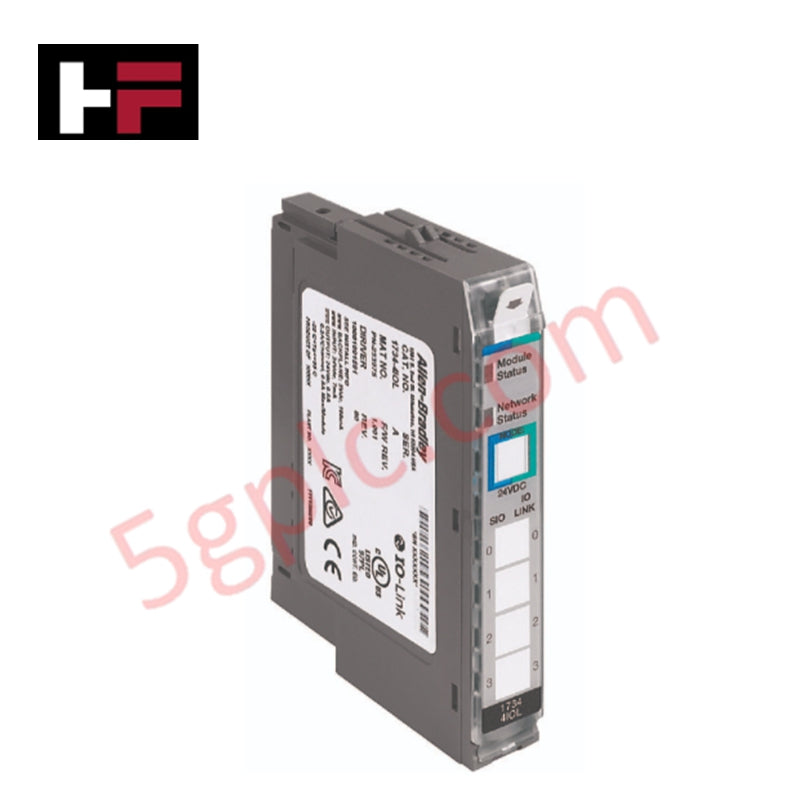
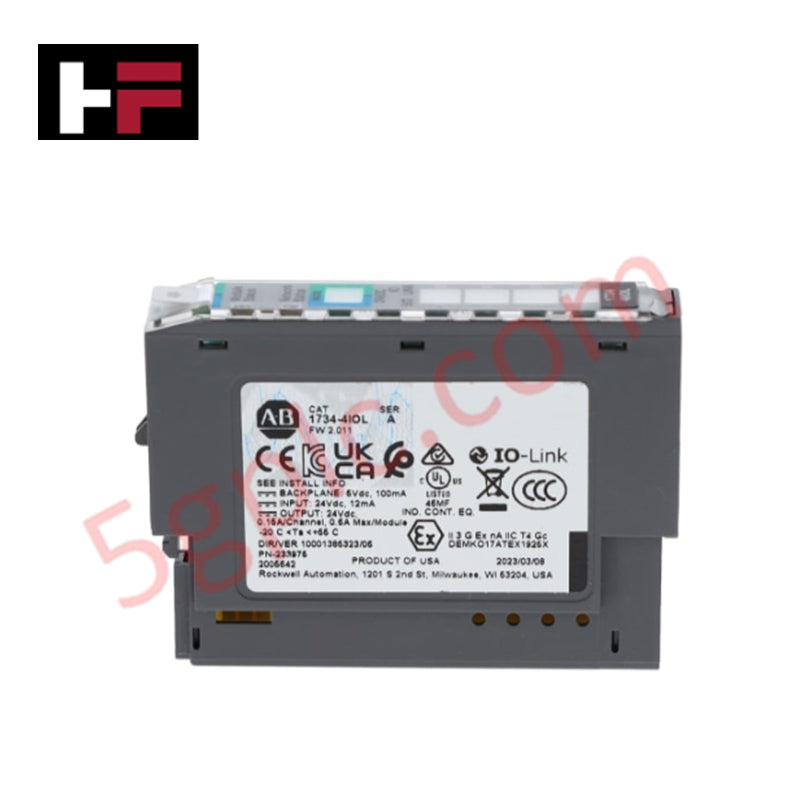
The Allen Bradley 1734-4IOL serves as a high-performance IO-Link master module within the POINT I/O family. This module bridges the gap between the controller and smart field devices, providing four dedicated channels for bidirectional communication. It enables users to harness advanced diagnostics and parameterization at the sensor/actuator level. We provide this unit as 100% Brand New and Original, ensuring seamless integration into your EtherNet/IP or DeviceNet distributed I/O architecture.
Technical Specifications
The 1734-4IOL provides digitized field data and robust power distribution for smart factory applications:
| Feature | Specification |
| Manufacturer | Allen Bradley |
| Product Line | POINT I/O (1734) |
| Module Type | IO-Link Master |
| Number of Channels | 4 Channels |
| Input Power | 24V DC |
| Communication Protocol | IO-Link (Point-to-Point) |
| Data Handling | Cyclic and Acyclic Data Support |
| Mounting Orientation | Horizontal or Vertical |
| Weight | 0.26 lbs (0.12 kg) |
| Terminal Base Compatibility | 1734-TB, 1734-TBS, 1734-TOP |
Engineering Advantages
The 1734-4IOL addresses the critical requirements of Industry 4.0 and complex machine diagnostics:
-
Real-Time Device Health Monitoring: This module extracts comprehensive diagnostic data from IO-Link enabled sensors. It detects conditions like lens soiling or internal temperature spikes before a failure occurs, shifting maintenance from reactive to predictive.
-
Automatic Device Configuration (ADC): The 1734-4IOL stores the configuration parameters of connected sensors. When a technician replaces a damaged sensor, the master module automatically downloads the settings to the new device, eliminating manual setup errors and reducing downtime.
-
Advanced Wiring Simplification: The module utilizes standard 3-wire unshielded cables for intelligent communication. This replaces expensive specialized cables and reduces the overall complexity and cost of the control cabinet wiring.
-
Granular Process Insights: Beyond simple On/Off signals, the 1734-4IOL transmits precise process values (such as exact distance measurements or pressure levels) as digital data, preventing signal degradation caused by electromagnetic interference (EMI) in analog circuits.
FAQs
-
Can I use standard digital sensors with the 1734-4IOL?
Yes. Each channel on the 1734-4IOL supports standard I/O (SIO) mode. You can connect traditional 24V DC digital sensors to any channel, providing a flexible migration path from standard I/O to smart IO-Link technology.
-
Which terminal base is best for the 1734-4IOL?
We recommend the 1734-TB or 1734-TBS base. Ensure you utilize the 8-terminal configuration to provide adequate power distribution for both the module electronics and the connected field devices.
-
Does this module support "Removal and Insertion Under Power" (RIUP)?
Yes. Like other POINT I/O modules, the 1734-4IOL allows for replacement while the rest of the system remains operational. This feature is critical for continuous process industries where shutting down the entire I/O rack is not an option.
-
How does the 1734-4IOL handle power to the sensors?
The module draws 24V DC from the POINT I/O backplane power bus. It distributes this power to the connected IO-Link devices through the L+ and L- pins, supporting up to the maximum rated current per port as specified in the technical manual.
Additional Information
- 100% Genuine Parts: All products are original and authentic, ensuring reliable industrial performance.
- 30-Day Refund Guarantee: Return any in-stock item within 30 days in original, unopened packaging for a full refund (excluding shipping and fees).
- 12-Month Warranty: Covers defects in materials or workmanship; excludes misuse, normal wear, or unauthorized modifications.
- Worldwide Shipping: We ship via USPS, UPS, FedEx, and DHL. Delivery times vary by country and may be subject to customs or import fees.
- Support & Contact: Technical and warranty assistance is available anytime. Contact us here: Contact.
- Purchase Guidance: Check product specifications and compatibility carefully before ordering to ensure proper application.


Tech & Buying Guide
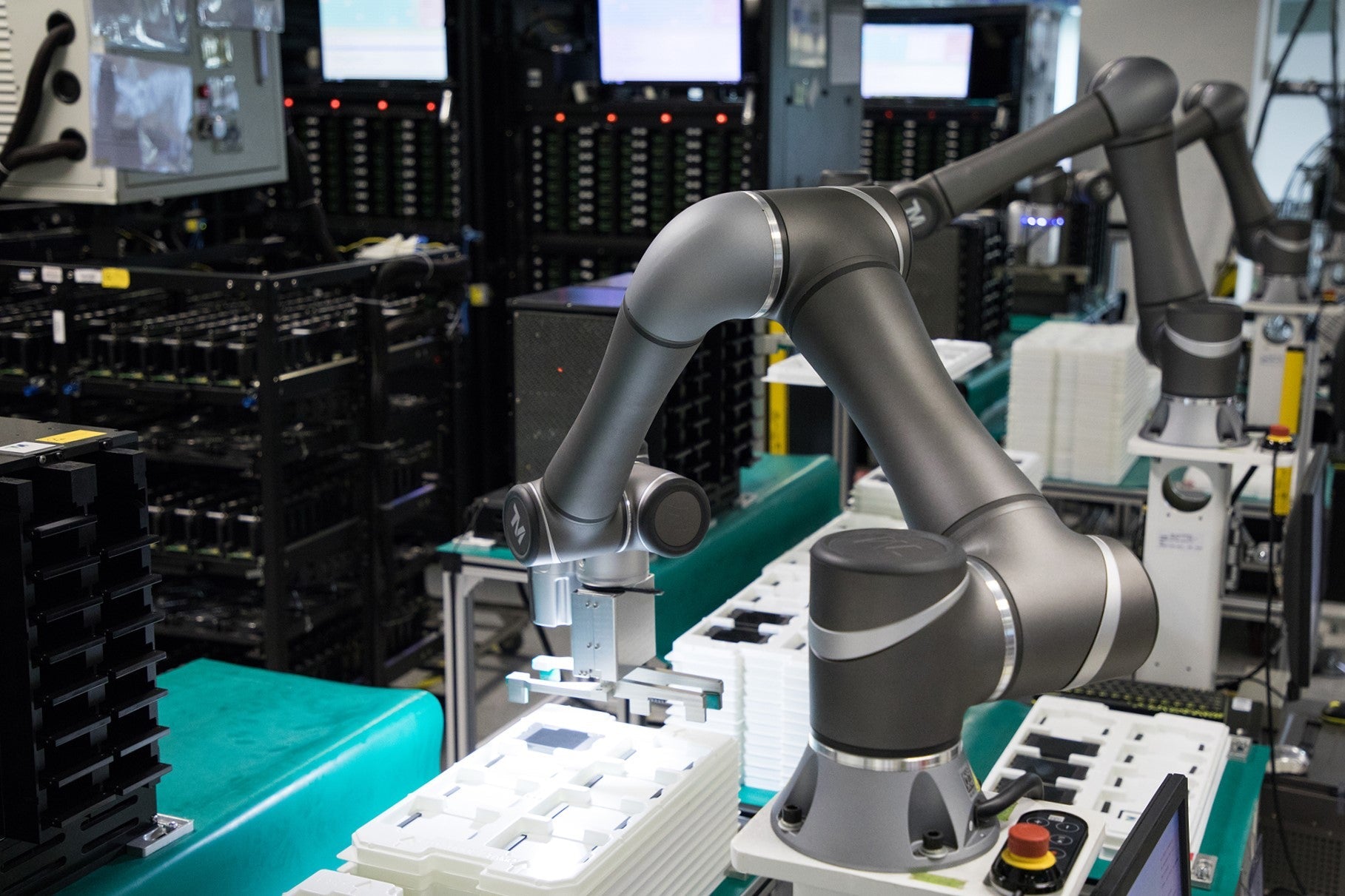
Redundant Automation Systems: Ensuring Continuous Uptime in Critical Control Infrastructure
System reliability directly determines operational profitability across high stakes process industries. Modern industrial automation platforms must eliminate single points of failure to prevent catastrophic shutdowns. Deploying fault tolerant architecture safeguards complex facilities against unexpected hardware glitches, network disruptions, and maintenance outages.

Understanding Types of Noise in Electronic Circuits and Control Systems
Signal integrity directly determines measurement accuracy and loop stability across industrial automation environments. Electronic noise introduces unwanted stochastic interference into analog loops, sensor feedback lines, and digital fieldbus networks. Understanding how intrinsic electronic noise and external electromagnetic interference manifest allows control engineers to optimize signal conditioning and shield sensitive instrumentation effectively.

Why 24V DC Power Supplies Standardize Modern Industrial Automation
Industrial control cabinets worldwide rely on 24V DC as the universal power standard for field instrumentation, sensors, and controllers. Walk into any manufacturing plant, and you will find PLCs, human-machine interfaces (HMIs), and smart actuators running on extra-low voltage DC. Standardizing on 24V DC enhances operational safety, lowers cabinet footprint, and maintains steady control performance across factory networks.