












Product Details
Product Overview
The Allen-Bradley 1734-485ASC serves as a specialized character-based serial interface within the POINT I/O family. It bridges the gap between RS-422/RS-485 peripheral devices and the Logix control architecture. This module enables the PLC to send and receive ASCII strings to and from devices such as barcode scanners, weigh scales, and vision sensors. We supply this unit as 100% Brand New and Original, ensuring your distributed I/O system maintains precise data synchronization and serial timing without the risks associated with used or refurbished hardware.
Technical Specifications
The 1734-485ASC utilizes the compact POINT I/O backplane to deliver efficient serial-to-network data conversion.
-
Manufacturer: Allen-Bradley / Rockwell Automation
-
Product Line: POINT I/O (1734)
-
Serial Standards: RS-422 and RS-485
-
Communication Type: ASCII (Character-based)
-
Default Buffer Size: 20 bytes Tx / 20 bytes Rx
-
Buffer Configuration: User-configurable via software
-
Terminator Support: End-of-string character detection
-
Grounding: DIN rail grounded
-
Terminal Interface: Uses 1734-TB or 1734-TBS Removable Terminal Base
-
Network Integration: Connects via POINT I/O adapter (EtherNet/IP, ControlNet, or DeviceNet)
-
Weight: 0.13 lbs (0.06 kg)
Engineering Advantages
-
Seamless ASCII String Management: The module handles character-based messaging natively. This offloads the intensive task of bit-level serial parsing from the main controller CPU, allowing the PLC to focus on primary logic execution while the 1734-485ASC manages the serial buffer.
-
Flexible Buffer Configuration: While the module defaults to a 20-byte buffer, engineers can adjust the Tx/Rx sizes to match the specific data packet requirements of the field device. This flexibility prevents data truncation and ensures the successful transmission of long ASCII strings common in labeling and tracking systems.
-
Advanced Noise Immunity: By supporting RS-422 and RS-485 differential signals over shielded cabling, the 1734-485ASC operates reliably in high-EMI environments. The DIN rail grounding method provides a low-impedance path for electrical noise, protecting the serial data stream from distortion.
-
Modular Maintenance Efficiency: The module snaps onto a removable terminal base (RTB). This allows maintenance teams to replace the electronics without disconnecting any field wiring, significantly reducing the Mean Time to Repair (MTTR) during scheduled or emergency maintenance.
-
Intelligent String Termination: The module supports "End-of-string" terminators. It automatically identifies the end of a message based on a user-defined character, ensuring the controller receives a complete and clean data packet for immediate processing.
FAQs
-
Can I use the 1734-485ASC for Modbus RTU communication? No. The 1734-485ASC specifically supports character-based ASCII messaging. Modbus RTU requires a different protocol handler (such as the 1734-232ASC or a dedicated ProSoft module) that supports binary data frames and CRC error checking.
-
Does this module require a specific terminal base? Yes. You must install the 1734-485ASC onto a 1734-TB or 1734-TBS terminal base. Note that the terminal base is a separate component and does not ship with the module.
-
How do I configure the baud rate and parity settings? You configure all serial parameters—including baud rate, parity, stop bits, and data bits—within the Studio 5000 (Logix Designer) I/O configuration profile for the module. Changes take effect as soon as you download the configuration to the controller.
-
Is this a genuine, factory-original unit? We guarantee that every 1734-485ASC we provide is 100% Brand New and Original. It ships in factory-sealed packaging with the original UPC (612598302352) intact, ensuring you receive the full industrial lifespan and performance specified by Allen-Bradley.
Additional Information
- 100% Genuine Parts: All products are original and authentic, ensuring reliable industrial performance.
- 30-Day Refund Guarantee: Return any in-stock item within 30 days in original, unopened packaging for a full refund (excluding shipping and fees).
- 12-Month Warranty: Covers defects in materials or workmanship; excludes misuse, normal wear, or unauthorized modifications.
- Worldwide Shipping: We ship via USPS, UPS, FedEx, and DHL. Delivery times vary by country and may be subject to customs or import fees.
- Support & Contact: Technical and warranty assistance is available anytime. Contact us here: Contact.
- Purchase Guidance: Check product specifications and compatibility carefully before ordering to ensure proper application.


Tech & Buying Guide
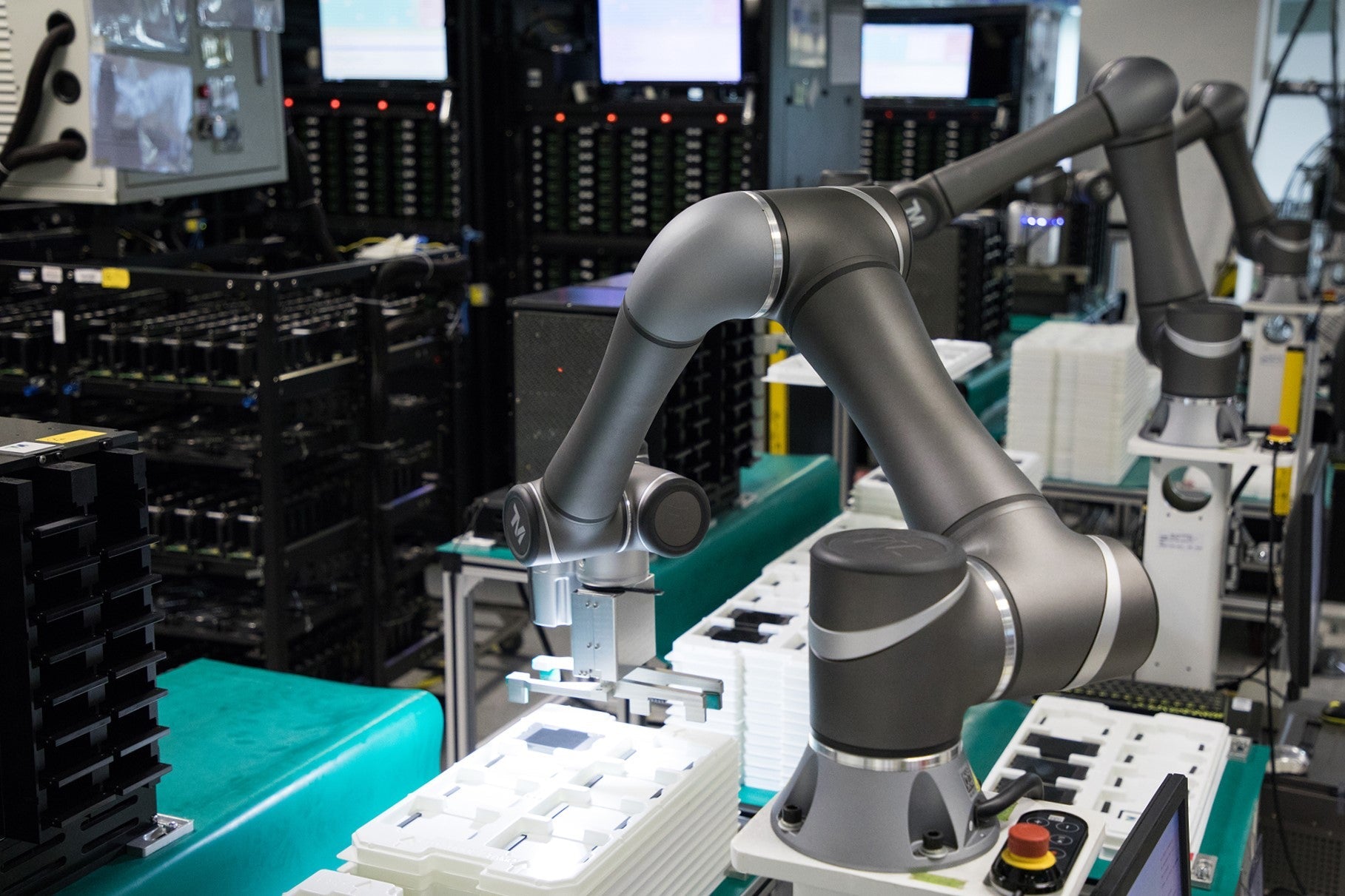
Redundant Automation Systems: Ensuring Continuous Uptime in Critical Control Infrastructure
System reliability directly determines operational profitability across high stakes process industries. Modern industrial automation platforms must eliminate single points of failure to prevent catastrophic shutdowns. Deploying fault tolerant architecture safeguards complex facilities against unexpected hardware glitches, network disruptions, and maintenance outages.

Understanding Types of Noise in Electronic Circuits and Control Systems
Signal integrity directly determines measurement accuracy and loop stability across industrial automation environments. Electronic noise introduces unwanted stochastic interference into analog loops, sensor feedback lines, and digital fieldbus networks. Understanding how intrinsic electronic noise and external electromagnetic interference manifest allows control engineers to optimize signal conditioning and shield sensitive instrumentation effectively.

Why 24V DC Power Supplies Standardize Modern Industrial Automation
Industrial control cabinets worldwide rely on 24V DC as the universal power standard for field instrumentation, sensors, and controllers. Walk into any manufacturing plant, and you will find PLCs, human-machine interfaces (HMIs), and smart actuators running on extra-low voltage DC. Standardizing on 24V DC enhances operational safety, lowers cabinet footprint, and maintains steady control performance across factory networks.