












Product Details
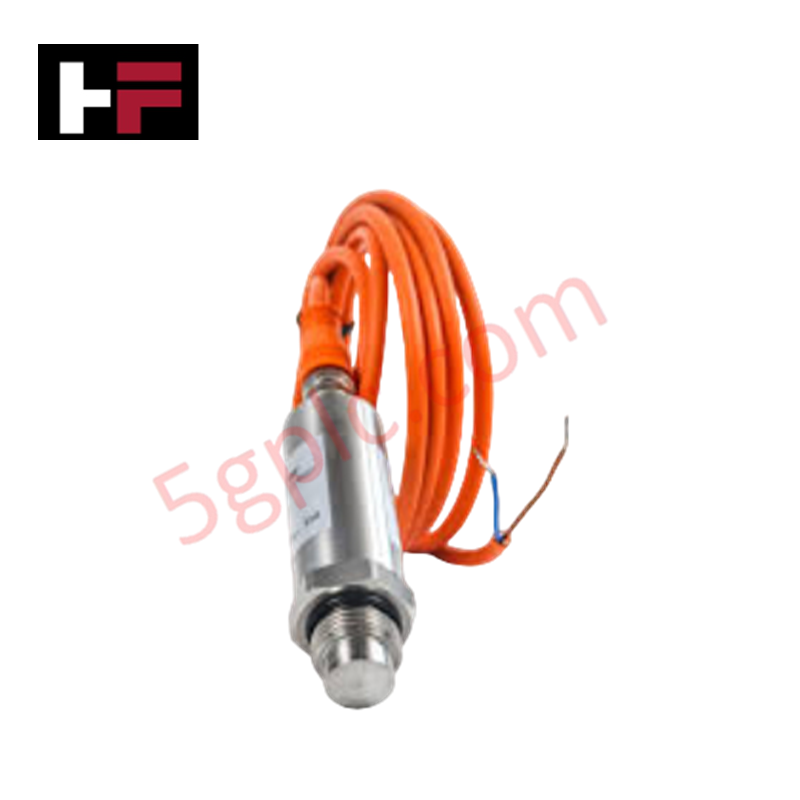
Configured for combustion monitoring in burner management systems, the Honeywell LG1093AA04 (LG1093AA04 Ultraviolet Flame Sensor) provides direct physical execution of flame detection via UV spectroscopy. The sensor serves as the primary detection element utilized to execute rapid flame monitoring across industrial furnace and boiler platforms.
Hardware Specifications
| Parameter | Specification |
|---|---|
| Model | LG1093AA04 |
| Brand | Honeywell |
| Operating Temp | -40 to 85 deg C |
| Power Consumption | 10 mA at 24 VDC |
| Detection Range | 0 to 762 mm |
| Response Time | < 10 ms |
| IP Rating | IP65 |
TSI Mechanical Monitoring and Signal Validation
The LG1093AA04 employs UV spectroscopy to isolate the specific spectral signatures emitted during combustion, facilitating high-speed flame discrimination. By maintaining a high sensitivity of 0.5 uA/mW, the sensor effectively filters out ambient light interference to ensure distinct flame state reporting. The internal circuitry utilizes cross-talk suppression to maintain signal integrity when multiple sensors are mounted in close proximity within a multi-burner array. The output stage provides a binary open/grounded signal, which must be validated against the controller's logic thresholds to confirm valid flame presence within the combustion chamber.
Frequently Asked Questions
Q: Can the LG1093AA04 be used in high-vibration environments?
A: Yes, the sensor is constructed for industrial service. However, ensure that the M12 connector is properly secured and that shielded cabling is used to prevent induced noise in the signal line, which could be misinterpreted as flame flicker or loss.
Q: Is the sensor output signal compatible with standard PLC digital input cards?
A: The sensor provides an open/grounded output. Verify that the input module is configured to match the voltage level and logic state (sink/source) of the sensor output to ensure correct detection of the flame/no-flame status.
Field Installation Guidelines
- Ensure the mounting position provides a direct line-of-sight to the flame root, within the 762 mm maximum detection range.
- Install the sensor using the provided M12 connector, ensuring the cable is routed away from high-voltage ignition sources to avoid EMI interference.
- Verify the IP65 seal by tightening the connector and inspecting the enclosure for debris or damage that could compromise environmental protection.
- Perform an initial flame-on/flame-off test to verify that the controller correctly maps the sensor's open/grounded signal transitions to the burner management logic.
- Periodically inspect the optical lens for soot accumulation, as surface fouling will reduce spectral sensitivity and may lead to false-negative flame loss indications.
Additional Information
- 100% Genuine Parts: All products are original and authentic, ensuring reliable industrial performance.
- 30-Day Refund Guarantee: Return any in-stock item within 30 days in original, unopened packaging for a full refund (excluding shipping and fees).
- 12-Month Warranty: Covers defects in materials or workmanship; excludes misuse, normal wear, or unauthorized modifications.
- Worldwide Shipping: We ship via USPS, UPS, FedEx, and DHL. Delivery times vary by country and may be subject to customs or import fees.
- Support & Contact: Technical and warranty assistance is available anytime. Contact us here: Contact.
- Purchase Guidance: Check product specifications and compatibility carefully before ordering to ensure proper application.
Tech & Buying Guide

Transforming Shop Floor Data into Actionable Insights: A Deep Dive into MES
Manufacturing Execution Systems serve as the digital backbone of modern factory floors. Positioned at Level 3 of the ISA-95 automation pyramid, MES links enterprise resource planning with real-time shop floor control systems. Today, industrial operators rely on MES software to bridge operational strategy with physical production execution.
Managed Switch vs. Unmanaged Switch: Industrial Ethernet Architecture

Hot Standby vs. Cold Standby Redundancy in Industrial Automation
System availability determines process safety and productivity in industrial automation. Control engineers deploy redundancy to eliminate single points of failure. This technical guide evaluates Hot Standby vs. Cold Standby architectures, comparing failover speeds, memory sync, cost trade-offs, and field selection criteria.