










Product Details
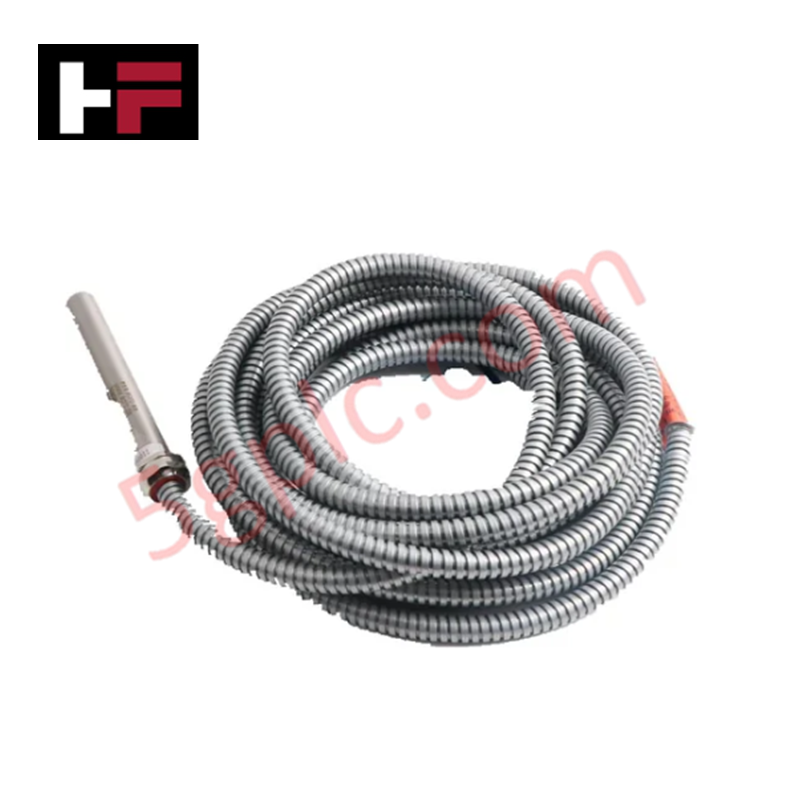
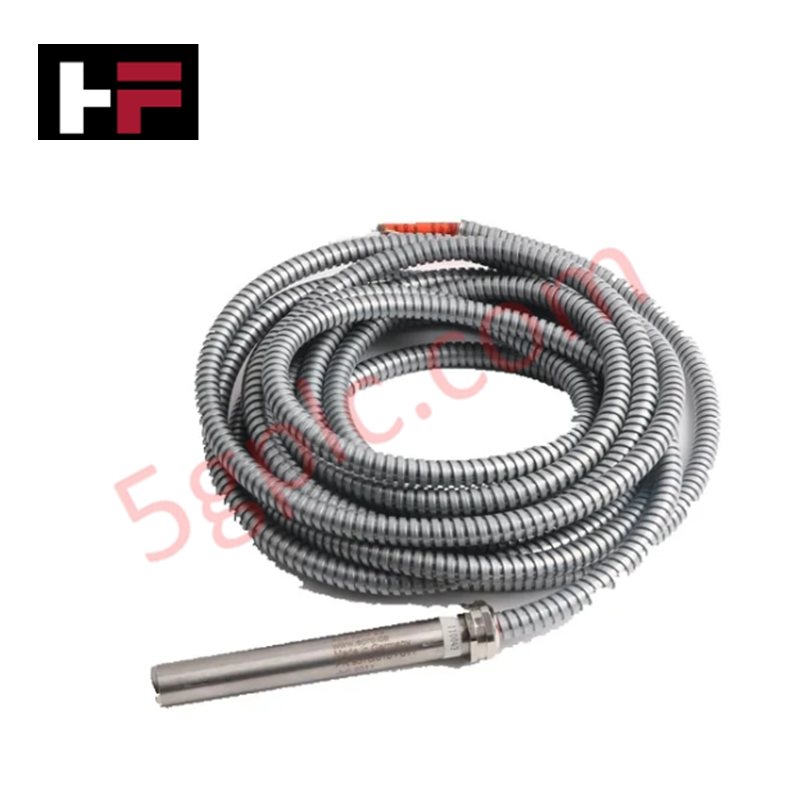
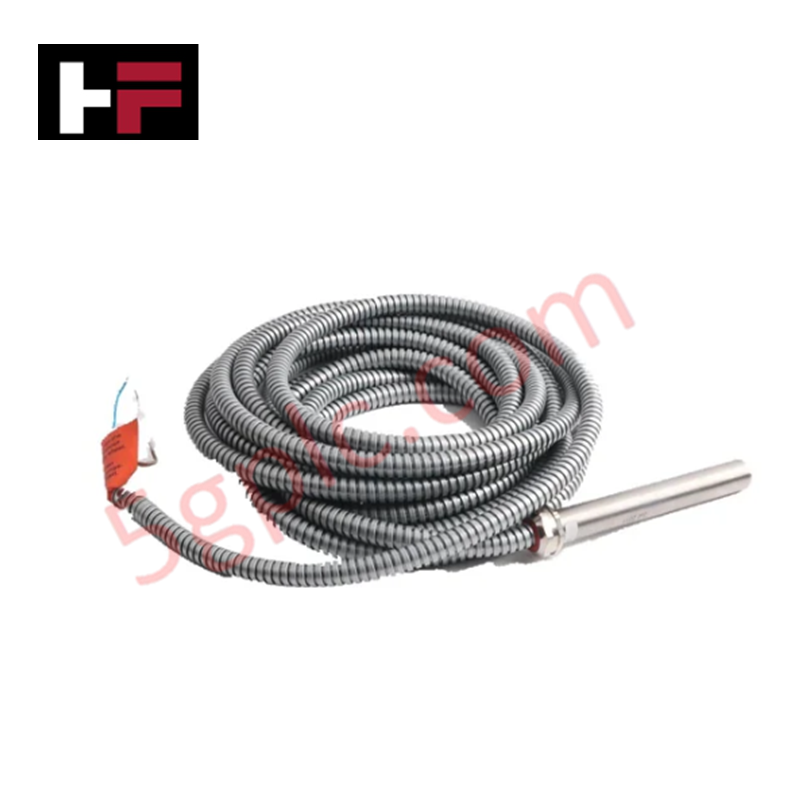
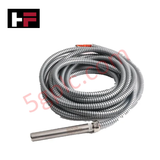
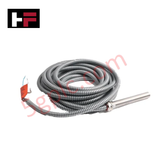
Configured for vibration monitoring in rotating machinery, the Emerson EPRO PR9268/302-100 (PR9268/302-100) Electrodynamic Velocity Sensor provides direct physical execution of seismic vibration signal acquisition.
Suffix Breakdown & Model Matrix
| Model Suffix | Orientation | Sensitivity | Frequency Range |
|---|---|---|---|
| PR9268/01x-x00 | Omni Directional | 17.5 mV/mm/s | 14-1000 Hz |
| PR9268/20x-x00 | Vertical +/- 60 deg | 28.5 mV/mm/s | 4-1000 Hz |
| PR9268/30x-x00 | Horizontal +/- 30 deg | 28.5 mV/mm/s | 4-1000 Hz |
| PR9268/60x-000 | Vertical +/- 30/60 deg | 22.0 mV/mm/s | 10-1000 Hz |
| PR9268/70x-000 | Horizontal +/- 10/30 deg | 22.0 mV/mm/s | 10-1000 Hz |
Hardware Specifications
| Parameter | Specification |
|---|---|
| Model | PR9268/302-100 |
| Brand | Emerson EPRO |
| Operating Temp | Standard industrial range |
| Power Consumption | Passive (no external power) |
| Sensitivity | 28.5 mV/mm/s |
| Max Acceleration | 10 g (continuous), 20 g (intermittent) |
Process Control and DCS Connectivity
The PR9268 series sensors are designed for integration with process control systems utilizing 4-20 mA HART loop protocol standards for long-distance signal transmission. To ensure measurement integrity, channel-to-channel isolation must be maintained within the input interface of the monitoring system to prevent ground loops that could introduce signal drift. Cold junction compensation (CJC) is not required for these electrodynamic components; however, impedance matching between the sensor's coil and the signal conditioner is necessary to ensure the frequency response remains within the rated 4-1000 Hz window.
Frequently Asked Questions
Q: Does the orientation affect the sensitivity of the sensor?
A: Yes. Electrodynamic sensors utilize a mass-spring system where the natural frequency is dependent on gravity. Installing the sensor outside the specified orientation range (e.g., +/- 30 deg for the PR9268/30x-x00) will result in measurement errors and potential damage to the internal suspension mechanism.
Q: Can this sensor be used in areas with high-intensity electromagnetic interference?
A: Electrodynamic sensors generate an output signal via coil induction. While they are resilient, utilize shielded twisted-pair cabling and ensure the shield is grounded at the signal conditioner input to minimize induced noise in industrial environments.
Field Installation Guidelines
- Mount the sensor on a machined, flat surface on the machinery casing to ensure high-frequency coupling.
- Verify the orientation of the sensor matches the suffix requirement (e.g., horizontal for PR9268/30x-x00); incorrect mounting angle will shift the natural frequency and distort the vibration amplitude.
- Torque the mounting stud/bolt to the manufacturer's recommendation to prevent structural resonance between the sensor and machine casing.
- Route cabling away from high-power AC lines to prevent magnetic induction into the velocity coil circuit.
- Perform a bump test or verify baseline vibration levels during initial startup to confirm that the sensor is within its dynamic range and that the signal conditioner is correctly calibrated to the 28.5 mV/mm/s sensitivity.
Additional Information
- 100% Genuine Parts: All products are original and authentic, ensuring reliable industrial performance.
- 30-Day Refund Guarantee: Return any in-stock item within 30 days in original, unopened packaging for a full refund (excluding shipping and fees).
- 12-Month Warranty: Covers defects in materials or workmanship; excludes misuse, normal wear, or unauthorized modifications.
- Worldwide Shipping: We ship via USPS, UPS, FedEx, and DHL. Delivery times vary by country and may be subject to customs or import fees.
- Support & Contact: Technical and warranty assistance is available anytime. Contact us here: Contact.
- Purchase Guidance: Check product specifications and compatibility carefully before ordering to ensure proper application.

Tech & Buying Guide

Master Acceptance Testing: Understanding FAT and SAT in Industrial Control Systems
Factory Acceptance Testing (FAT) and Site Acceptance Testing (SAT) serve as critical quality assurance gateways in complex industrial control systems. Both procedures verify that programmable logic controllers (PLCs), distributed control systems (DCS), and associated field devices meet strict functional specifications. However, executing these tests effectively requires clear delineation between off-site staging and final field commissioning.

Industrial Networking Essentials: Demystifying Hubs, Switches, and Routers in Control Systems
Industrial automation relies heavily on robust networking infrastructure to connect programmable logic controllers (PLCs), distributed control systems (DCS), and human-machine interfaces (HMIs). Modern factory automation environments generate vast amounts of real-time operational data across deterministic networks. Understanding the structural differences between hubs, switches, and routers ensures optimal traffic segmentation, minimizes latency, and maintains high network availability.

Safety Relays in Industrial Automation: Fundamentals, Design Standards, and Fail-Safe Architecture
Safety relays form the bedrock of functional safety in modern factory automation, preventing catastrophic equipment failure and protecting plant personnel. While standard electromechanical relays handle basic load switching, they lack the redundant diagnostics required for high-risk industrial environments. Modern industrial automation platforms—including programmable logic controllers (PLCs) and distributed control systems (DCS)—rely on specialized safety relays to monitor field devices and isolate hazards instantly.