












Product Details
Module Performance and Architecture
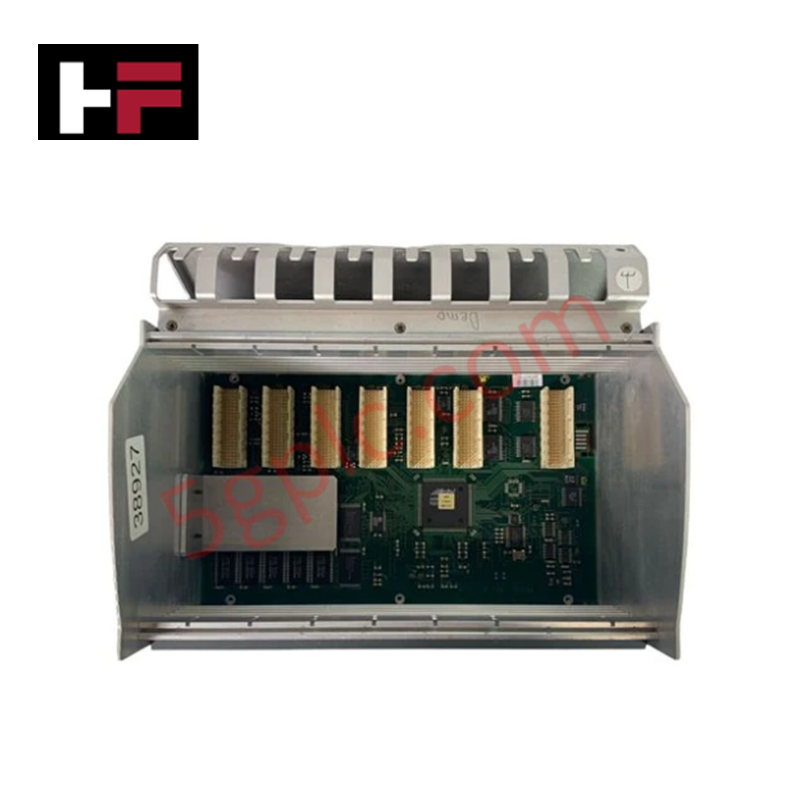
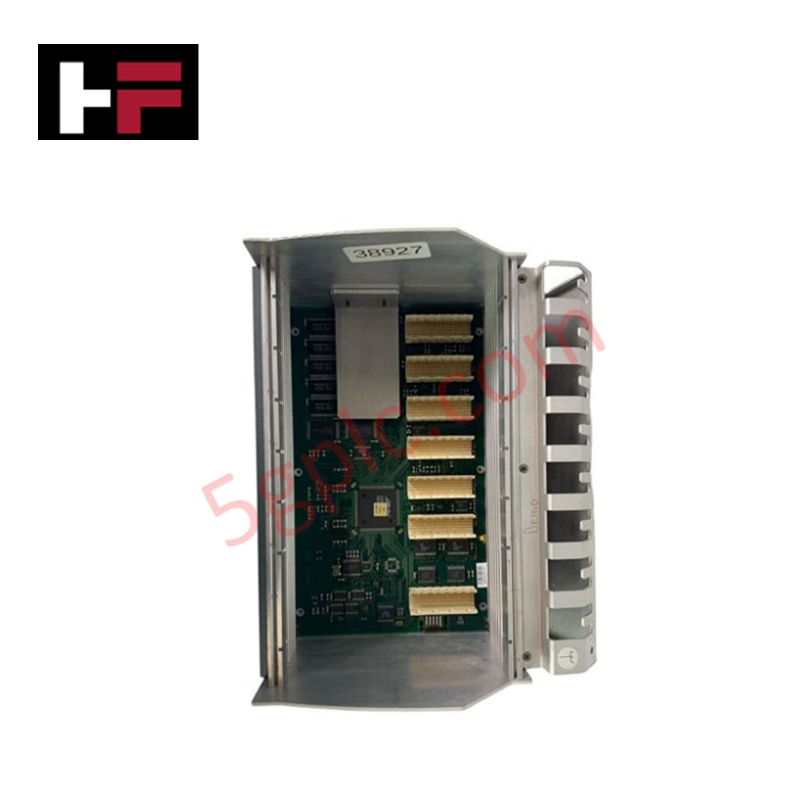
The F 8620/11 (Part Number F-8620/11) is the high-integrity computational core designed for HIMA H41q and H51q safety systems. As a central processing unit, it executes complex safety-instrumented functions (SIF) with a focus on deterministic logic solving. The module is engineered for SIL 3 safety environments, utilizing a 1oo2D internal diagnostic structure to ensure that all processing tasks are validated in real-time before output commands are committed to the field.
Detailed Hardware Specifications
-
Model Identification: F 8620/11
-
Part Number: F-8620/11
-
Microprocessor: Dual 32-bit RISC safety processors
-
Clock Frequency: 50 MHz
-
Memory Capacity: 1 MB Flash EPROM / 1 MB SRAM
-
Logic Execution Time: 0.05 ms per 1K instructions
-
Backplane Supply Voltage: 5.0 VDC ± 5%
-
Current Consumption: 1.2 A at 5 VDC
-
Communication Interface: Integrated system bus for I/O and peer-to-peer links
-
Diagnostics Display: Front-facing alphanumeric LED status array
-
Safety Integrity Level: SIL 3 (IEC 61508) / AK 6 (DIN V 19250)
-
Heat Dissipation: Max 6.0 W
-
Operating Temperature: 0 to +60°C
-
Storage Temperature: -40 to +85°C
-
Physical Weight: 0.5 kg (1.10 lbs)
System Integration and Safety Logic
The F8620/11 handles the central arbitration of all safety data. It operates by cyclically scanning inputs, executing the user-defined logic, and updating outputs via the HIMA system bus. To ensure maximum reliability, the module performs continuous self-tests on its ALUs, registers, and memory sectors. In high-availability configurations, two F 8620/11 modules are utilized in parallel, allowing the system to tolerate a single hardware failure without tripping the process, provided the redundant partner is healthy.
Technical FAQ
What is the maximum program size supported by the F 8620/11?The module supports user programs up to 1 MB in size, which is sufficient for large-scale ESD or BMS applications involving several hundred I/O points.
How does the F 8620/11 handle memory errors?The CPU utilizes Error Correction Code (ECC) and parity checks. If a non-recoverable memory fault is detected, the F-8620/11 triggers a fail-safe shutdown of the CPU to prevent erratic logic execution.
Additional Information
- 100% Genuine Parts: All products are original and authentic, ensuring reliable industrial performance.
- 30-Day Refund Guarantee: Return any in-stock item within 30 days in original, unopened packaging for a full refund (excluding shipping and fees).
- 12-Month Warranty: Covers defects in materials or workmanship; excludes misuse, normal wear, or unauthorized modifications.
- Worldwide Shipping: We ship via USPS, UPS, FedEx, and DHL. Delivery times vary by country and may be subject to customs or import fees.
- Support & Contact: Technical and warranty assistance is available anytime. Contact us here: Contact.
- Purchase Guidance: Check product specifications and compatibility carefully before ordering to ensure proper application.


Tech & Buying Guide

Understanding Types of Noise in Electronic Circuits and Control Systems
Signal integrity directly determines measurement accuracy and loop stability across industrial automation environments. Electronic noise introduces unwanted stochastic interference into analog loops, sensor feedback lines, and digital fieldbus networks. Understanding how intrinsic electronic noise and external electromagnetic interference manifest allows control engineers to optimize signal conditioning and shield sensitive instrumentation effectively.

Why 24V DC Power Supplies Standardize Modern Industrial Automation
Industrial control cabinets worldwide rely on 24V DC as the universal power standard for field instrumentation, sensors, and controllers. Walk into any manufacturing plant, and you will find PLCs, human-machine interfaces (HMIs), and smart actuators running on extra-low voltage DC. Standardizing on 24V DC enhances operational safety, lowers cabinet footprint, and maintains steady control performance across factory networks.

Essential Motion Control Commands: A Practical Guide for Engineers
Automation engineers often rely on precise position and speed control to drive modern factory machinery. Modern industrial systems, such as Programmable Logic Controllers (PLCs) and Distributed Control Systems (DCS), depend heavily on standardized motion instructions. Mastering these commands ensures operational safety, protects mechanical components, and optimizes cycle times across production lines.