










Product Details
Product Overview
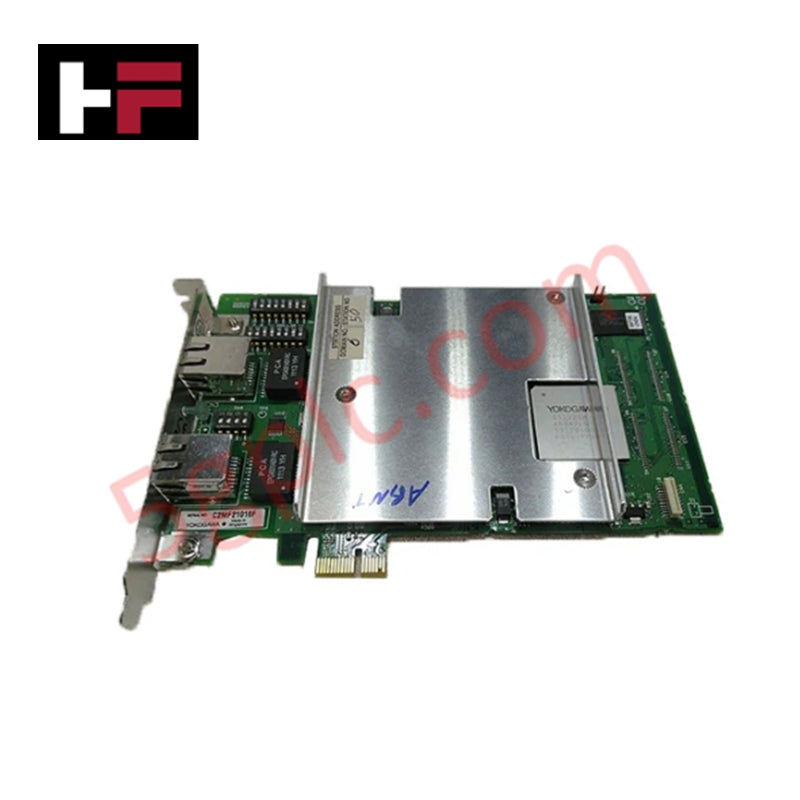
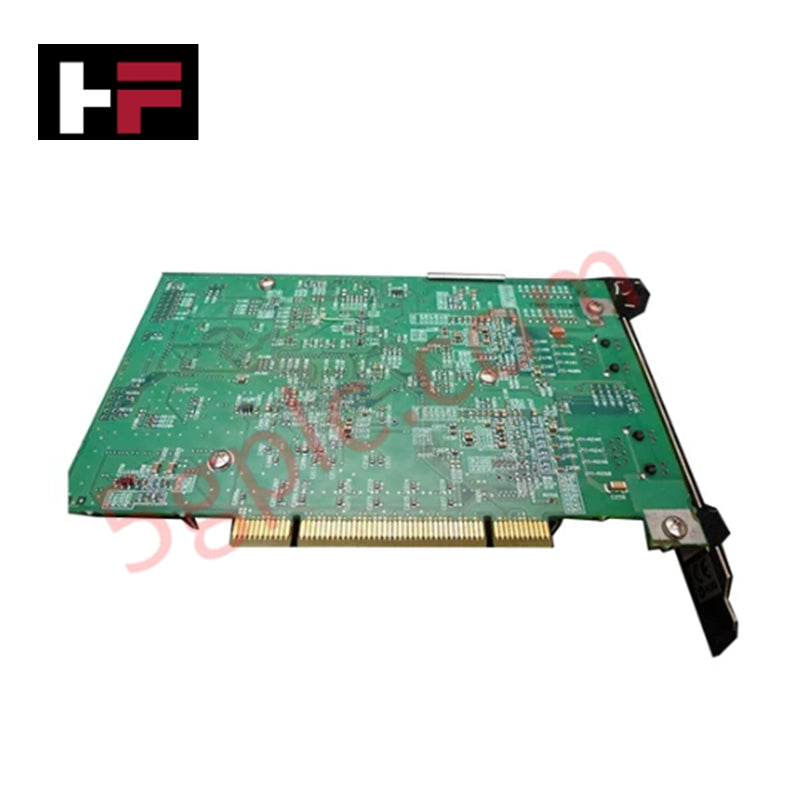
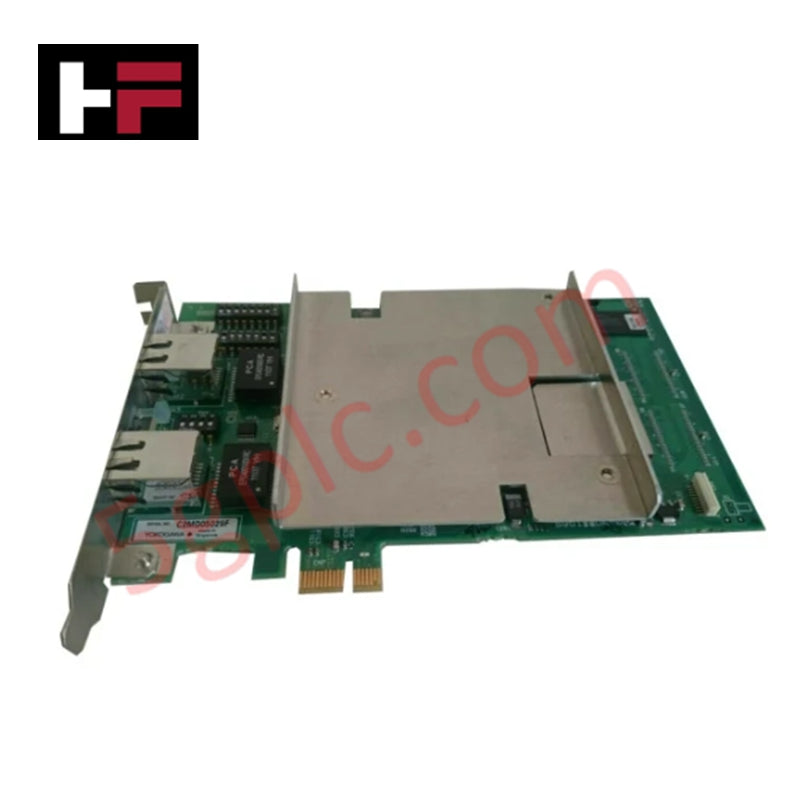
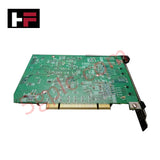
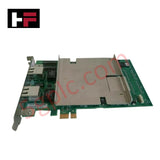
The Yokogawa VF702 functions as a high-performance Control Bus Interface Card designed for seamless communication within the Yokogawa DCS ecosystem. It manages high-speed data exchange between human interface stations and control stations across the Vnet network. We provide this hardware as 100% Brand New and Original, ensuring full signal integrity and factory-standard throughput for your industrial automation network.
Technical Specifications
The VF702 utilizes the 10BASE-2 standard to facilitate robust bus-topology networking in demanding control environments.
| Feature | Specification Details |
| Product Type | Control Bus Interface Card |
| Communication Standard | Compliant with 10BASE-2 |
| Connector Interface | BNC Connector |
| Connection Method | Coaxial cable (YCB146) via T-type connector |
| Dimensions | 2.5 cm x 12.7 cm x 19.7 cm |
| Weight | 0.1 kg |
| Condition | 100% Brand New Original |
Engineering Advantages
-
Optimized Bus Communication: The VF702 employs 10BASE-2 (Thinnet) technology, allowing for reliable data transmission over coaxial cabling. This setup effectively minimizes electromagnetic interference (EMI) in electrically noisy industrial environments, maintaining stable DCS network uptime.
-
Simplified Integration: The card utilizes a standard BNC interface, which simplifies field connections. By pairing the VF702 with the YCB146 coaxial cable and T-type connectors, engineers can quickly expand or modify the control bus without complex rewiring.
-
Compact Form Factor: With a thickness of only 2.5 cm, the VF702 maximizes slot density within the control station. This compact design allows for more intensive hardware configurations in space-constrained server rooms or cabinets.
-
Plug-and-Play Compatibility: Engineered specifically for the Yokogawa system architecture, the VF702 requires no extensive software modification for recognition. This ensures rapid deployment during system upgrades or emergency hardware replacements.
FAQs
What cable and connector types does the VF702 require?
The VF702 requires a high-quality coaxial cable, specifically the Model YCB146, along with a T-type connector for bus integration. It features a standard BNC interface to ensure a secure, twist-lock connection.
Does the VF702 support redundant network configurations?
Yes. In most Yokogawa DCS architectures, you install two VF702 cards to provide dual-redundancy for the Control Bus. This configuration ensures that communication continues uninterrupted if one card or path fails.
Can I install the VF702 while the system is under power?
While many modern modules allow for hot-swapping, we recommend following the specific hardware installation manual for your specific station model (e.g., AFV or AV5). Always verify the "Hot Swap" status of the specific slot to prevent signal spikes on the control bus.
Is this network card a refurbished unit?
Absolutely not. We supply only 100% Brand New Yokogawa hardware. Each VF702 arrives in its original factory anti-static packaging, complete with the official manufacturer serial number to guarantee authenticity and long-term reliability.
Additional Information
- 100% Genuine Parts: All products are original and authentic, ensuring reliable industrial performance.
- 30-Day Refund Guarantee: Return any in-stock item within 30 days in original, unopened packaging for a full refund (excluding shipping and fees).
- 12-Month Warranty: Covers defects in materials or workmanship; excludes misuse, normal wear, or unauthorized modifications.
- Worldwide Shipping: We ship via USPS, UPS, FedEx, and DHL. Delivery times vary by country and may be subject to customs or import fees.
- Support & Contact: Technical and warranty assistance is available anytime. Contact us here: Contact.
- Purchase Guidance: Check product specifications and compatibility carefully before ordering to ensure proper application.


Tech & Buying Guide

Demystifying the DDE Protocol in Legacy Industrial Automation Systems
Modern control systems rely heavily on seamless interprocess communication to exchange operational data between software programs. Microsoft first introduced the Dynamic Data Exchange (DDE) protocol in 1987 to enable real-time data sharing. In factory automation, DDE served as an early bridge between control software and Windows desktop applications. Therefore, understanding DDE mechanics provides crucial insights into how legacy industrial networks established software-level connectivity.

Demystifying CPU Communication Ports in Siemens PLC Architectures
Industrial automation relies heavily on robust data exchange between devices. Without seamless connectivity, field instruments, network switches, human-machine interfaces, and programmable logic controllers cannot coordinate effectively. Therefore, understanding the various CPU communication ports available in Siemens hardware ensures efficient factory automation design and seamless system integration.

Mastering the Siemens PLC Scan Cycle: How the CPU Executes Automation Programs
Industrial automation relies heavily on programmable logic controllers (PLCs) to manage complex manufacturing processes. Many engineers dive straight into programming without mastering the underlying architecture. However, understanding how a PLC CPU executes a program ensures reliable system design. Therefore, mastering the scan cycle optimizes both performance and troubleshooting in modern control systems.