










Product Details
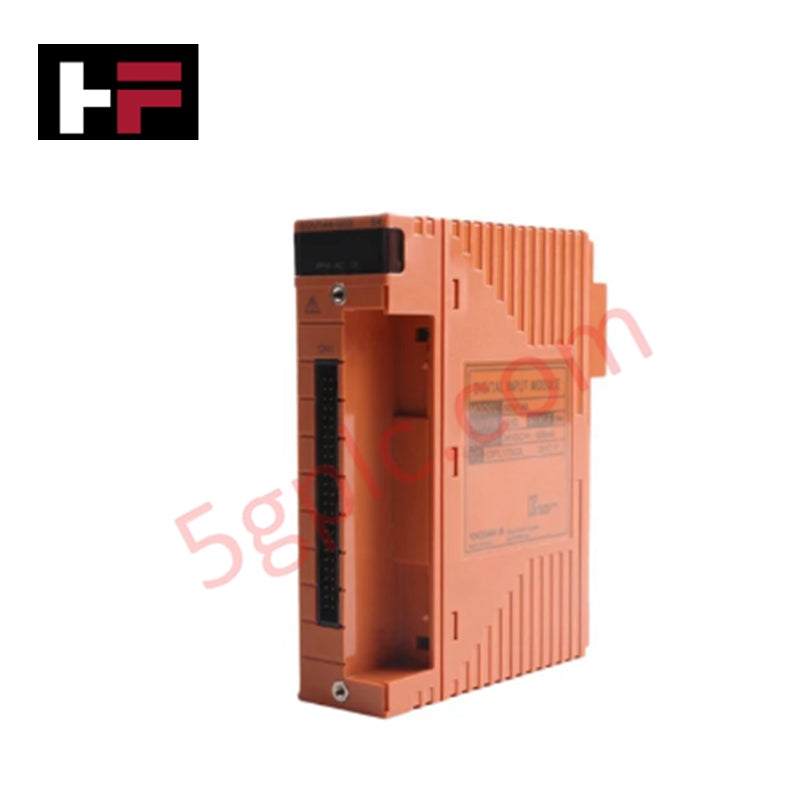
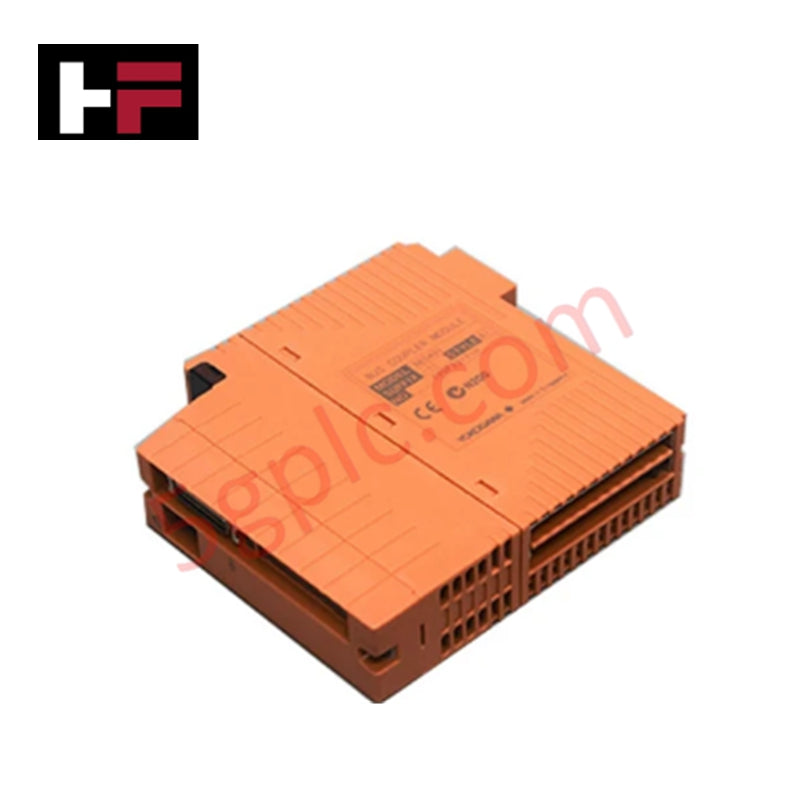
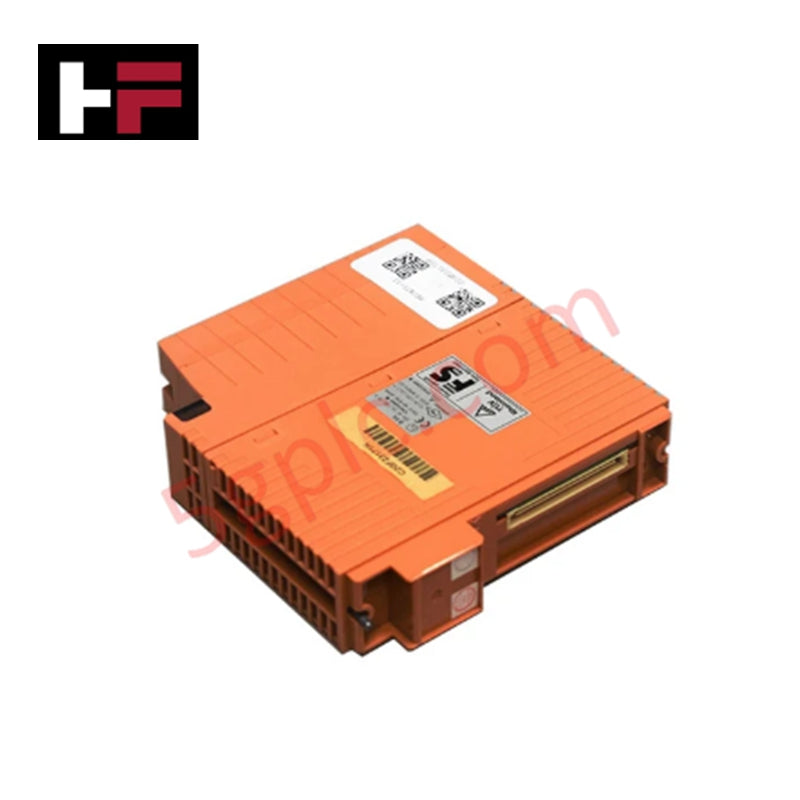
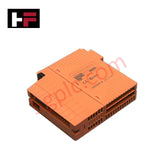
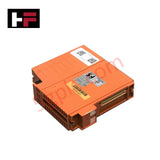
The Yokogawa SDV541-S53/B4D00 serves as the primary SDV541 Digital Output Module utilized to execute discrete actuator switching sequences across ProSafe-RS safety instrumented system platforms. The hardware drives up to 16 independent 24 VDC external loops through galvanic module isolation parameters, enforcing safe electrical circuit routing to final control elements.
Suffix Breakdown & Model Matrix
- -S: Standard hardware assembly profile.
- 5: Configured for pressure clamp terminal block interface or MIL cable connectivity; non-explosion protection enclosure design.
- 3: Conformal coating matching ISA Standard G3 requirements; operating temperature range rated from -20 to 70 deg C.
- /B4D00: Option code specifying the inclusion of a dual-redundant pressure clamp terminal block interface (without integrated surge absorber).
Hardware Specifications
| Parameter | Specification |
|---|---|
| Model | SDV541-S53/B4D00 |
| Brand | Yokogawa |
| Origin | Japan |
| Weight | 0.45 kg (Approximate configuration mass with adapter) |
| Dimensions | Standard Yokogawa ProSafe-RS module footprint |
| Operating Temp | -20 to 70 deg C |
| Power Consumption | Backplane system bus dependent |
| Number of Channels | 16-channel discrete configuration |
| Output Voltage Rating | 24 VDC nominal field supply |
| Isolation Type | Module-level galvanic isolation |
| Environmental Tolerance | ISA Standard G3 corrosive gas class |
| Terminal Options | Dual-redundant pressure clamp block interface |
Process Control & Channel-to-Channel Isolation
The module architecture integrates robust module-level galvanic isolation barriers between the internal logic processing array and the external field connection interfaces. By forcing optical and transformer decoupling paths across the electronic boundary, the system prevents common-mode high-voltage transients on any 24 VDC line from penetrating back into the controller backplane. This isolation framework suppresses cross-talk noise and limits electrical circuit faults to the field termination block side, maintaining safety-instrumented loop reliability.
Frequently Asked Questions
Q: How does the dual-redundant pressure clamp terminal block option (/B4D00) handle loop failure?
A: Option /B4D00 supplies redundant physical termination paths to the module interface. This configuration permits parallel terminal connections to prevent a single wiring fault or terminal block failure from breaking the critical signal loop execution path.
Q: What are the restrictions regarding hot-swap replacements of the module during system operations?
A: The hardware supports active online extraction from the ProSafe-RS baseplate. However, before the physical replacement occurs, application-level interlocks governing all 16 channels must be locked or forced into an explicit bypass state via the engineering station to prevent inadvertent safe-state shutdown triggers.
Field Installation Guidelines
- Enclosure Environmental Management: Mount the hardware inside a protective cabinet ensuring internal atmospheric concentrations stay within ISA Standard G3 specifications. Forced air ventilation must be deployed if internal ambient conditions trend toward the upper 70 deg C threshold.
- Cabling Shielding and Separation: All field signal wires routed to the /B4D00 terminal block must utilize shielded instrumentation cable assemblies. Cable shields must be terminated strictly at the single-point cabinet safety ground bus to block common-mode noise propagation.
- Inductive Arc Suppression Requirements: Because the /B4D00 option lacks integrated surge absorbers, external flyback diodes or RC snubber networks must be hardwired directly across all inductive field loads to protect the internal output transistors from back-EMF spikes.
Additional Information
- 100% Genuine Parts: All products are original and authentic, ensuring reliable industrial performance.
- 30-Day Refund Guarantee: Return any in-stock item within 30 days in original, unopened packaging for a full refund (excluding shipping and fees).
- 12-Month Warranty: Covers defects in materials or workmanship; excludes misuse, normal wear, or unauthorized modifications.
- Worldwide Shipping: We ship via USPS, UPS, FedEx, and DHL. Delivery times vary by country and may be subject to customs or import fees.
- Support & Contact: Technical and warranty assistance is available anytime. Contact us here: Contact.
- Purchase Guidance: Check product specifications and compatibility carefully before ordering to ensure proper application.


Tech & Buying Guide

Demystifying the DDE Protocol in Legacy Industrial Automation Systems
Modern control systems rely heavily on seamless interprocess communication to exchange operational data between software programs. Microsoft first introduced the Dynamic Data Exchange (DDE) protocol in 1987 to enable real-time data sharing. In factory automation, DDE served as an early bridge between control software and Windows desktop applications. Therefore, understanding DDE mechanics provides crucial insights into how legacy industrial networks established software-level connectivity.

Demystifying CPU Communication Ports in Siemens PLC Architectures
Industrial automation relies heavily on robust data exchange between devices. Without seamless connectivity, field instruments, network switches, human-machine interfaces, and programmable logic controllers cannot coordinate effectively. Therefore, understanding the various CPU communication ports available in Siemens hardware ensures efficient factory automation design and seamless system integration.

Mastering the Siemens PLC Scan Cycle: How the CPU Executes Automation Programs
Industrial automation relies heavily on programmable logic controllers (PLCs) to manage complex manufacturing processes. Many engineers dive straight into programming without mastering the underlying architecture. However, understanding how a PLC CPU executes a program ensures reliable system design. Therefore, mastering the scan cycle optimizes both performance and troubleshooting in modern control systems.