












Product Details
Product Overview
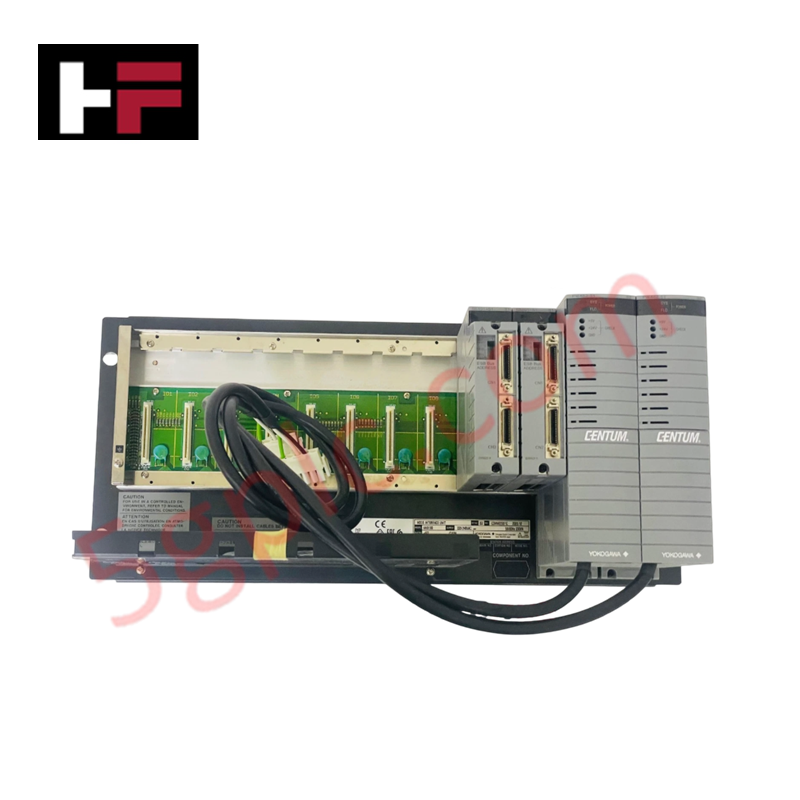
The Yokogawa ANB10D-427/CU2N functions as a high-availability I/O expansion hub within the CENTUM VP Distributed Control System (DCS). This ESB Bus Node Unit enables the connection of local and remote FIO modules to the Field Control Station (FCS), facilitating high-speed data acquisition and process control. By utilizing a dual-redundant architecture for both communication and power, it maintains uninterrupted signal flow between field instruments and the processor. We supply this unit as 100% Brand New and Original, ensuring your control infrastructure meets the highest factory-certified standards.
Part Number Breakdown: ANB10D-427/CU2N
Yokogawa specifies the functional capabilities of the ANB10D series through the following alphanumeric suffix logic:
| Code | Category | Technical Specification |
| ANB10D | Model | Node Unit for Dual-Redundant ESB Bus |
| -4 | Power Supply | Dual-redundant power supply modules |
| 2 | Voltage | 220 - 240 V AC power supply input |
| 7 | Configuration | Standard hardware revision (Updated from legacy 5) |
| /CU2N | Option | Connector Unit for ESB Bus (Standard type) |
Technical Specifications
The ANB10D-427/CU2N integrates robust electrical and mechanical parameters to handle heavy I/O loads:
-
Bus Type: Dual-redundant ESB Bus (Extended Serial Backplane)
-
Power Input: 220 V to 240 V AC, 50/60 Hz
-
Redundancy Type: Dual-redundant power modules and dual-path bus communication
-
I/O Support: Accommodates Yokogawa FIO (Field Input/Output) modules
-
Connector Type: Includes /CU2N Connector Unit for ESB bus interface
-
Net Weight: 10 kg
-
Mounting: Standard 19-inch rack-mountable (requires 5U height)
Engineering Advantages
The ANB10D-427/CU2N addresses the core requirements of modern process automation facilities:
-
Eliminate Signal Loss via Bus Redundancy: The dual-redundant ESB bus interface provides two independent physical paths for data. If one ESB cable sustains physical damage, the unit maintains 100% process visibility through the secondary path, preventing the loss of critical field data.
-
Continuous Power Availability: The -4 suffix indicates a dual-redundant power supply configuration. This allows the unit to draw power from two independent sources. If one power module fails, the healthy module assumes the full load instantly, permitting "hot-swapping" or online replacement without interrupting I/O operations.
-
Simplified Hardware Integration: The /CU2N connector unit facilitates rapid daisy-chaining of multiple I/O nodes. This standardized interface reduces wiring errors and ensures stable, high-speed signal transmission across the system backplane, even in cabinets with high-density cabling.
-
High-Voltage Grid Compatibility: Specifically engineered for 220-240V AC environments, the internal power circuitry filters industrial line noise and handles voltage transients typical of large-scale manufacturing grids, protecting sensitive FIO modules from electrical interference.
FAQs
-
Does the /CU2N option include an internal terminator?
No. The /CU2N is a standard connector unit without a terminator. If this node occupies the final position in your ESB bus chain, you must use a /CU2T connector unit or install an external terminator to prevent signal reflections.
-
Can I replace an ANB10S with this ANB10D model?
Yes. The ANB10D (Duplexed) provides higher reliability than the ANB10S (Single). Ensure your Field Control Station (FCS) features dual-redundant ESB bus ports to utilize the secondary communication channel provided by this unit.
-
What mounting hardware does the unit require?
The unit fits standard 19-inch racks. We recommend utilizing the specified M5 screws and insulation bushes to prevent ground loops and ensure the 10 kg chassis remains stable against industrial vibrations.
-
Is this unit compatible with 110V AC power?
No. The suffix code "2" specifically denotes a 220-240V AC input. For 110V AC environments, you must select the model with the "1" suffix code to prevent hardware damage.
Additional Information
- 100% Genuine Parts: All products are original and authentic, ensuring reliable industrial performance.
- 30-Day Refund Guarantee: Return any in-stock item within 30 days in original, unopened packaging for a full refund (excluding shipping and fees).
- 12-Month Warranty: Covers defects in materials or workmanship; excludes misuse, normal wear, or unauthorized modifications.
- Worldwide Shipping: We ship via USPS, UPS, FedEx, and DHL. Delivery times vary by country and may be subject to customs or import fees.
- Support & Contact: Technical and warranty assistance is available anytime. Contact us here: Contact.
- Purchase Guidance: Check product specifications and compatibility carefully before ordering to ensure proper application.


Tech & Buying Guide

Demystifying Open Platform Communication (OPC): The Backbone of Industrial Interoperability
Interoperability remains a cornerstone requirement for modern smart factories and process automation. Open Platform Communication (OPC) bridges the gap between disparate hardware platforms, control systems, and visualization software. By establishing a universal communication standard, OPC allows field controllers, SCADA platforms, and enterprise software from different vendors to exchange real-time data seamlessly.

Understanding Siemens PLC Memory Cards: MMC, SMC, and SD Solutions in Industrial Automation
Memory management plays a pivotal role in maintaining control system reliability across modern manufacturing plants. Industrial control systems rely on specialized memory cards to store project logic, firmware updates, and retentive system data. Siemens uses several memory architectures, including Micro Memory Cards (MMC) and SIMATIC Memory Cards (SMC). Engineers must understand these hardware variations to ensure zero data loss and minimize downtime during maintenance routines.

Redefining Control Systems: The Rise of Flexible I/O Modules in Industrial Automation
Conventional input-output architectures often limit engineering agility and inflate long-term inventory costs. Today, Flexible Input/Output Modules (FIOM) are transforming how control system engineers design, commission, and maintain automation infrastructure. By allowing individual channel software configuration, FIOM technology bridges the gap between rigid hardware design and dynamic plant requirements.