










Product Details
Product Overview
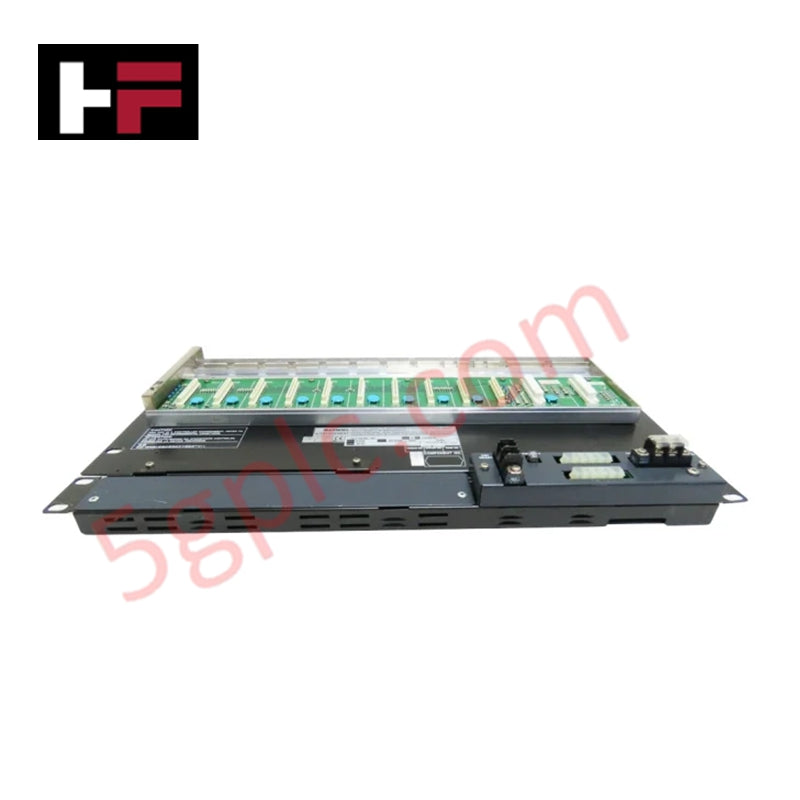
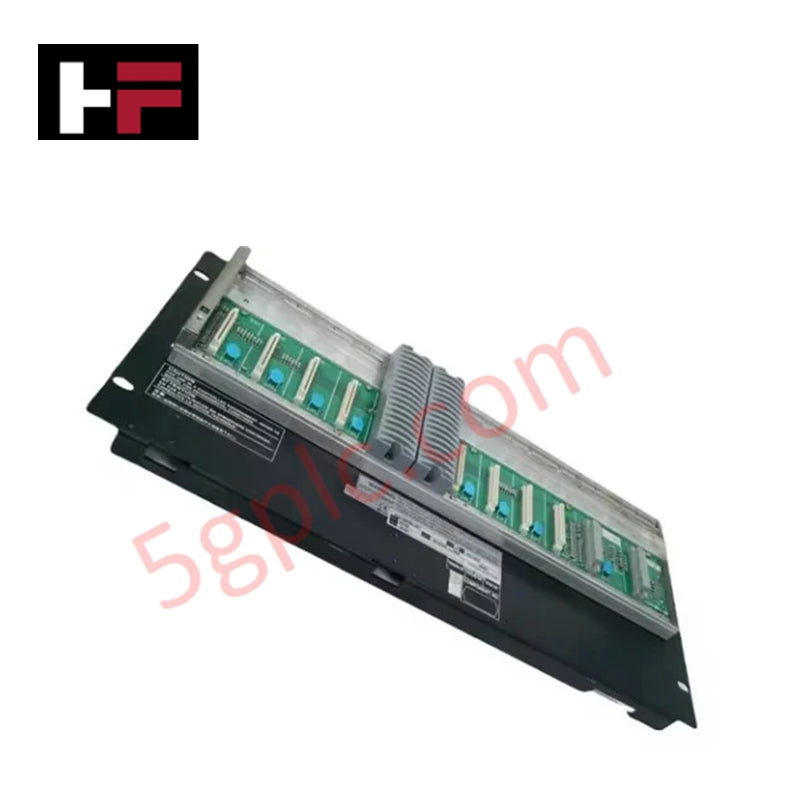
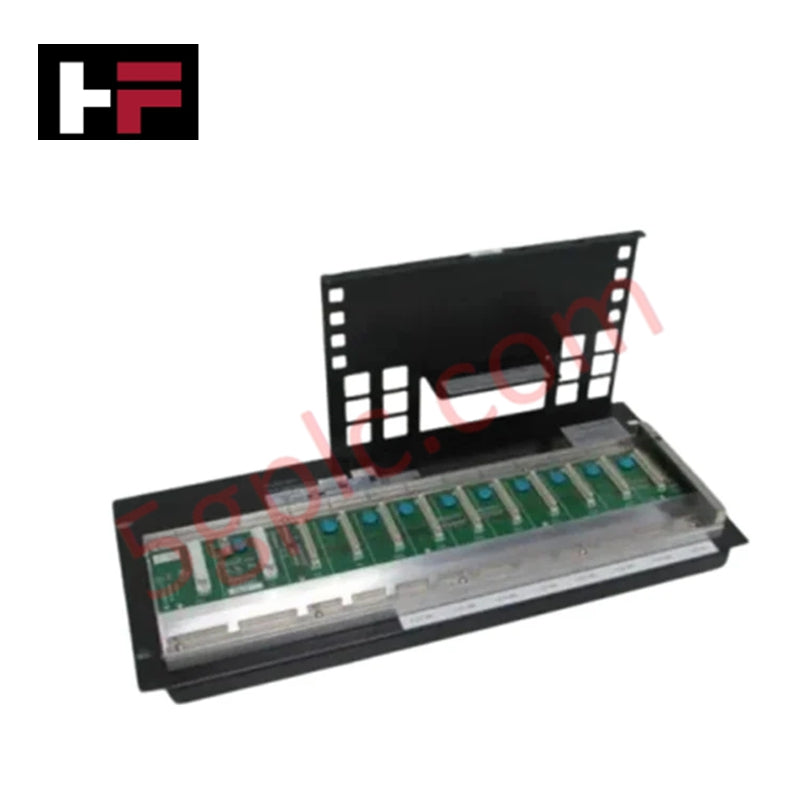
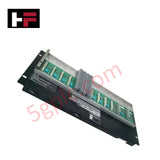
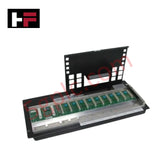
The Yokogawa ANB10D-421/CU2N/NDEL is a high-availability Duplicated Node Interface Unit (NIU) engineered for the CENTUM VP Distributed Control System (DCS). This unit serves as a critical local or remote I/O subrack, housing up to 8 FIO (Field Input/Output) modules. The "D" designation signifies its Duplexed (Redundant) architecture, providing dual paths for power and communication to ensure continuous process monitoring. This specific configuration includes the CU2N and NDEL option codes, which define specialized communication connector settings and destination-specific hardware labeling for international standards.
Condition: 100% Brand New and Original Factory Sealed.
Part Number Breakdown: ANB10D-421/CU2N/NDEL
Yokogawa uses a structured coding system to define the NIU's electrical, mounting, and interface properties:
-
ANB10D: Duplicated Node Interface Unit (for FIO).
-
-4: Dual-redundant 100-120 V AC Power Supply.
-
2: 19-inch Rack-mount type with insulation bushing.
-
1: Standard functional hardware type.
-
/CU2N: Communication interface option specifying connector types and noise filtering.
-
/NDEL: Specialized labeling or destination-specific hardware designation.
Technical Specifications
The ANB10D-421 provides a robust and redundant electrical environment for high-density I/O modules.
-
Number of I/O Slots: 8 slots (supports Analog, Digital, and Communication FIO modules)
-
Interface Bus: ESB Bus (Extended Serial Backplane)
-
Power Supply: 100-120 V AC, 50/60 Hz (Dual-redundant)
-
Mounting: Standard 19-inch rack-mount (with insulation bushing)
-
Withstand Voltage: 1500 V AC between power terminals and ground
-
Current Consumption: Max 100 VA (at 100-120 V AC)
-
Operating Temperature: 0 to 50°C (32 to 122°F)
-
Redundancy: Supports dual PW481 power units and dual EC401 bus modules.
Engineering Advantages
-
Mission-Critical Redundancy: The ANB10D-421/CU2N/NDEL is designed to eliminate single points of failure. By utilizing dual-redundant power supplies and ESB bus interfaces, the unit ensures that all 8 I/O modules remain online and communicating with the Field Control Unit (FCU) even if one power circuit or communication cable fails.
-
Ground Loop Protection: The "2" in the suffix indicates the inclusion of insulation bushings for rack mounting. This physical isolation prevents electrical noise and ground loops from the cabinet frame from interfering with sensitive signals, ensuring high measurement accuracy for analog modules.
-
Scalable I/O Expansion: This NIU allows for the physical distribution of I/O modules across the plant. By connecting several ANB10D units via YCB301 ESB bus cables, a single controller can manage widely dispersed field points while maintaining high-speed data synchronization.
-
Online Hardware Maintenance: All redundant components, including power supply units and bus interface modules, are hot-swappable. Maintenance teams can replace a faulty component while the system is live and the process is running, significantly reducing Mean Time to Repair (MTTR).
-
High-Density Design: With 8 dedicated slots in a 19-inch form factor, the ANB10D maximizes cabinet space efficiency. This allows for a more compact control room footprint while maintaining the heat dissipation necessary for long-term component reliability.
FAQs
-
What is the difference between ANB10D and ANB11D?
The ANB10D is used for standard ESB Bus (local or near-distance), while the ANB11D is utilized for the Optical ESB Bus, allowing for longer distances between the controller and the I/O node.
-
How do I connect the ANB10D-421 to the Field Control Unit?
The NIU connects to the FCU (e.g., AFV30D or AFV10D) using ESB Bus Cables. For a redundant system, these cables must be used in pairs to maintain the duplicated communication path.
-
Does this unit include the I/O modules?
No. The ANB10D-421/CU2N/NDEL is the base chassis and power assembly. You must order specific I/O modules (e.g., AAI141, ADV151) separately based on your project's I/O requirements.
-
Can I use this unit in a 220V AC environment?
No. The suffix "-4" indicates a 100-120V AC rating. For 220-240V AC power environments, the ANB10D-2xx series is required.
Additional Information
- 100% Genuine Parts: All products are original and authentic, ensuring reliable industrial performance.
- 30-Day Refund Guarantee: Return any in-stock item within 30 days in original, unopened packaging for a full refund (excluding shipping and fees).
- 12-Month Warranty: Covers defects in materials or workmanship; excludes misuse, normal wear, or unauthorized modifications.
- Worldwide Shipping: We ship via USPS, UPS, FedEx, and DHL. Delivery times vary by country and may be subject to customs or import fees.
- Support & Contact: Technical and warranty assistance is available anytime. Contact us here: Contact.
- Purchase Guidance: Check product specifications and compatibility carefully before ordering to ensure proper application.


Tech & Buying Guide

Demystifying CPU Communication Ports in Siemens PLC Architectures
Industrial automation relies heavily on robust data exchange between devices. Without seamless connectivity, field instruments, network switches, human-machine interfaces, and programmable logic controllers cannot coordinate effectively. Therefore, understanding the various CPU communication ports available in Siemens hardware ensures efficient factory automation design and seamless system integration.

Mastering the Siemens PLC Scan Cycle: How the CPU Executes Automation Programs
Industrial automation relies heavily on programmable logic controllers (PLCs) to manage complex manufacturing processes. Many engineers dive straight into programming without mastering the underlying architecture. However, understanding how a PLC CPU executes a program ensures reliable system design. Therefore, mastering the scan cycle optimizes both performance and troubleshooting in modern control systems.

How to Connect to Siemens S7 PLCs: 5 Essential Communication Methods
Establishing a reliable hardware link between a programming terminal and a Siemens SIMATIC controller is essential for engineering workflows. Field engineers rely on distinct physical layers, ranging from legacy serial connections to high-speed Industrial Ethernet protocols. Modern factory automation environments prioritize fast data transfer and seamless driver integration. Selecting the correct connection method simplifies program downloads, online monitoring, and system troubleshooting in complex control systems.