










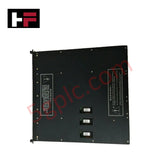
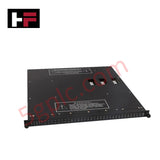
Product Details
Product Overview
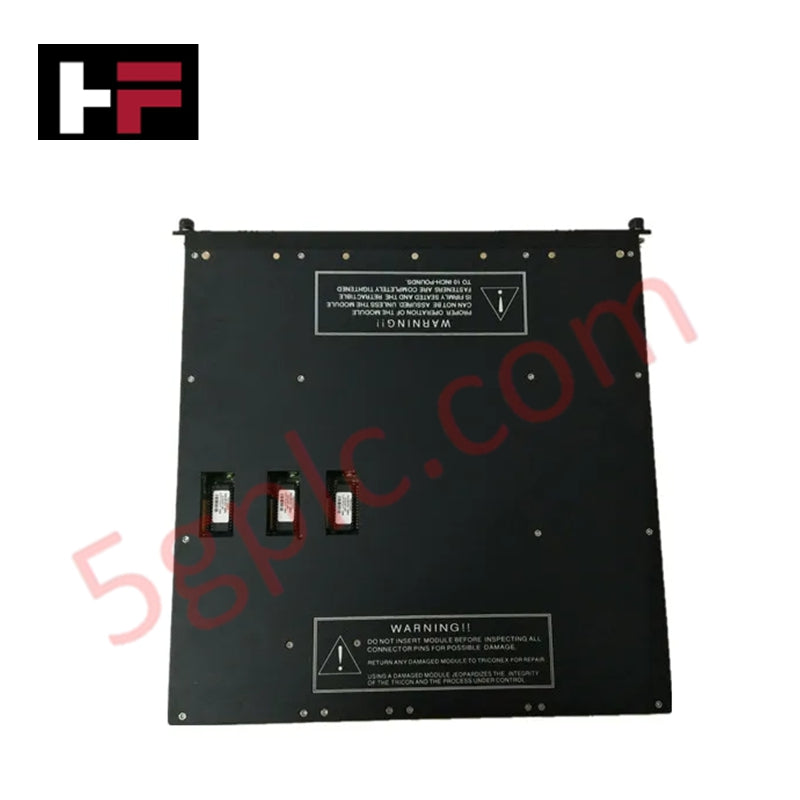
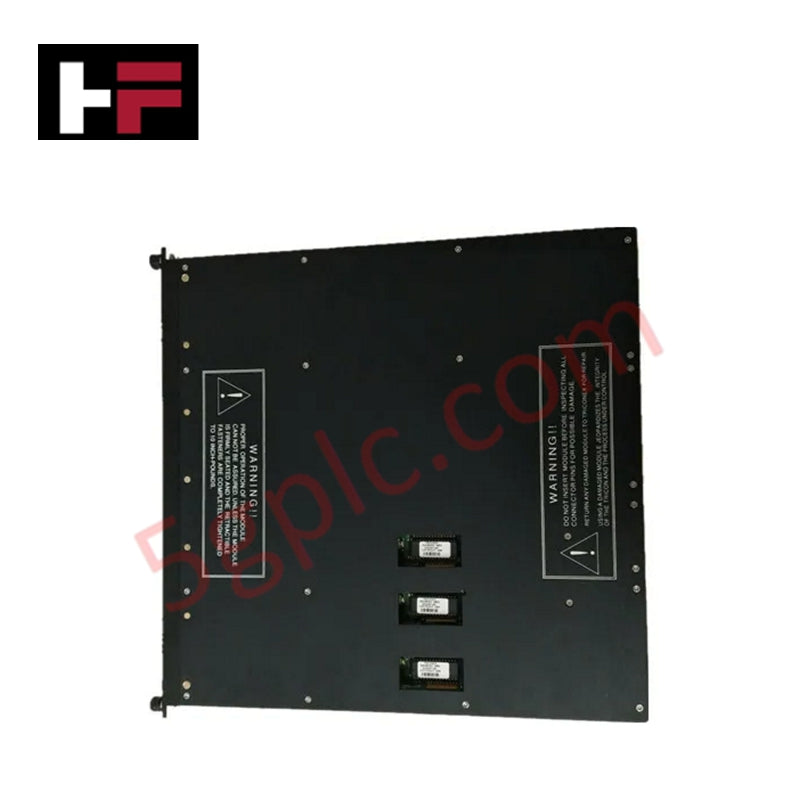
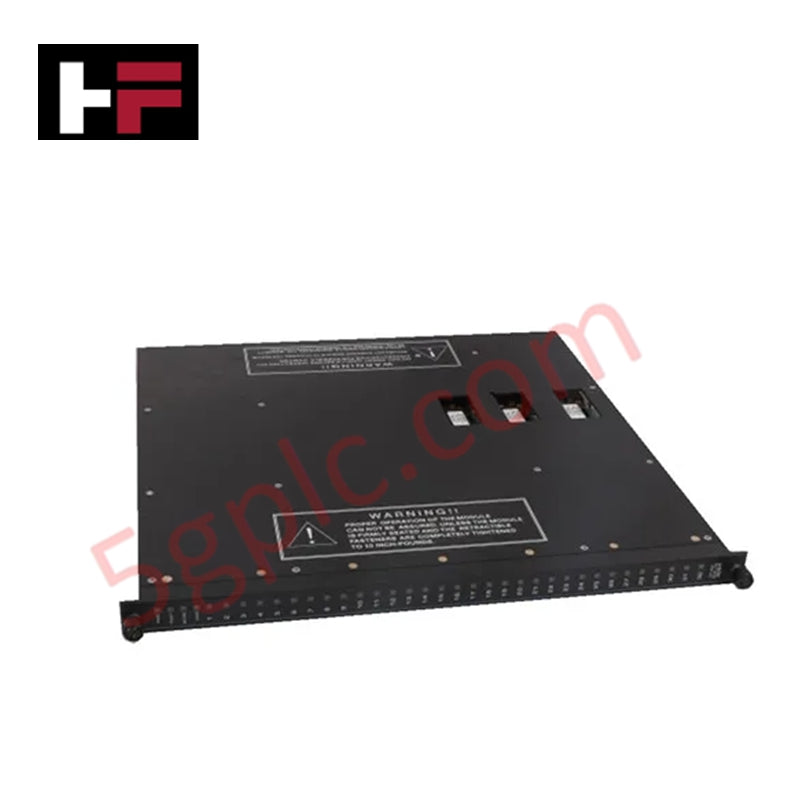
The Triconex 9300 functions as a premier Safety Instrumented System (SIS) controller, providing the high-speed logic execution required for mission-critical industrial processes. This module utilizes a sophisticated fault-tolerant architecture that identifies and isolates hardware failures without interrupting the safety loop. It serves as the central intelligence for Emergency Shutdown (ESD) and Fire and Gas (F&G) applications, delivering precise control where downtime poses significant risk. We supply this unit exclusively as 100% Brand New and Original factory equipment.
Technical Specifications
| Feature | Specification |
| Model Number | 9300 |
| System Type | Safety Instrumented System (SIS) |
| Response Time | < 1 ms (High-speed real-time execution) |
| Communication | Ethernet, RS-485, HART Protocols |
| Energy Storage | Integrated Rechargeable Battery Unit |
| Dimensions (H x W x D) | 45.7 cm x 35.6 cm x 5.1 cm |
| Weight | 2.2 kg |
| Fault Tolerance | Automatic Element Compensation & Diagnostics |
Engineering Advantages
-
Sub-Millisecond Logic Execution: The 9300 achieves a response time of less than 1 ms. This ultra-high-speed processing enables the controller to trigger final control elements almost instantaneously, effectively mitigating rapid pressure surges or thermal excursions in volatile chemical reactors.
-
Autonomous Fault Recovery: The system hardware automatically detects and compensates for failed internal elements. This "self-healing" capability maintains safety integrity and process uptime, eliminating the need for immediate emergency maintenance during a single component fault.
-
Multi-Protocol Connectivity: Integrated support for Ethernet, RS-485, and HART protocols allows the 9300 to bridge the gap between safety logic and plant-wide DCS or asset management software. This versatility simplifies the integration of intelligent field devices into the safety system architecture.
-
Onboard Power Backup: The inclusion of a dedicated rechargeable battery unit ensures the controller retains critical diagnostic data and system state information during unexpected power interruptions. This internal energy storage facilitates a faster, safer return to operation after a facility-wide power event.
FAQs
-
How does the 9300 maintain safety during a module failure?
The 9300 employs a triplicated voting structure. When the system detects a discrepancy in one processing path, the two remaining healthy paths out-vote the failed element. This ensures the output to the field remains correct and safe while the system logs a diagnostic alarm for the technician.
-
What are the mounting requirements for the 9300 controller?
The module fits into a standard Triconex high-density chassis. Ensure the rack provides adequate vertical clearance (at least 5.1 cm depth) and verify that the backplane pins are clean and straight before seating the module to ensure optimal communication signal integrity.
-
Does the 1 ms response time include field I/O delay?
The 1 ms specification refers to the internal logic processing and bus communication speed of the 9300 module. Total loop response time depends on the specific input filters and output actuator speeds, but the 9300 minimizes the controller-induced latency to the absolute technical limit.
Additional Information
- 100% Genuine Parts: All products are original and authentic, ensuring reliable industrial performance.
- 30-Day Refund Guarantee: Return any in-stock item within 30 days in original, unopened packaging for a full refund (excluding shipping and fees).
- 12-Month Warranty: Covers defects in materials or workmanship; excludes misuse, normal wear, or unauthorized modifications.
- Worldwide Shipping: We ship via USPS, UPS, FedEx, and DHL. Delivery times vary by country and may be subject to customs or import fees.
- Support & Contact: Technical and warranty assistance is available anytime. Contact us here: Contact.
- Purchase Guidance: Check product specifications and compatibility carefully before ordering to ensure proper application.


Tech & Buying Guide

Demystifying the DDE Protocol in Legacy Industrial Automation Systems
Modern control systems rely heavily on seamless interprocess communication to exchange operational data between software programs. Microsoft first introduced the Dynamic Data Exchange (DDE) protocol in 1987 to enable real-time data sharing. In factory automation, DDE served as an early bridge between control software and Windows desktop applications. Therefore, understanding DDE mechanics provides crucial insights into how legacy industrial networks established software-level connectivity.

Demystifying CPU Communication Ports in Siemens PLC Architectures
Industrial automation relies heavily on robust data exchange between devices. Without seamless connectivity, field instruments, network switches, human-machine interfaces, and programmable logic controllers cannot coordinate effectively. Therefore, understanding the various CPU communication ports available in Siemens hardware ensures efficient factory automation design and seamless system integration.

Mastering the Siemens PLC Scan Cycle: How the CPU Executes Automation Programs
Industrial automation relies heavily on programmable logic controllers (PLCs) to manage complex manufacturing processes. Many engineers dive straight into programming without mastering the underlying architecture. However, understanding how a PLC CPU executes a program ensures reliable system design. Therefore, mastering the scan cycle optimizes both performance and troubleshooting in modern control systems.