










Product Details
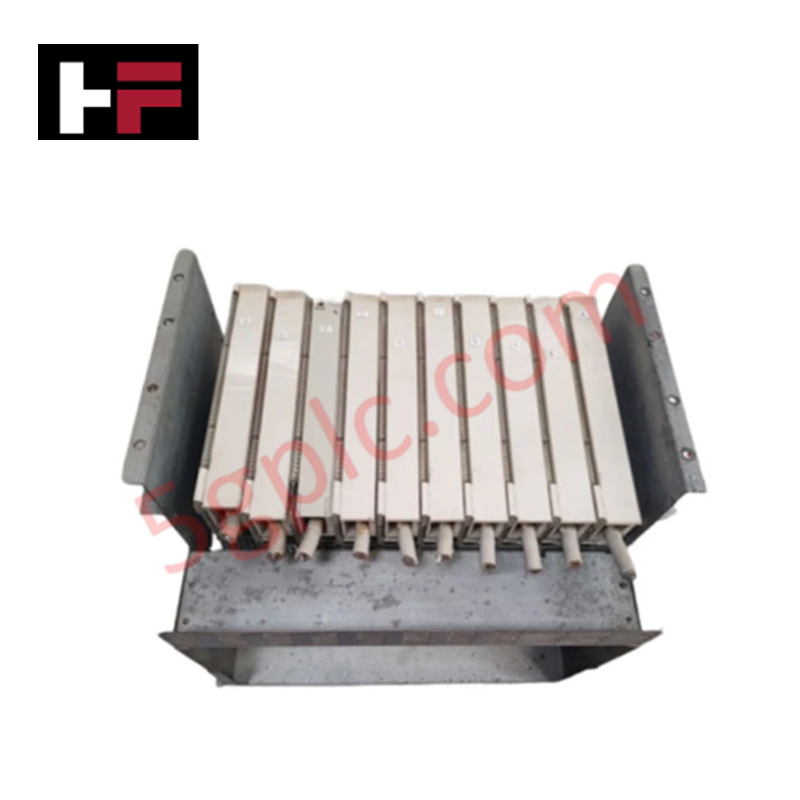
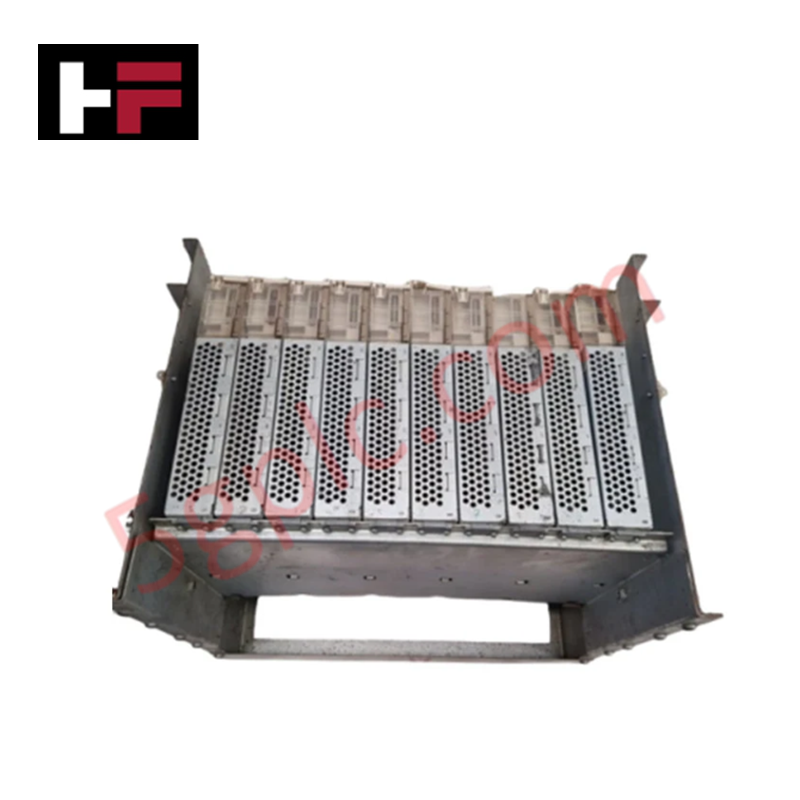
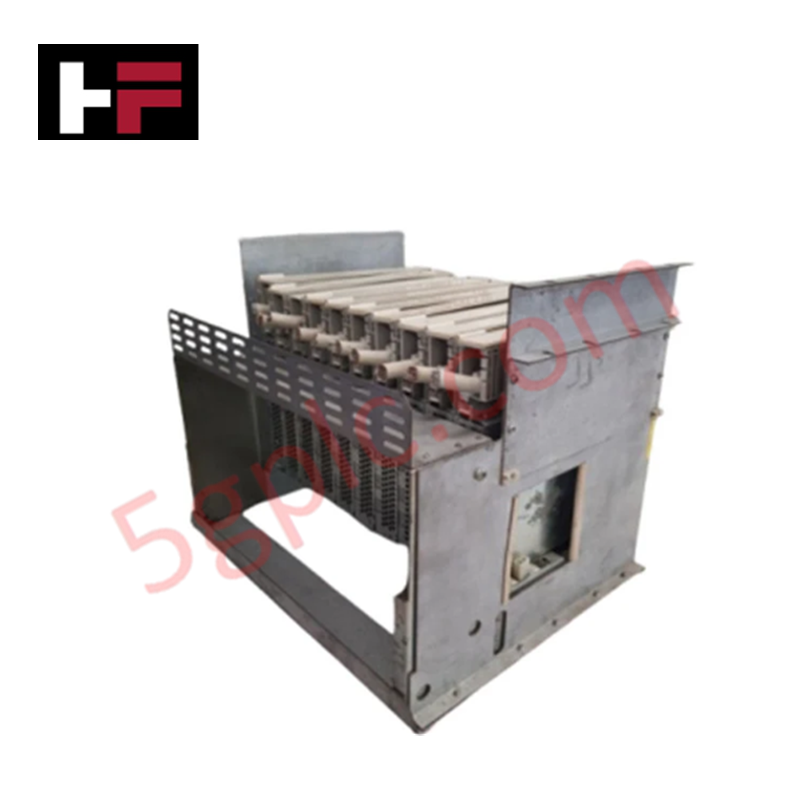
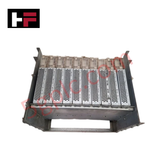
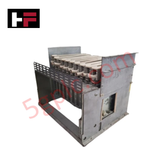
The ABB RF615, also cataloged as the RF615 Base Backplane, operates as a dedicated hardware component for physical module housing and electrical signal routing within Advant Controller 100 series platforms.
Hardware Specifications
| Parameter | Specification |
| Model | RF615 (Part ID: 3BHT100010R1) |
| Brand | ABB |
| Origin | Sweden |
| Weight | 3 kg |
| Dimensions | 470.7 mm x 245.7 mm x 84.6 mm |
| Operating Temp | 0 to +55 deg C (Standard baseline parameter) |
| Power Consumption | Passive backplane structure (Internal logic load negligible) |
| Product Type | Central Unit / Base Backplane |
| Slot Count | 10 slots |
| Compatible Systems | Advant Controller 100 series |
| RoHS Status | Compliant with EU Directive 2011/65/EU (Exemption applied per 3BSE088609) |
| WEEE Category | 5. Small Equipment (No external dimension more than 50 cm) |
| Battery Count | 0 |
Backplane Bus Communication Velocity and Signal Routing
The physical layer trace geometry of the backplane establishes fixed paths for communication lines across all 10 slots. This passive architecture supports synchronous data rates while preventing transmission reflections. Dedicated track shielding across the backplane bus stabilizes the data link under full I/O density configurations, ensuring firmware flash compatibility between co-located processor modules and remote terminal interfaces without data packet loss.
Frequently Asked Questions
Q: Does the backplane track network permit live hot-swapping of secondary modules?
A: Hot-swap capability depends entirely on the insertion rules of the specific controller module placed within the 10 available slots. The backplane itself provides passive distribution but does not contain isolating current switches.
Q: What are the electrical implications of the empty slots on bus impedance?
A: Unoccupied slots maintain an open-circuit state. The backplane trace termination resistors stabilize bus line capacitance across all 10 slots to prevent signal degradation at high transmission rates.
Q: Are there specific slots designated exclusively for master controller units?
A: Physical positioning must strictly follow the hardware configuration rules of the Advant Controller 100 system manuals, where specific power and primary processing modules occupy fixed slot locations.
Field Installation Guidelines
-
Enclosure Mounting Alignment: Secure the backplane onto the rear panel structure of the cabinet using standard fastening bolts. Ensure no structural distortion occurs across the 470.7 mm length during tightening.
-
Shielding Topology: Connect the central grounding lug of the backplane directly to the primary copper earth bar of the cabinet to eliminate common-mode noise across the parallel bus.
-
Cable Stress Prevention: External field wiring connected to modules installed in the 10 slots must be channeled through adjacent cable ducts to prevent physical downward leverage on the backplane connectors.
-
Thermal Ventilation Clearance: Ensure a minimum gap of 50 mm above and below the backplane assembly to allow free air circulation and prevent heat buildup in densely populated frames.
Additional Information
- 100% Genuine Parts: All products are original and authentic, ensuring reliable industrial performance.
- 30-Day Refund Guarantee: Return any in-stock item within 30 days in original, unopened packaging for a full refund (excluding shipping and fees).
- 12-Month Warranty: Covers defects in materials or workmanship; excludes misuse, normal wear, or unauthorized modifications.
- Worldwide Shipping: We ship via USPS, UPS, FedEx, and DHL. Delivery times vary by country and may be subject to customs or import fees.
- Support & Contact: Technical and warranty assistance is available anytime. Contact us here: Contact.
- Purchase Guidance: Check product specifications and compatibility carefully before ordering to ensure proper application.






Tech & Buying Guide

Demystifying CPU Communication Ports in Siemens PLC Architectures
Industrial automation relies heavily on robust data exchange between devices. Without seamless connectivity, field instruments, network switches, human-machine interfaces, and programmable logic controllers cannot coordinate effectively. Therefore, understanding the various CPU communication ports available in Siemens hardware ensures efficient factory automation design and seamless system integration.

Mastering the Siemens PLC Scan Cycle: How the CPU Executes Automation Programs
Industrial automation relies heavily on programmable logic controllers (PLCs) to manage complex manufacturing processes. Many engineers dive straight into programming without mastering the underlying architecture. However, understanding how a PLC CPU executes a program ensures reliable system design. Therefore, mastering the scan cycle optimizes both performance and troubleshooting in modern control systems.

How to Connect to Siemens S7 PLCs: 5 Essential Communication Methods
Establishing a reliable hardware link between a programming terminal and a Siemens SIMATIC controller is essential for engineering workflows. Field engineers rely on distinct physical layers, ranging from legacy serial connections to high-speed Industrial Ethernet protocols. Modern factory automation environments prioritize fast data transfer and seamless driver integration. Selecting the correct connection method simplifies program downloads, online monitoring, and system troubleshooting in complex control systems.