













Product Details
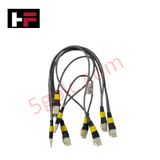
The Honeywell 51202974-100, also cataloged as the 51202974 Cable Duct, operates as a dedicated hardware component for mechanical cable protection and wire routing management within Honeywell Experion DCS cabinet assemblies and raceway structures. The rigid PVC square duct protects multi-conductor trunks and field I/O wiring harnesses against physical abrasion and environmental degradation.
Hardware Specifications
| Parameter | Specification |
|---|---|
| Model | 51202974-100 |
| Brand | Honeywell |
| Origin | USA |
| Dimensions | Cross-section: 80 mm x 80 mm (3.15 in x 3.15 in); Length: 100 m (328 ft) |
| Operating Temp | -20 deg C to +70 deg C |
| Power Consumption | Passive physical enclosure component (0 W) |
| Material | Rigid PVC (Polyvinyl Chloride) |
| Flammability Rating | UL 94 V-0 (self-extinguishing) |
| UV Protection | Integrated UV stabilization |
| Application | High-density cable management |
FOUNDATION Fieldbus and Loop Wiring Channel Isolation
In process control panel configurations, the 80 mm x 80 mm duct profile accommodates physically segregated wiring bundles for 4-20 mA HART loop protocol instruments, discrete I/O, and FOUNDATION Fieldbus trunk lines. By maintaining mechanical isolation boundaries within the duct, signal lines are isolated from external physical stress and potential cross-channel inductive coupling. The non-conductive PVC construction prevents accidental phase-to-ground faults during field wiring maintenance activities on high-density termination assemblies.
Frequently Asked Questions
Q: Does the UL 94 V-0 rating permit installation inside air-handling plenums or sealed DCS cabinets?
A: The UL 94 V-0 rating confirms the material is self-extinguishing within 10 seconds under vertical flame exposure without dropping flaming particles, making it compliant for deployment inside closed industrial control enclosures.
Q: How does the UV stabilization impact outdoor wiring runs between field junction boxes?
A: Integrated UV inhibitors prevent polymer degradation, embrittlement, and cracking when exposed to long-term direct solar radiation, maintaining mechanical impact resistance over extended operational cycles.
Field Installation Guidelines
- Cutting & Trimming: Use fine-toothed hand saws or specialized shear cutters to produce burr-free square cuts when tailoring duct lengths to cabinet dimensions.
- Mounting Attachment: Secure the duct base to the enclosure backplane using M5 flat-head screws through pre-drilled mounting slots, ensuring screw heads sit flush to prevent cable jacket abrasion.
- Wiring Fill Capacity: Do not exceed a 60% maximum cross-sectional cable fill ratio to prevent heat entrapment and allow sufficient clearance for finger-slot routing.
- Separation Rules: Maintain distinct duct runs or physical dividers when routing sensitive analog loop wires alongside high-current DC power supply feeds within the cabinet.
Additional Information
- 100% Genuine Parts: All products are original and authentic, ensuring reliable industrial performance.
- 30-Day Refund Guarantee: Return any in-stock item within 30 days in original, unopened packaging for a full refund (excluding shipping and fees).
- 12-Month Warranty: Covers defects in materials or workmanship; excludes misuse, normal wear, or unauthorized modifications.
- Worldwide Shipping: We ship via USPS, UPS, FedEx, and DHL. Delivery times vary by country and may be subject to customs or import fees.
- Support & Contact: Technical and warranty assistance is available anytime. Contact us here: Contact.
- Purchase Guidance: Check product specifications and compatibility carefully before ordering to ensure proper application.


Tech & Buying Guide

FAT vs SAT in Industrial Control Systems: Key Differences and Execution Guide
Industrial control system deployment relies on strict verification protocols to guarantee operational safety, system stability, and regulatory compliance. Commissioning complex Programmable Logic Controller (PLC) racks, Distributed Control Systems (DCS), and Safety Instrumented Systems (SIS) requires two critical milestones: the Factory Acceptance Test (FAT) and the Site Acceptance Test (SAT). Both procedures validate that system automation meets design specifications, but they occur at different stages of project execution and target distinct operational risks.

Hub vs Switch vs Router in Industrial Automation Architecture
Modern factory automation relies on reliable industrial networking infrastructure to exchange real-time field data across operational technology systems. Engineers often encounter networking hardware like hubs, switches, and routers when integrating Programmable Logic Controllers, Distributed Control Systems, and SCADA monitoring nodes. Although these devices share physical ports, they operate at different layers of the Open Systems Interconnection reference model and deliver distinct traffic management capabilities.

Marshalling Cabinet Preventive Maintenance: Essential Healthiness Checks for PLC, DCS, and ESD Systems
Marshalling cabinets serve as the vital interface between field instrumentation and control room electronics in modern process facilities. Regular preventive maintenance of these cabinets ensures signal integrity across programmable logic controllers (PLCs), distributed control systems (DCS), and emergency shutdown (ESD) networks. System technicians must execute structured inspection protocols to mitigate environmental risks, identify loose wiring, and maintain continuous operational readiness.