










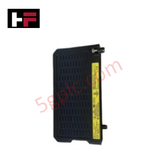
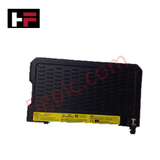
Product Details
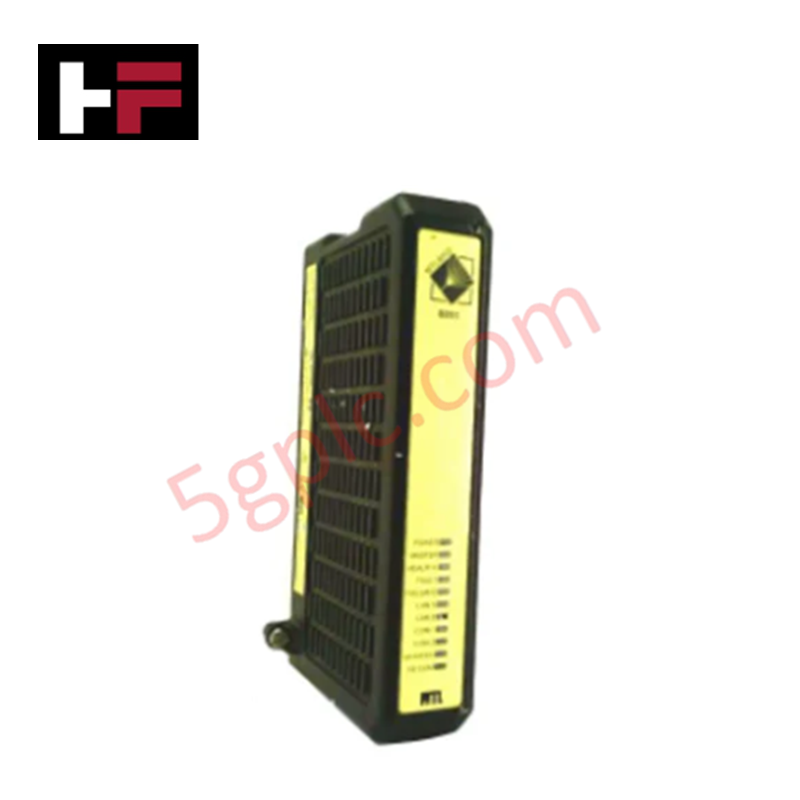
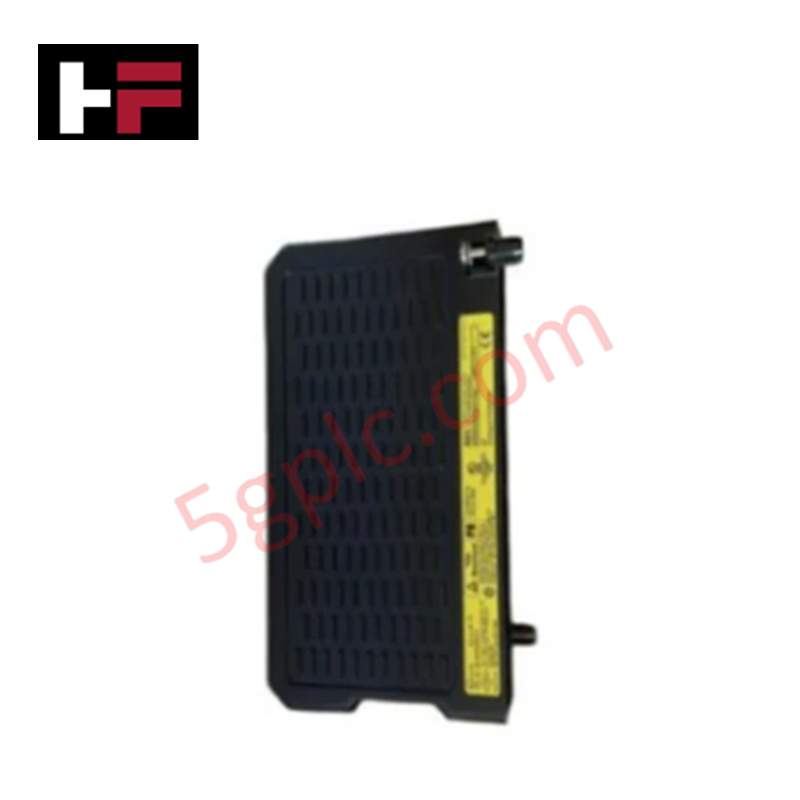
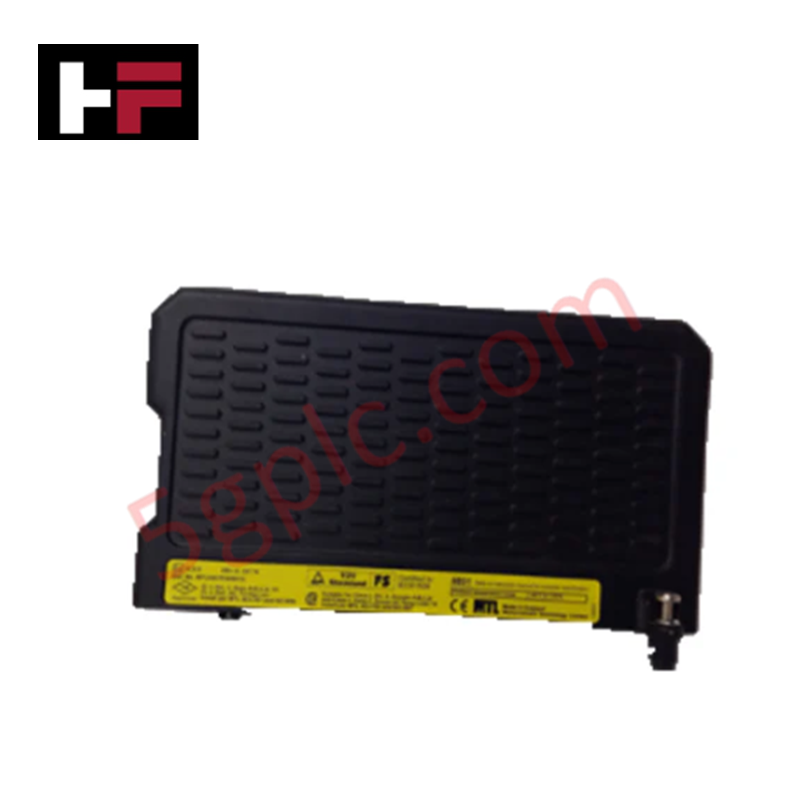
The GE 8851-LC-MT, also cataloged as the 8851-LC-MT Safety Control Module, operates as a dedicated hardware component for deterministic safety data transmission within SafetyNet network platforms.
Hardware Specifications
| Parameter | Specification |
|---|---|
| Model | 8851-LC-MT |
| Brand | GE (General Electric) |
| Origin | United States |
| Weight | 2.5 lbs |
| Dimensions | 57 mm x 14.5 mm x 13.4 mm |
| Operating Temp | -40 - 85 deg C |
| Power Consumption | Power Supply: 3.3 V DC |
| Transmission Speed | 10/100/1000 Mbps |
| Operating Wavelength | 1310 nm |
| Transmit Power | -9.5 dBm to 0 dBm |
| Receive Sensitivity | -20 dBm |
| Maximum Distance | 10 km |
| Safety Certification | IEC 61508 SIL 2 |
| Architecture | 1oo1D with internal diagnostics |
Firmware Flash Compatibility and Deterministic Networks
The hardware subsystem executes high-speed optical data frame serialization over a 1310 nm laser wavelength path. Operating within a 1oo1D safety configuration, the controller executes automated internal diagnostic loops to verify physical layer packet integrity. To maintain collision-free packet execution across Profinet, EtherNet/IP, or native SafetyNet deterministic networks, connected node interfaces must align with precise firmware flash compatibility matrices. This prevents sub-millisecond transmission timing drift and protects the safety-loop response times.
Frequently Asked Questions
Q: How does the 1oo1D architecture execute a fail-safe state during an internal hardware diagnostic fault?
A: When internal diagnostics detect an optical degradation or memory register failure, the 1oo1D framework automatically transitions the local channel to its defined de-energized fail-safe state while transmitting a diagnostic fault byte across the backplane.
Q: What are the hot-swap constraints when replacing an active 8851-LC-MT module?
A: Hot-swapping is restricted based on the active state of the optional redundancy link. If a redundant channel is synchronized, the primary unit can be removed without disrupting optical transmission loops; otherwise, the local network segment must be de-energized.
Field Installation Guidelines
- Fiber Optic Cable Bending Radius: Maintain a minimum structural bending radius of 30 mm on all 1310 nm fiber optic patch cables to prevent signal attenuation and preserve receive sensitivity parameters above -20 dBm.
- DIN-Rail and Enclosure Alignment: Mount the module onto standard panel rails inside a sealed cabinet, verifying that the physical clearance path allows natural convective cooling across the -40 to 85 deg C operating window.
- Electrostatic Grounding Sequence: Ensure the hosting chassis framework is bonded to the master facility low-impedance grounding bar prior to inserting the 3.3 V internal logic interface line pins.
Additional Information
- 100% Genuine Parts: All products are original and authentic, ensuring reliable industrial performance.
- 30-Day Refund Guarantee: Return any in-stock item within 30 days in original, unopened packaging for a full refund (excluding shipping and fees).
- 12-Month Warranty: Covers defects in materials or workmanship; excludes misuse, normal wear, or unauthorized modifications.
- Worldwide Shipping: We ship via USPS, UPS, FedEx, and DHL. Delivery times vary by country and may be subject to customs or import fees.
- Support & Contact: Technical and warranty assistance is available anytime. Contact us here: Contact.
- Purchase Guidance: Check product specifications and compatibility carefully before ordering to ensure proper application.


Tech & Buying Guide

Demystifying the DDE Protocol in Legacy Industrial Automation Systems
Modern control systems rely heavily on seamless interprocess communication to exchange operational data between software programs. Microsoft first introduced the Dynamic Data Exchange (DDE) protocol in 1987 to enable real-time data sharing. In factory automation, DDE served as an early bridge between control software and Windows desktop applications. Therefore, understanding DDE mechanics provides crucial insights into how legacy industrial networks established software-level connectivity.

Demystifying CPU Communication Ports in Siemens PLC Architectures
Industrial automation relies heavily on robust data exchange between devices. Without seamless connectivity, field instruments, network switches, human-machine interfaces, and programmable logic controllers cannot coordinate effectively. Therefore, understanding the various CPU communication ports available in Siemens hardware ensures efficient factory automation design and seamless system integration.

Mastering the Siemens PLC Scan Cycle: How the CPU Executes Automation Programs
Industrial automation relies heavily on programmable logic controllers (PLCs) to manage complex manufacturing processes. Many engineers dive straight into programming without mastering the underlying architecture. However, understanding how a PLC CPU executes a program ensures reliable system design. Therefore, mastering the scan cycle optimizes both performance and troubleshooting in modern control systems.