










Product Details
Product Overview
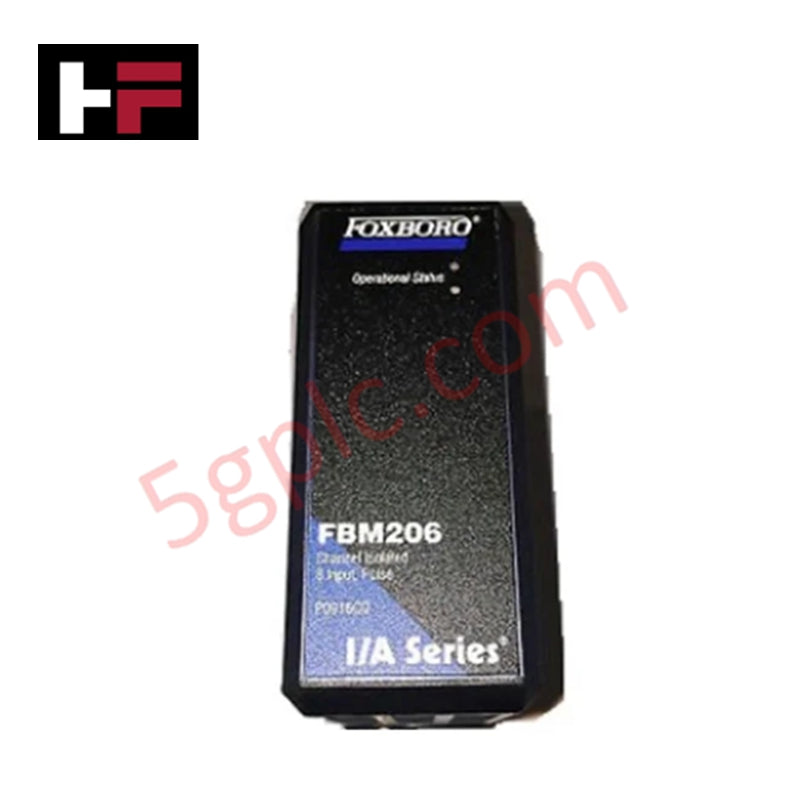
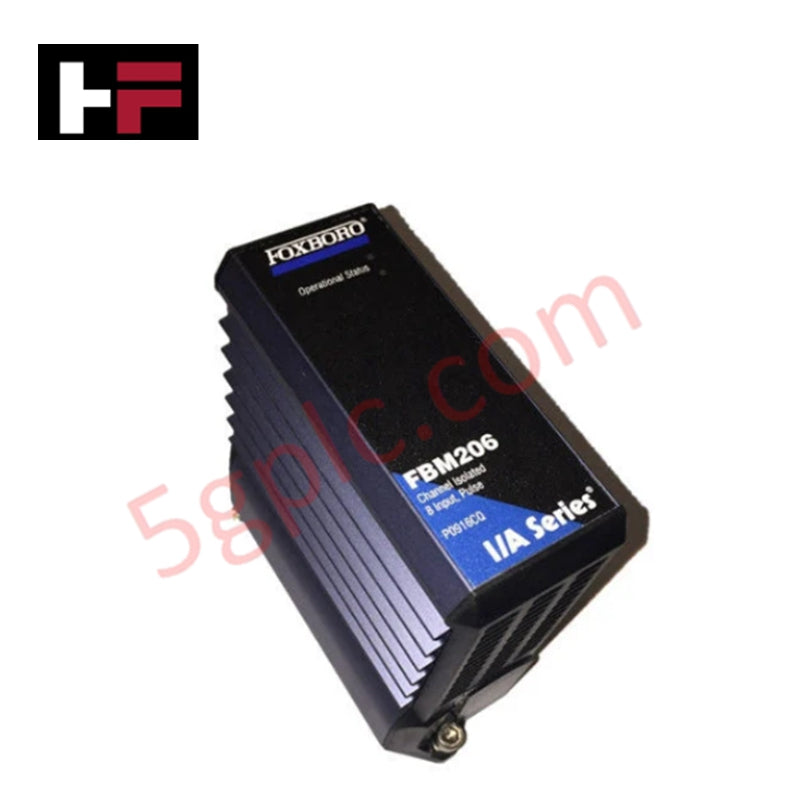
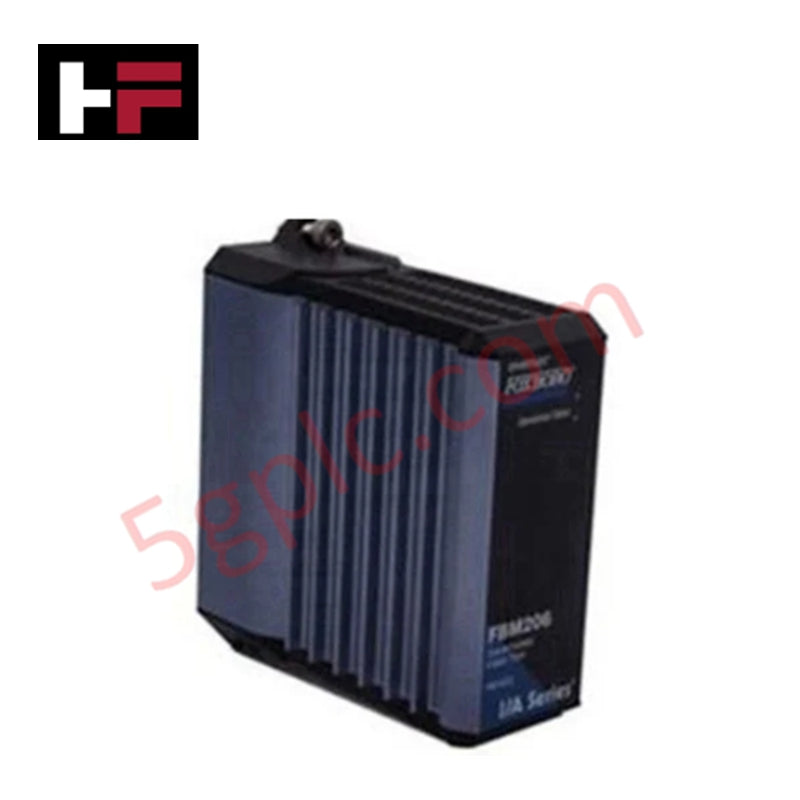
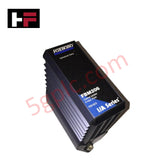
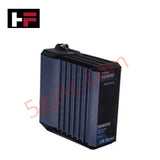
The Foxboro FBM206 (P0916CQ) functions as a high-precision frequency acquisition interface for the Foxboro I/A Series Distributed Control System (DCS). This module features eight isolated channels specifically designed to measure the rate of change or frequency of process variables. It serves as the primary hardware interface for turbine flowmeters, tachometers, and high-speed event counters. We provide this unit as 100% Brand New and Original, ensuring your control system maintains factory-certified accuracy without the degradation risks of refurbished components.
Technical Specifications
| Feature | Specification Details |
| Manufacturer | Foxboro (Schneider Electric) |
| Model Number | FBM206 |
| Part Number | P0916CQ |
| Number of Channels | 8 Independent Channels |
| Input Type | Pulse / Frequency |
| Frequency Range | 0.5 Hz to 20 kHz |
| Accuracy | ±0.5% of Full Scale |
| Input Impedance | 100 kΩ |
| Isolation Voltage | 2,500 Vrms |
| Operating Temperature | -40 to 85 °C (-40 to 185 °F) |
| Power Consumption | 2.5 W |
| Dimensions | 160 x 108 x 25 mm (6.25 x 4.25 x 1.0 in) |
| Weight | 0.45 kg (1.0 lb) |
Engineering Advantages
The FBM206 P0916CQ resolves critical signal processing challenges in high-speed industrial environments:
-
Superior Electrical Protection: Each channel provides 2,500 Vrms isolation. This robust barrier prevents high-voltage transients and ground loops from entering the system Fieldbus, safeguarding the central control processors from field-side electrical noise.
-
Extreme Thermal Tolerance: The hardware operates across a wide range from -40 to 85 °C. This industrial-grade rating permits installation in remote marshalling cabinets or outdoor enclosures where temperature fluctuations would cause standard commercial electronics to fail.
-
Broad Frequency Dynamics: The module handles signals from ultra-low 0.5 Hz up to high-speed 20 kHz. This range allows engineers to use a single module type for diverse applications, from slow-turning volumetric flowmeters to high-speed turbine shafts.
-
Minimal Thermal Load: Drawing only 2.5 W, the FBM206 generates negligible heat. This low-power consumption allows for high-density mounting on DIN rails or baseplates without necessitating specialized cabinet cooling systems.
-
Transparent Signal Acquisition: High input impedance (100 kΩ) prevents the module from loading the field transmitter circuit. This ensures that the pulse signal maintains its peak voltage and wave shape, resulting in precise frequency calculations even over long cable runs.
FAQs
-
Can the FBM206 P0916CQ handle signals from magnetic pickups?
Yes. The FBM206 processes standard pulse and frequency signals commonly generated by magnetic sensors and turbine meters. You must verify that the peak-to-peak voltage of the sensor output meets the minimum threshold requirements of the I/A Series Fieldbus specification.
-
Does this module support hot-swapping?
The I/A Series architecture allows for the removal and replacement of FBMs without powering down the baseplate. The system automatically re-identifies the Brand New P0916CQ and resumes data transmission via the redundant Fieldbus upon seating.
-
How does the module deal with high-frequency noise?
The FBM206 incorporates internal signal conditioning and filtering. This hardware-level processing rejects high-frequency interference and "jitter," ensuring the control processor receives only the true pulse data from the field device.
-
Is the P0916CQ compatible with older 100 Series baseplates?
The P0916CQ belongs to the 200 Series modular family. It requires a 200 Series baseplate for physical and electrical connection. If you are upgrading from 100 Series hardware, ensure you have the appropriate adapter or baseplate hardware in place.
Additional Information
- 100% Genuine Parts: All products are original and authentic, ensuring reliable industrial performance.
- 30-Day Refund Guarantee: Return any in-stock item within 30 days in original, unopened packaging for a full refund (excluding shipping and fees).
- 12-Month Warranty: Covers defects in materials or workmanship; excludes misuse, normal wear, or unauthorized modifications.
- Worldwide Shipping: We ship via USPS, UPS, FedEx, and DHL. Delivery times vary by country and may be subject to customs or import fees.
- Support & Contact: Technical and warranty assistance is available anytime. Contact us here: Contact.
- Purchase Guidance: Check product specifications and compatibility carefully before ordering to ensure proper application.




Tech & Buying Guide

Demystifying the DDE Protocol in Legacy Industrial Automation Systems
Modern control systems rely heavily on seamless interprocess communication to exchange operational data between software programs. Microsoft first introduced the Dynamic Data Exchange (DDE) protocol in 1987 to enable real-time data sharing. In factory automation, DDE served as an early bridge between control software and Windows desktop applications. Therefore, understanding DDE mechanics provides crucial insights into how legacy industrial networks established software-level connectivity.

Demystifying CPU Communication Ports in Siemens PLC Architectures
Industrial automation relies heavily on robust data exchange between devices. Without seamless connectivity, field instruments, network switches, human-machine interfaces, and programmable logic controllers cannot coordinate effectively. Therefore, understanding the various CPU communication ports available in Siemens hardware ensures efficient factory automation design and seamless system integration.

Mastering the Siemens PLC Scan Cycle: How the CPU Executes Automation Programs
Industrial automation relies heavily on programmable logic controllers (PLCs) to manage complex manufacturing processes. Many engineers dive straight into programming without mastering the underlying architecture. However, understanding how a PLC CPU executes a program ensures reliable system design. Therefore, mastering the scan cycle optimizes both performance and troubleshooting in modern control systems.