












Product Details
Technical Functional Integration
The DSQC 327 (3HAB7230-1/04) is a versatile signal processing module designed for the ABB S4C and S4C+ controller generations. This board functions as a high-density combination interface, consolidating multiple input and output channels into a single compact hardware footprint. It is primarily utilized to facilitate communication between the robot's central processing unit and peripheral factory equipment, such as sensors, grippers, and safety interlocks. By integrating mixed signal types, the DSQC 327 (3HAB7230-1/04) minimizes the need for multiple discrete boards, optimizing cabinet space while maintaining high-speed signal integrity across the system bus.
Hardware Specifications and Environmental Data
The following technical parameters define the physical and operational profile of the DSQC 327 (3HAB7230-1/04):
-
Product Type: Combination Digital Input/Output Module
-
Controller Compatibility: Optimized for ABB S4C (M97/M98) and S4C+ systems
-
Channel Architecture: Mixed I/O configuration (Digital Inputs/Outputs)
-
Communication Link: Backplane-integrated serial/parallel bus interface
-
Physical Dimensions: 12.6 cm (D) x 12.4 cm (W) x 2.2 cm (H)
-
Component Weight: 0.1 kg
-
Manufacturing Origin: Switzerland
-
Logic Level: Standard 24V DC industrial logic support
Industrial Application and Maintenance FAQ
What are the primary failure symptoms for this I/O module?
The most frequent indicators of a faulty DSQC 327 (3HAB7230-1/04) include "I/O Communication Lost" errors on the programming unit or specific input/output channels failing to toggle despite correct electrical excitation. These issues are often caused by opto-coupler degradation or physical damage to the connector pins.
Does this unit require manual addressing via dip-switches?
Yes. When replacing a DSQC 327 (3HAB7230-1/04), it is essential to replicate the binary address settings found on the original board's jumpers or switches to ensure the S4C controller maps the I/O signals to the correct software addresses.
Can this board handle high-current inductive loads?
While the digital outputs are robust, it is recommended to use interposing relays for high-current inductive loads (such as large solenoid valves) to protect the internal transistors of the DSQC 327 (3HAB7230-1/04) from flyback voltage spikes.
Comparison: DSQC 327 vs. DSQC328
| Feature | DSQC 327 (3HAB7230-1/04) | DSQC 328 (3HAC17444-8) |
| System Generation | S4C / S4C+ | S4C / S4C+ |
| I/O Type | Combination (Mixed) | High-Density Digital |
| Mounting | Internal Rack Slot | Internal Rack Slot |
| Circuit Density | Compact Multi-Function | Dedicated Signal Logic |
Additional Information
- 100% Genuine Parts: All products are original and authentic, ensuring reliable industrial performance.
- 30-Day Refund Guarantee: Return any in-stock item within 30 days in original, unopened packaging for a full refund (excluding shipping and fees).
- 12-Month Warranty: Covers defects in materials or workmanship; excludes misuse, normal wear, or unauthorized modifications.
- Worldwide Shipping: We ship via USPS, UPS, FedEx, and DHL. Delivery times vary by country and may be subject to customs or import fees.
- Support & Contact: Technical and warranty assistance is available anytime. Contact us here: Contact.
- Purchase Guidance: Check product specifications and compatibility carefully before ordering to ensure proper application.






Tech & Buying Guide
Demystifying Programmable Logic Controllers: Comprehensive Guide to PLC Classification and Selection in Industrial Automation
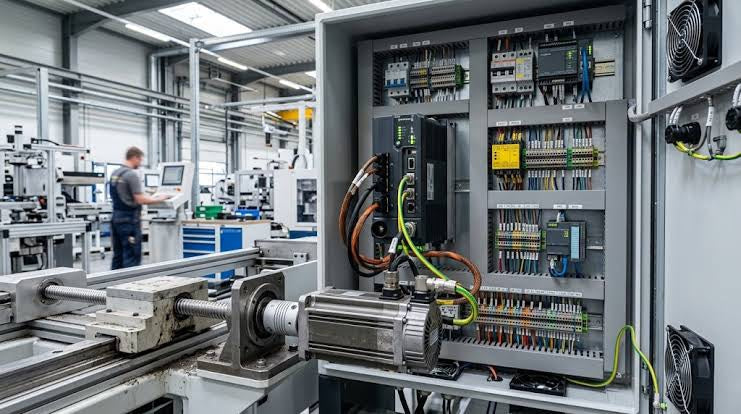
Modern industrial automation heavily relies on Programmable Logic Controllers (PLCs) to drive factory floor efficiency. Over my 15 years as an industrial automation expert working with DCS, TSI, and control systems, I have seen PLCs evolve into the central nervous system of modern manufacturing. Selecting the right controller requires a deep understanding of PLC types based on physical size, hardware architecture, and power supply configurations.
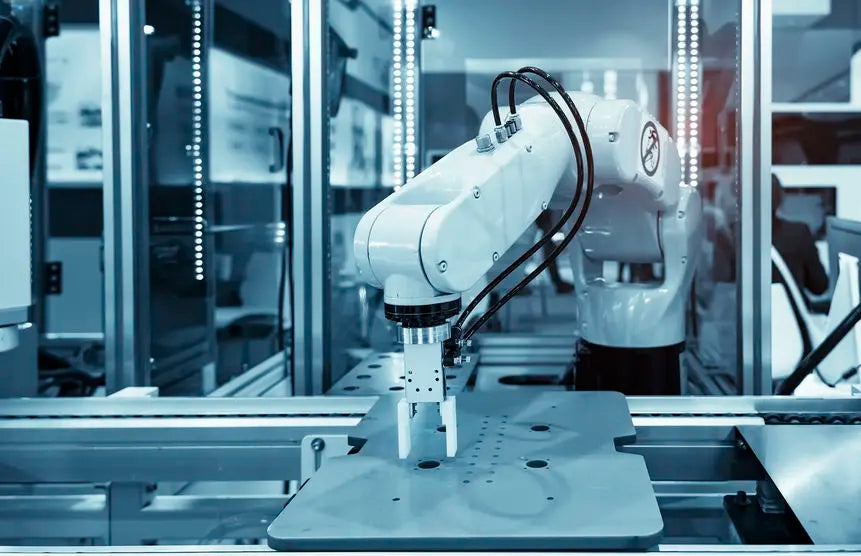
Comprehensive Guide to PLC Types in Modern Industrial Automation
Modern industrial automation relies on programmable logic controllers to govern critical factory operations. System integrators classify PLCs based on scale, hardware architecture, and power supply design. Understanding these core categories enables automation engineers to select the right control system architecture. Consequently, proper hardware selection optimizes performance while minimizing long-term operational costs.

Demystifying the DDE Protocol in Legacy Industrial Automation Systems
Modern control systems rely heavily on seamless interprocess communication to exchange operational data between software programs. Microsoft first introduced the Dynamic Data Exchange (DDE) protocol in 1987 to enable real-time data sharing. In factory automation, DDE served as an early bridge between control software and Windows desktop applications. Therefore, understanding DDE mechanics provides crucial insights into how legacy industrial networks established software-level connectivity.