










Product Details
Product Overview
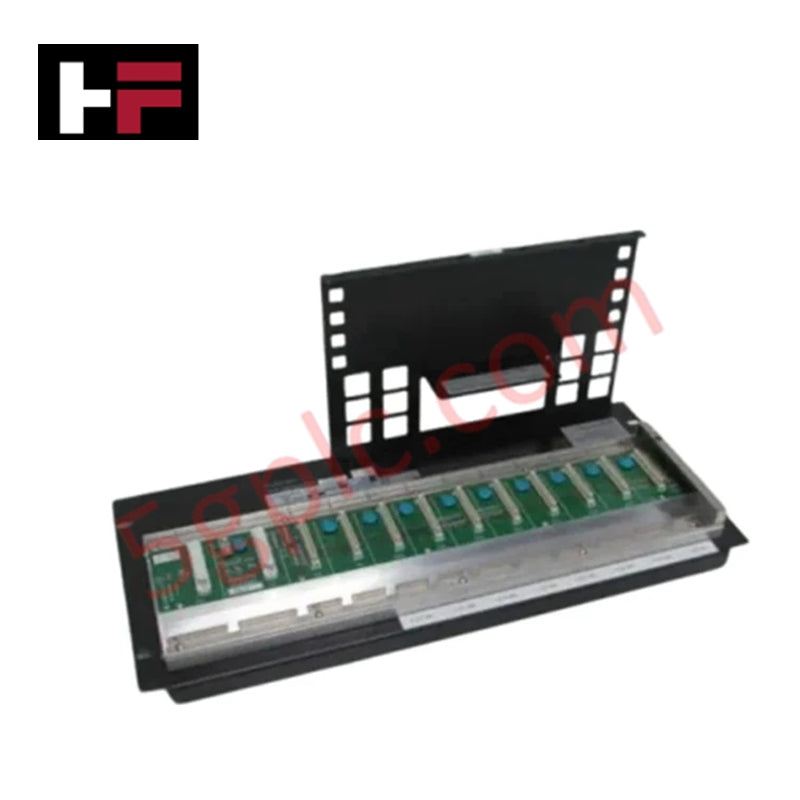
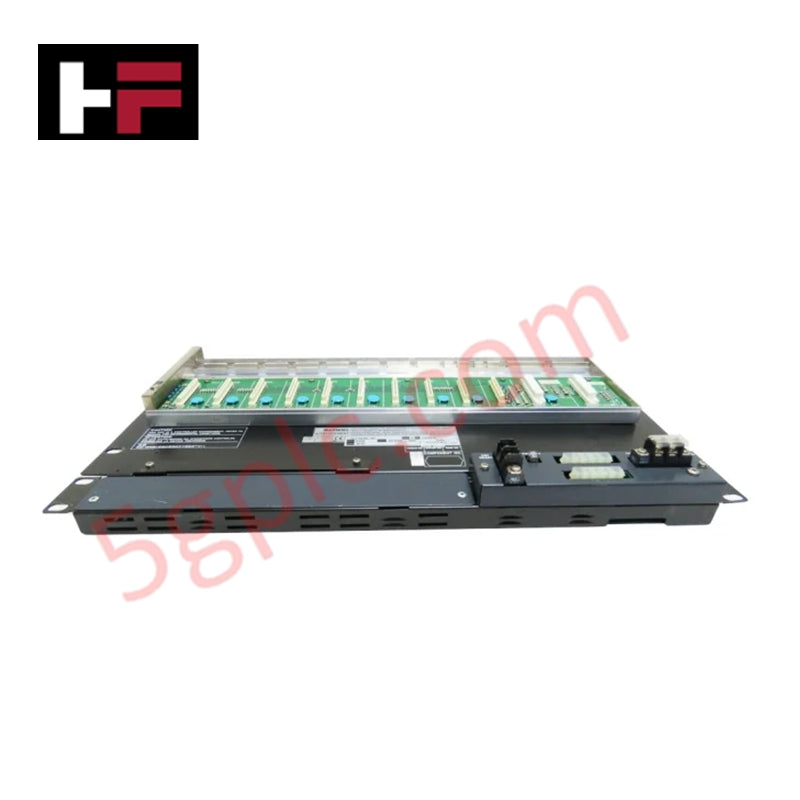
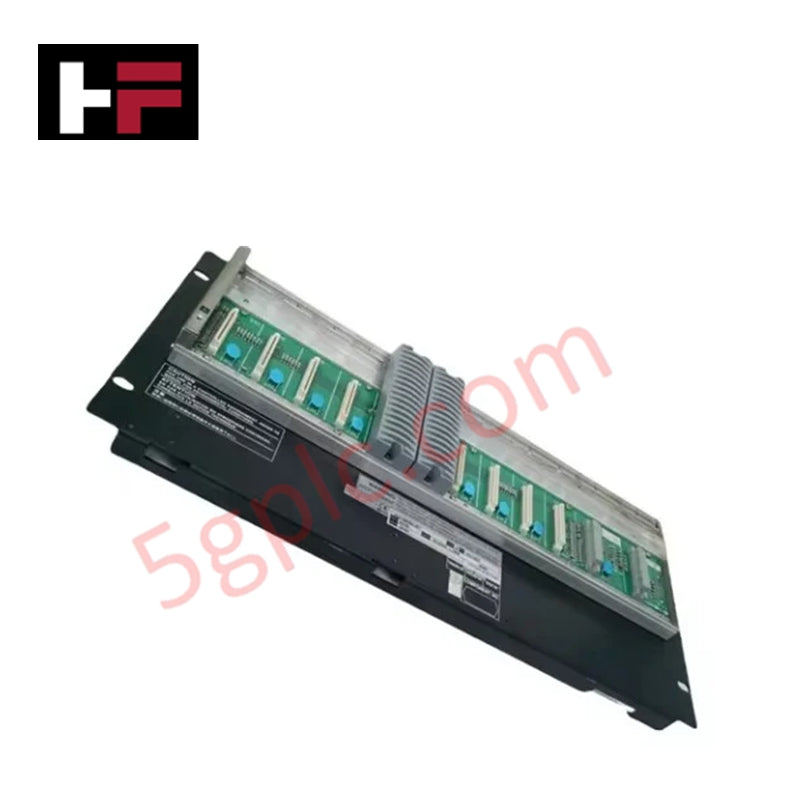
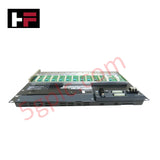
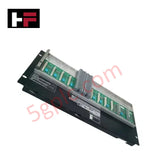
The Yokogawa ANB10D-223/S2 is a Duplicated Node Interface Unit (NIU) designed to expand the I/O capacity of CENTUM VP and CENTUM CS 3000 Field Control Stations (FCS). This unit acts as a high-reliability subrack that houses up to 8 FIO (Field Input/Output) modules. The "D" suffix signifies its Duplexed (Redundant) architecture, ensuring that communication between field sensors and the central controller remains uninterrupted during a component failure. The "S2" revision indicates a specialized hardware update focused on enhanced ESB bus signal stability and improved resistance to long-term component aging.
Condition: 100% Brand New and Original Factory Sealed.
Part Number Breakdown: ANB10D-223/S2
Yokogawa utilizes a structured suffix code to define the power requirements and mounting style:
-
ANB10D: Duplicated Node Interface Unit (for FIO).
-
-2: Dual-redundant 220-240 V AC Power Supply.
-
2: 19-inch Rack-mount type with insulation bushing.
-
3: Basic hardware type with specific revision enhancements.
-
/S2: Suffix code for improved ESB bus stability and component longevity.
Technical Specifications
The ANB10D-223/S2 provides a stable electrical environment for high-density I/O modules.
-
Number of I/O Slots: 8 slots (supports Analog, Digital, and Communication FIO modules)
-
Interface Bus: ESB Bus (Extended Serial Backplane)
-
Power Supply: 220-240 V AC, 50/60 Hz (Dual-redundant)
-
Mounting: Standard 19-inch rack-mount (with insulation bushing)
-
Current Consumption: Max 80 VA (at 220-240 V AC)
-
Withstand Voltage: 1500 V AC between power terminals and ground
-
Ambient Temperature: 0 to 50°C (Operating)
-
Weight: Approx. 10 kg
Engineering Advantages
-
Mission-Critical Availability: The ANB10D-223/S2 is equipped with dual-redundant power supplies (PW482) and supports dual-redundant ESB bus interface modules (EC401). This ensures that a failure in one power circuit or communication cable does not result in the loss of 8 I/O channels, maintaining plant safety and production.
-
S2 Revision Reliability: The "S2" hardware revision incorporates updated internal circuitry specifically engineered to resist thermal aging. It provides superior signal integrity for the high-speed ESB communication bus, which is critical in large-scale distributed architectures where signal timing is precise.
-
Efficient 220V Power Management: Designed specifically for 220-240V AC environments, this model eliminates the need for external step-down transformers in standard international power grids. The internal power units are optimized for high efficiency and low heat dissipation.
-
Flexible I/O Distribution: This NIU allows for the physical distribution of I/O modules across multiple cabinets. By connecting several ANB10D units via YCB301 ESB bus cables, engineers can optimize field wiring runs and reduce copper costs.
-
Online Hot-Swapping: Redundant power supplies and bus interface modules can be replaced while the system is live. This capability allows maintenance teams to perform repairs without shutting down the associated control loops, drastically reducing Mean Time to Repair (MTTR).
FAQs
-
What is the difference between ANB10D and ANB10S?
The ANB10D is the Duplicated version (housing two power supplies and two bus interfaces), while the ANB10S is the Single version. For critical process loops, the ANB10D is the industry standard for preventing I/O dropouts.
-
How do I connect the ANB10D-223/S2 to the Field Control Unit?
The NIU connects to the FCU (e.g., AFV30D or AFV10D) using ESB Bus Cables. These cables must be used in pairs for redundant systems to ensure the duplexed communication paths are fully utilized.
-
Does this unit include the I/O modules?
No. The ANB10D-223/S2 is the base chassis and power assembly. Specific I/O modules like the AAI143 or ADV151 must be ordered separately based on your signal point requirements.
-
Can I use this unit in a 110V AC environment?
No. This model is specifically rated for 220-240V AC. For 110-120V AC power systems, you should use the ANB10D-4xx series.
Additional Information
- 100% Genuine Parts: All products are original and authentic, ensuring reliable industrial performance.
- 30-Day Refund Guarantee: Return any in-stock item within 30 days in original, unopened packaging for a full refund (excluding shipping and fees).
- 12-Month Warranty: Covers defects in materials or workmanship; excludes misuse, normal wear, or unauthorized modifications.
- Worldwide Shipping: We ship via USPS, UPS, FedEx, and DHL. Delivery times vary by country and may be subject to customs or import fees.
- Support & Contact: Technical and warranty assistance is available anytime. Contact us here: Contact.
- Purchase Guidance: Check product specifications and compatibility carefully before ordering to ensure proper application.


Tech & Buying Guide

Demystifying CPU Communication Ports in Siemens PLC Architectures
Industrial automation relies heavily on robust data exchange between devices. Without seamless connectivity, field instruments, network switches, human-machine interfaces, and programmable logic controllers cannot coordinate effectively. Therefore, understanding the various CPU communication ports available in Siemens hardware ensures efficient factory automation design and seamless system integration.

Mastering the Siemens PLC Scan Cycle: How the CPU Executes Automation Programs
Industrial automation relies heavily on programmable logic controllers (PLCs) to manage complex manufacturing processes. Many engineers dive straight into programming without mastering the underlying architecture. However, understanding how a PLC CPU executes a program ensures reliable system design. Therefore, mastering the scan cycle optimizes both performance and troubleshooting in modern control systems.

How to Connect to Siemens S7 PLCs: 5 Essential Communication Methods
Establishing a reliable hardware link between a programming terminal and a Siemens SIMATIC controller is essential for engineering workflows. Field engineers rely on distinct physical layers, ranging from legacy serial connections to high-speed Industrial Ethernet protocols. Modern factory automation environments prioritize fast data transfer and seamless driver integration. Selecting the correct connection method simplifies program downloads, online monitoring, and system troubleshooting in complex control systems.