










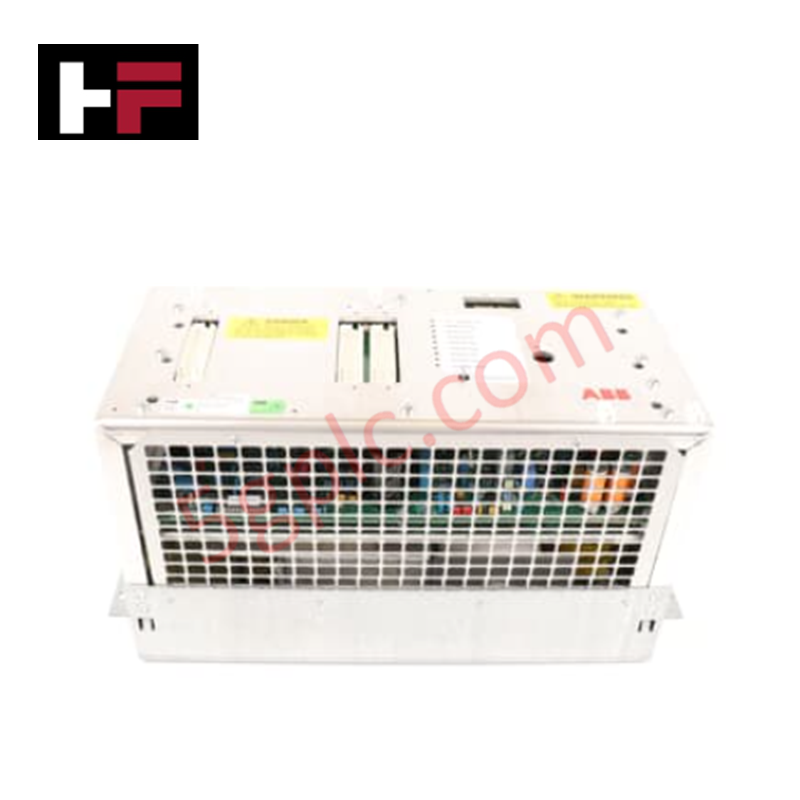
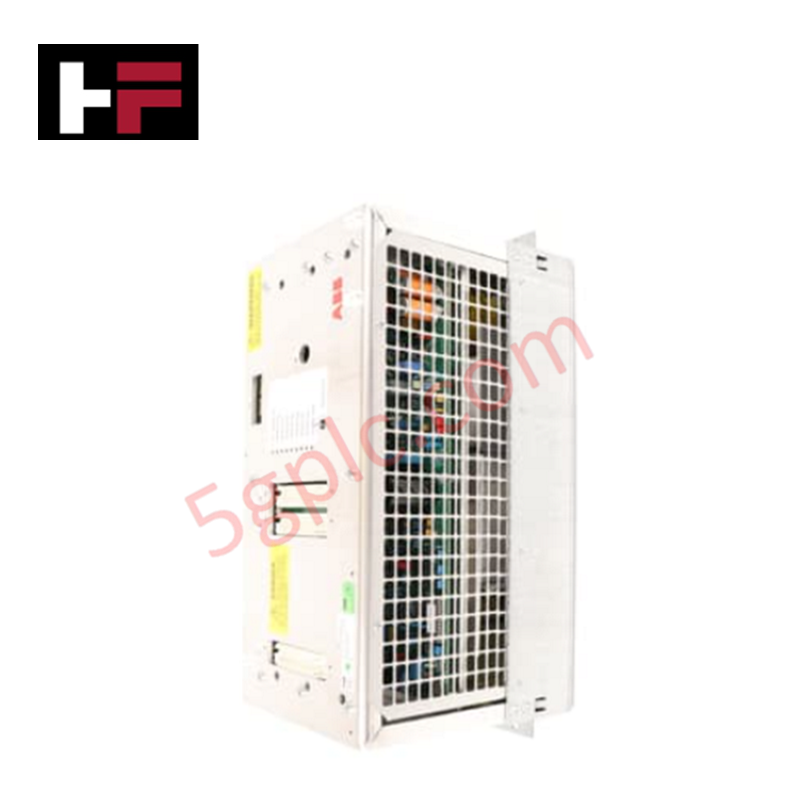
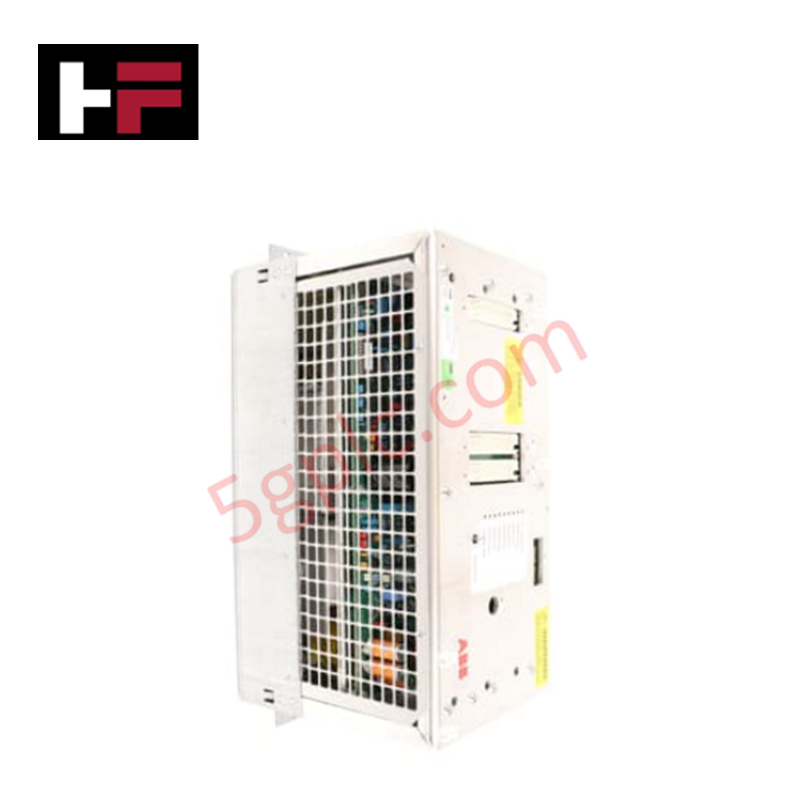
Product Details
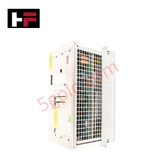
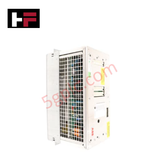
The ABB PFSA 140 3BSE006503R1, also cataloged as the PFSA 140 Roll Supply Unit, operates as a dedicated hardware component for constant-current excitation and excitation power distribution within Pressductor mill sensing and tension measurement systems. Driven by an output stage operating at 2 kHz up to 1 kW maximum capacity, the module delivers dual constant-current outputs of 2x 2x 1.2 A directly to web force sensor transducers.
Hardware Specifications
| Parameter | Specification |
|---|---|
| Model | PFSA 140 (3BSE006503R1) |
| Brand | ABB |
| Origin | United States / Sweden |
| Product Type | Power Supply Units |
| Excitation Frequency | 2 kHz |
| Maximum Output Power | 1 kW |
| Current Output Rating | 2x 2x 1.2 A (Constant Current) |
| Net Weight | 23.3 kg |
| Dimensions | Standard Pressductor subrack / enclosure footprint |
| Operating Temp | 0 to +55 deg C (standard enclosure ambient) |
| Power Consumption | 1 kW maximum full-load dissipation |
Backplane Bus Communication Velocity and Deterministic Execution
The supply unit interfaces directly with processing electronics via backplane bus communication velocity channels to provide real-time status diagnostics and current regulation feedback. Internal power logic maintains deterministic network timing and constant-current scaling without drift. Onboard firmware flash compatibility ensures synchronized parameter calibration across system controller updates without disturbing the 2 kHz excitation carrier frequency.
Frequently Asked Questions
Q: How is thermal dissipation managed given the 23.3 kg weight and 1 kW output capacity?
A: The chassis utilizes heavy-duty aluminum heat sinks designed for cabinet installation with natural or forced convection; adequate vertical airflow clearance must be maintained above and below the enclosure.
Q: What precautions are required when connecting the 2x 2x 1.2 A constant-current outputs?
A: All transducer wiring must be completed and terminal screws fully tightened prior to energizing the unit to prevent high-voltage inductive inductive transients on open circuit loops.
Field Installation Guidelines
- Enclosure Mounting: Mount the 23.3 kg unit securely using heavy-duty bolts attached to the cabinet backplate, ensuring structural support for the physical weight.
- Earth Grounding: Connect a dedicated copper earth conductor to the main chassis ground stud to establish shield grounding and minimize electromagnetic interference on the 2 kHz output lines.
- Transducer Cabling: Route constant-current excitation wiring in shielded twisted-pair cables physically separated from high-voltage AC power and motor drive conduits.
- Input Line Isolation: Ensure primary power feeds are de-energized and locked out before landing incoming power connections on the supply terminals.
Additional Information
- 100% Genuine Parts: All products are original and authentic, ensuring reliable industrial performance.
- 30-Day Refund Guarantee: Return any in-stock item within 30 days in original, unopened packaging for a full refund (excluding shipping and fees).
- 12-Month Warranty: Covers defects in materials or workmanship; excludes misuse, normal wear, or unauthorized modifications.
- Worldwide Shipping: We ship via USPS, UPS, FedEx, and DHL. Delivery times vary by country and may be subject to customs or import fees.
- Support & Contact: Technical and warranty assistance is available anytime. Contact us here: Contact.
- Purchase Guidance: Check product specifications and compatibility carefully before ordering to ensure proper application.






Tech & Buying Guide

Static UPS vs. Rotary UPS: Technical Evaluation for Industrial Automation

Comprehensive Guide to Noise Types in Industrial Automation and Electronics

Mitigating Emergency Stop Spurious Trips in Industrial Control Systems
Emergency stop (E-Stop) pushbuttons serve as vital safety devices in factory automation and process control plants. Functional safety standards mandate normally-closed (NC) contact blocks to ensure fail-safe operation during wiring breaks or power outages. However, mechanical degradation over time can trigger unexpected spurious trips, halting production lines without an actual emergency. Understanding the underlying causes of mechanical contact failure allows automation engineers to implement robust, fault-tolerant safety circuits.