










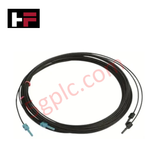
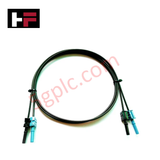
Product Details
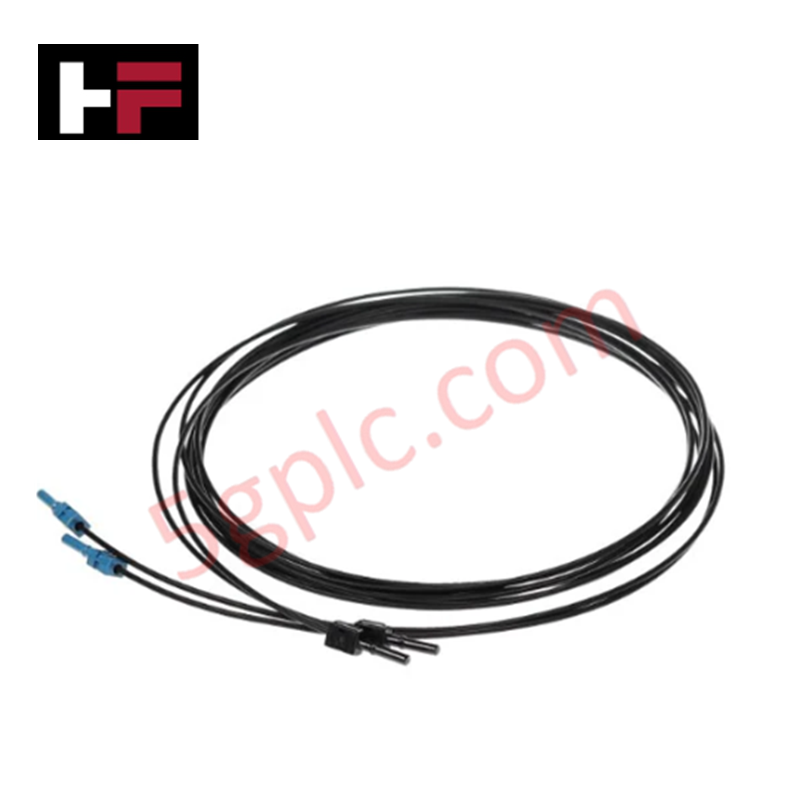
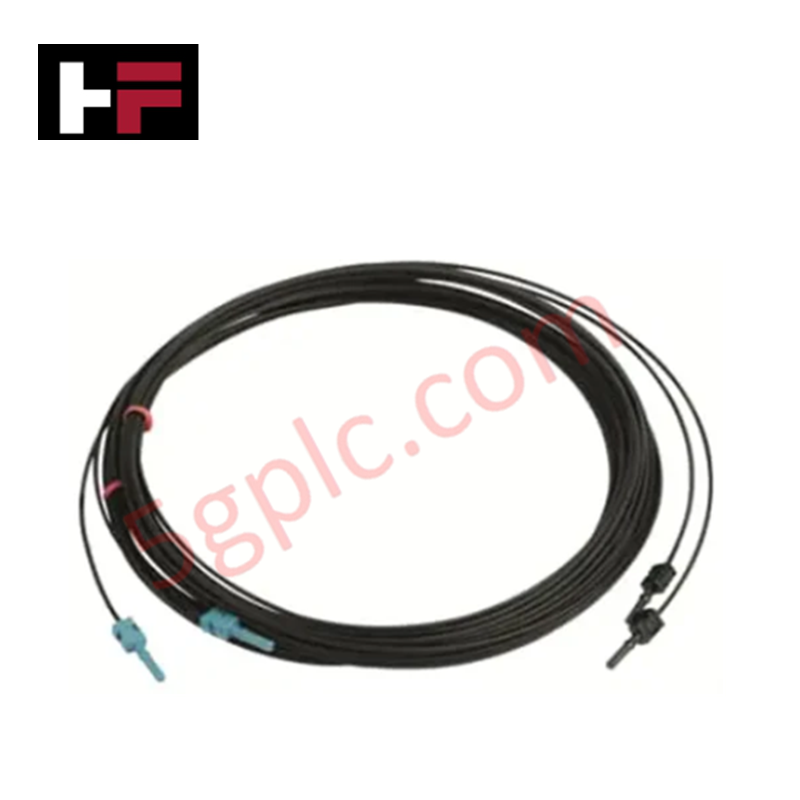
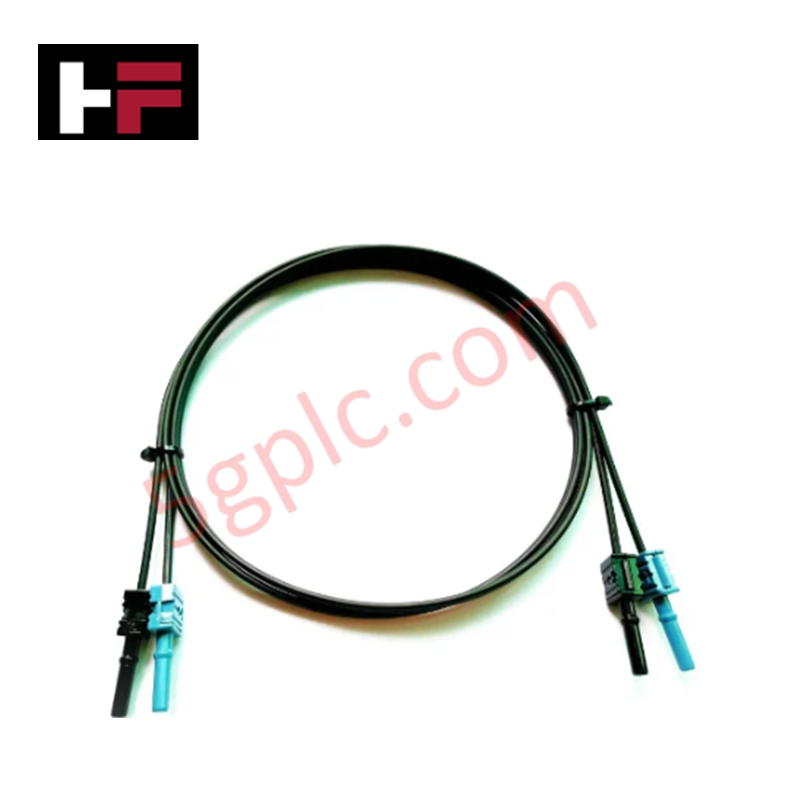
Configured for high-speed optical signal serialization in drive control loops, the ABB NLWC-03 (NLWC-03 Twin Fibre Optic Cable) provides direct physical/electrical execution.
Hardware Specifications
| Parameter | Specification |
|---|---|
| Model | NLWC-03 (Product ID: 58948233) |
| Brand | ABB |
| Origin | Finland |
| Weight | 0.100 kg |
| Dimensions | 2 x 3 m continuous length profile |
| Operating Temp | -20 to +70 deg C (Standard industrial baseline parameters) |
| Power Consumption | 0 W (Passive optical medium) |
| Product Type | Twin Fibre Optic Cables |
| Core Material | Plastic Optical Fibre (POF) |
| Quantity Structure | 2 x single fibers per ordered set |
| WEEE Category | Product Not in WEEE Scope |
Profinet / EtherNet/IP Deterministic Networks and I/O Density Scaling
The dual plastic core arrangement of the NLWC-03 is engineered to support synchronous data transport between drive regulatory boards and external network interface cards. By eliminating electromagnetic interference along its length, the fiber line supports constant backplane bus communication velocity indexes across complex electrical systems. When connected to communication ports that map into larger Profinet / EtherNet/IP deterministic networks, this assembly maintains real-time parameter tracking without introducing scan timing jitter. The standardized termination design ensures strict firmware flash compatibility across major controller revisions, providing isolated signal transfer necessary for expanding high-density local I/O scaling setups.
Frequently Asked Questions
Q: Does the material composition of the NLWC-03 support continuous hot-swap attachment during active drive operation?
A: Yes. Because the optical assembly transmits non-electrical light pulses, it can be physically unplugged or inserted without risking backplane bus electrical errors or sparking. However, removing active communication tracks breaks the drive synchronization loop and triggers immediate control fault parameters.
Q: How is the physical bend tracking baseline monitored to prevent signal attenuation errors?
A: The passive plastic core layout has a specific minimum bend radius limitation. Bending the cable beyond this structural threshold causes optical dispersion losses, which degrade data frame delivery and generate interface communication timeouts.
Q: Are there discrete transmitter/receiver labeling indicators on this dual-line assembly?
A: Yes. The assembly includes color-coded trace rings or molding markers at each end. These indicators ensure correct matching of transmission directions between the drive control board TX ports and the remote interface RX nodes.
Field Installation Guidelines
- Connector Optical Cleaning: Inspect both optical faces for contaminants prior to seating the connectors. Wipe clean using an approved lint-free dry cloth to avoid signal degradation.
- Minimum Bend Management: Route the twin fiber lines within the wire trays while maintaining a minimum structural bend radius of 35 mm. Tight crimps fracture the plastic fiber core structure.
- Pull Tension Limits: Apply mechanical pulling forces only to the external outer protective jacketing during installation routing. Do not apply tensile loads directly to the terminated connector housings.
- Separation from Thermal Sources: Route the plastic lines clear of high-temperature resistive modules or internal drive heatsinks. Excessive heat will distort the plastic optical core material.
Additional Information
- 100% Genuine Parts: All products are original and authentic, ensuring reliable industrial performance.
- 30-Day Refund Guarantee: Return any in-stock item within 30 days in original, unopened packaging for a full refund (excluding shipping and fees).
- 12-Month Warranty: Covers defects in materials or workmanship; excludes misuse, normal wear, or unauthorized modifications.
- Worldwide Shipping: We ship via USPS, UPS, FedEx, and DHL. Delivery times vary by country and may be subject to customs or import fees.
- Support & Contact: Technical and warranty assistance is available anytime. Contact us here: Contact.
- Purchase Guidance: Check product specifications and compatibility carefully before ordering to ensure proper application.






Tech & Buying Guide

Demystifying the DDE Protocol in Legacy Industrial Automation Systems
Modern control systems rely heavily on seamless interprocess communication to exchange operational data between software programs. Microsoft first introduced the Dynamic Data Exchange (DDE) protocol in 1987 to enable real-time data sharing. In factory automation, DDE served as an early bridge between control software and Windows desktop applications. Therefore, understanding DDE mechanics provides crucial insights into how legacy industrial networks established software-level connectivity.

Demystifying CPU Communication Ports in Siemens PLC Architectures
Industrial automation relies heavily on robust data exchange between devices. Without seamless connectivity, field instruments, network switches, human-machine interfaces, and programmable logic controllers cannot coordinate effectively. Therefore, understanding the various CPU communication ports available in Siemens hardware ensures efficient factory automation design and seamless system integration.

Mastering the Siemens PLC Scan Cycle: How the CPU Executes Automation Programs
Industrial automation relies heavily on programmable logic controllers (PLCs) to manage complex manufacturing processes. Many engineers dive straight into programming without mastering the underlying architecture. However, understanding how a PLC CPU executes a program ensures reliable system design. Therefore, mastering the scan cycle optimizes both performance and troubleshooting in modern control systems.