










Product Details
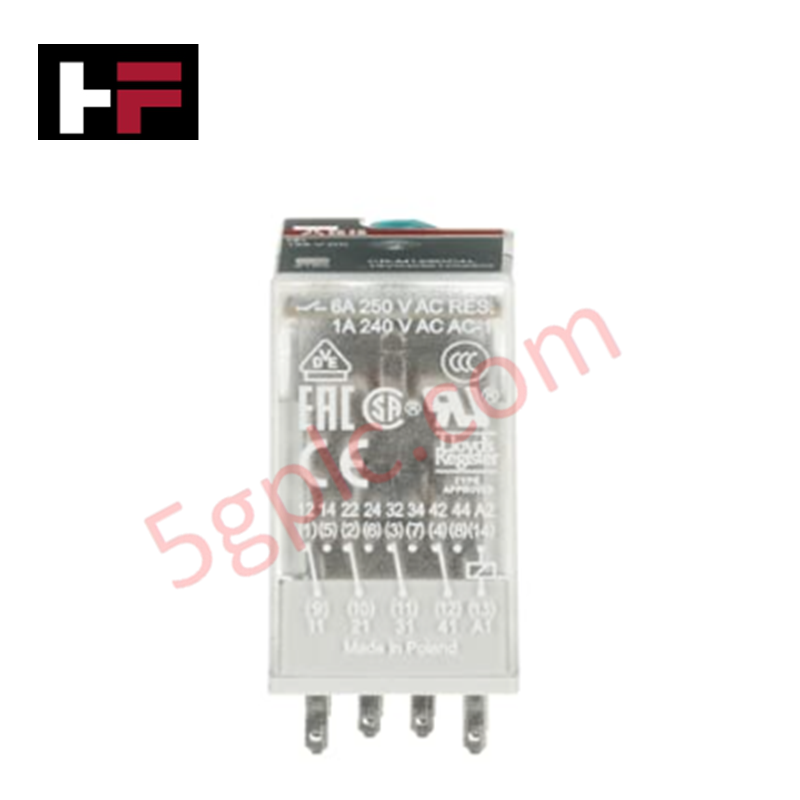
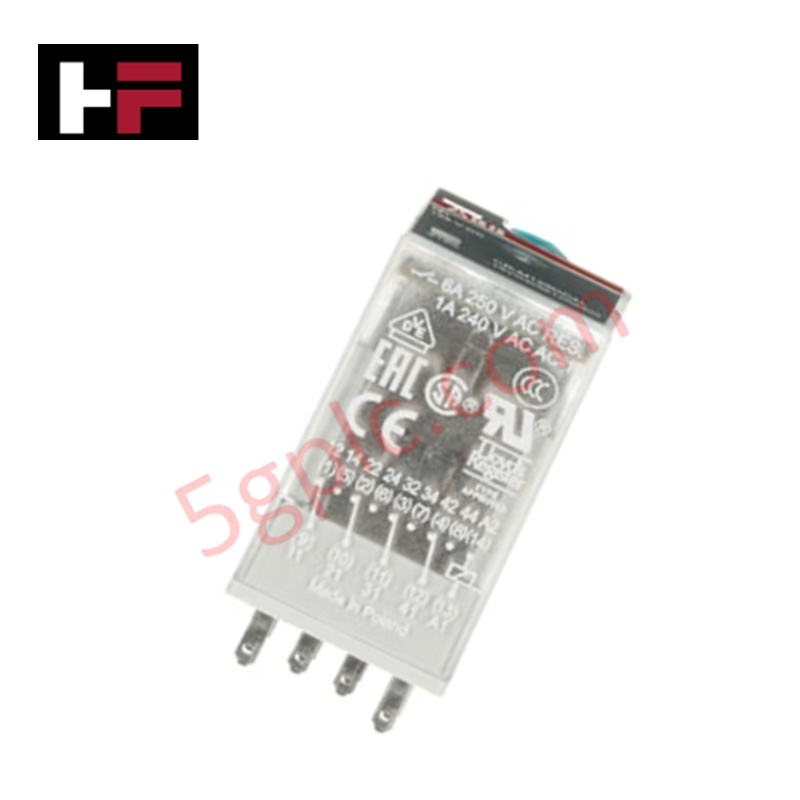
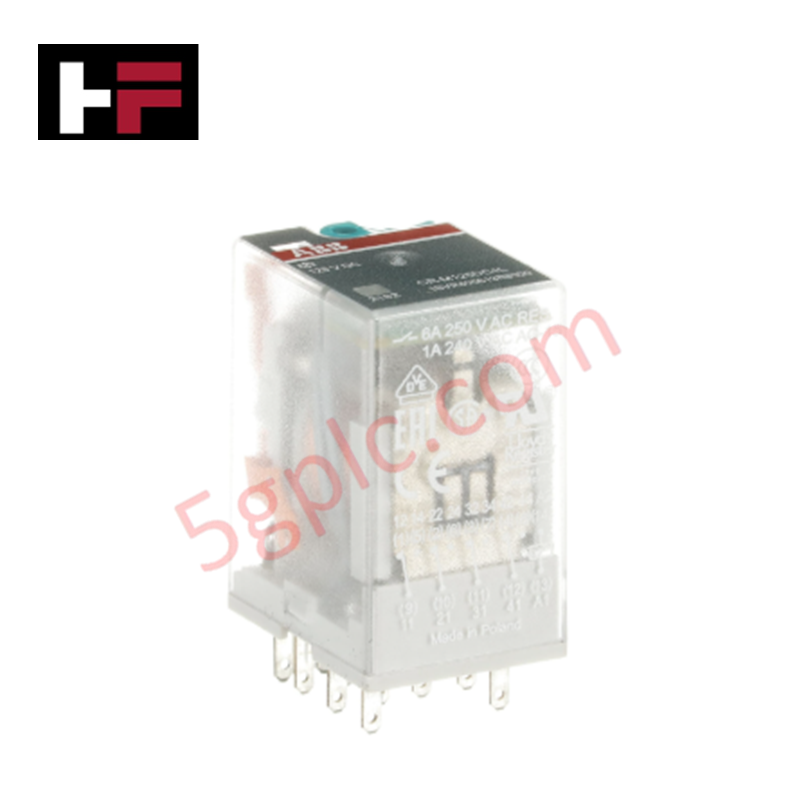
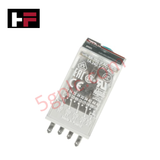
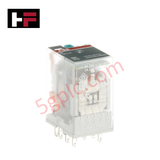
Configured for multiple circuit galvanic separation and signal multiplication in industrial control panels, the ABB CR-M125DC4L (CR-M125DC4L Pluggable Interface Relay) provides direct physical/electrical execution.
Hardware Specifications
| Parameter | Specification |
|---|---|
| Model | CR-M125DC4L (Product ID: 1SVR405613R8300) |
| Brand | ABB |
| Origin | Germany |
| Weight | 0.033 kg |
| Dimensions | 21.2 mm x 35.6 mm x 27.5 mm |
| Operating Temp | -40 to +70 deg C |
| Power Consumption | Generated via 125 V DC coil excitation loop |
| Contact Configuration | 4 c/o (SPDT) Contacts |
| Contact Rating | 250 V AC / 6 A |
| Rated Control Voltage | 125 V DC |
| Terminal Connection | Flat-Pin Connections |
| Degree of Protection | IP40 |
| Flammability Rating | UL94 HB |
Profinet / EtherNet/IP Deterministic Networks and I/O Density Scaling
The electrical coil architecture of the CR-M125DC4L functions as a galvanic buffer stage separating discrete field logic lines from physical digital output cards. This inductive suppression path filters common-mode spikes, ensuring line fluctuations do not affect host backplane bus communication velocity indexes. When routing discrete interlocks linked to remote Profinet / EtherNet/IP deterministic networks, the 4 c/o contacts enable synchronous multi-channel state distribution without introducing scanning lag into processing nodes. The uniform electrical layout preserves standard firmware flash compatibility profiles on main controller platforms, permitting dense arrangement architectures to maximize physical I/O density scaling.
Frequently Asked Questions
Q: Does the physical configuration of the CR-M125DC4L support live hot-swap replacement?
A: Yes. The pluggable flat-pin interface layout enables tool-free online extraction and replacement when inserted into a compatible ABB CR-M socket base. The upstream 125 V DC coil excitation supply should be isolated during extraction to prevent inductive arcing.
Q: What is the technical function of the integrated mechanical test button element?
A: The mechanical latch override bypasses coil electrical actuation, forcing the 4 c/o contacts into an energized state orientation. This manual override provides point-to-point physical loop verification during hardware commissioning cycles.
Q: Does this specific model feature internal suppression diodes for transient voltage containment?
A: No. The core CR-M125DC4L contains a basic inductive coil with a status LED array. High-frequency inductive surge protection requires adding a matching pluggable function module accessory to the base socket.
Field Installation Guidelines
- Base Socket Integration: Insert the flat-pin alignment grid vertically into the receptacle slot array of an ABB CR-M terminal socket. Press down firmly until the side retention holder bracket snaps into position.
- DIN Rail Mounting Alignment: Secure the socket base structure horizontally onto standard 35 mm DIN rails. Ensure the internal ground grounding clip seats properly on the rail edge to ground high-frequency noise.
- Terminal Torque Parameters: When landing conductor wiring onto the screw terminal variants of the base socket, tighten all termination points to factory specification guidelines to prevent thermal drift.
- Interconnect Cable Segregation: Route low-voltage 125 V DC coil actuation wiring paths through standard logical channels isolated from multi-phase high-current AC motor leads to block inductive crosstalk.
Additional Information
- 100% Genuine Parts: All products are original and authentic, ensuring reliable industrial performance.
- 30-Day Refund Guarantee: Return any in-stock item within 30 days in original, unopened packaging for a full refund (excluding shipping and fees).
- 12-Month Warranty: Covers defects in materials or workmanship; excludes misuse, normal wear, or unauthorized modifications.
- Worldwide Shipping: We ship via USPS, UPS, FedEx, and DHL. Delivery times vary by country and may be subject to customs or import fees.
- Support & Contact: Technical and warranty assistance is available anytime. Contact us here: Contact.
- Purchase Guidance: Check product specifications and compatibility carefully before ordering to ensure proper application.






Tech & Buying Guide

Comprehensive Guide to PLC Types in Modern Industrial Automation
Modern industrial automation relies on programmable logic controllers to govern critical factory operations. System integrators classify PLCs based on scale, hardware architecture, and power supply design. Understanding these core categories enables automation engineers to select the right control system architecture. Consequently, proper hardware selection optimizes performance while minimizing long-term operational costs.

Demystifying the DDE Protocol in Legacy Industrial Automation Systems
Modern control systems rely heavily on seamless interprocess communication to exchange operational data between software programs. Microsoft first introduced the Dynamic Data Exchange (DDE) protocol in 1987 to enable real-time data sharing. In factory automation, DDE served as an early bridge between control software and Windows desktop applications. Therefore, understanding DDE mechanics provides crucial insights into how legacy industrial networks established software-level connectivity.

Demystifying CPU Communication Ports in Siemens PLC Architectures
Industrial automation relies heavily on robust data exchange between devices. Without seamless connectivity, field instruments, network switches, human-machine interfaces, and programmable logic controllers cannot coordinate effectively. Therefore, understanding the various CPU communication ports available in Siemens hardware ensures efficient factory automation design and seamless system integration.