










Product Details
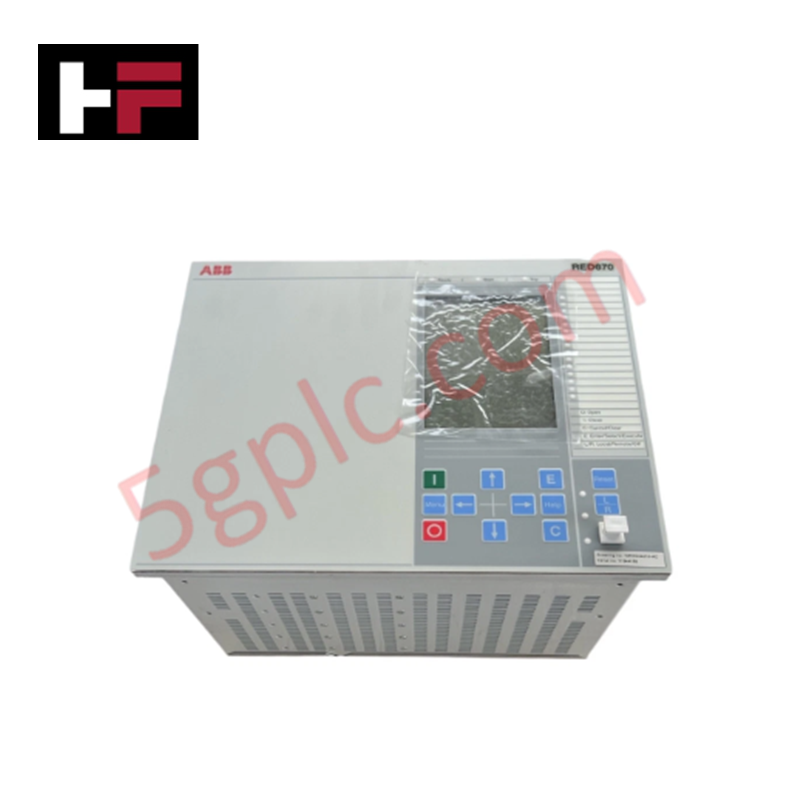
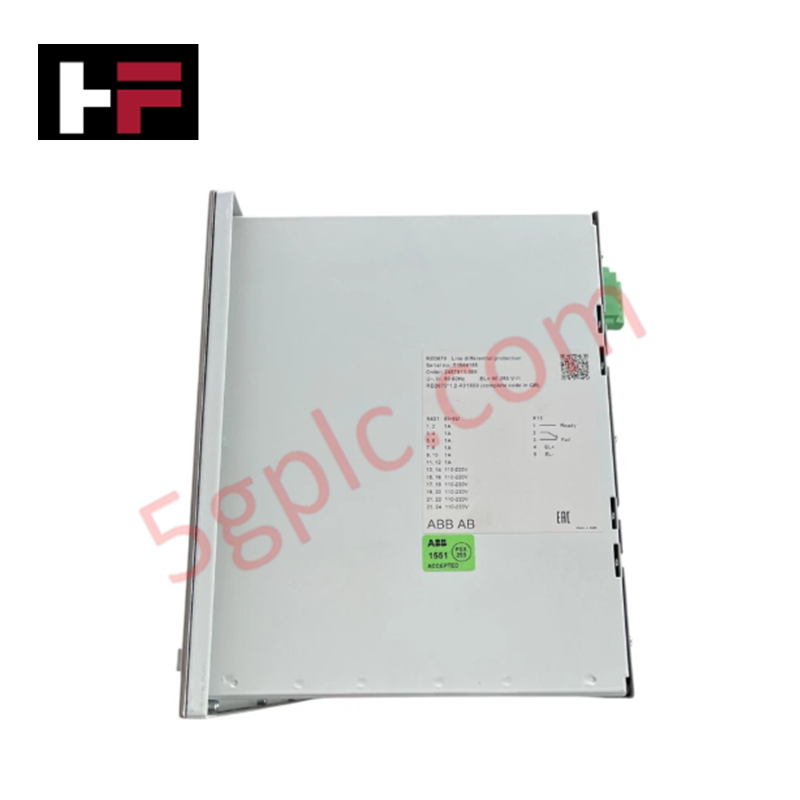
The ABB 1MRK004810-AC, also cataloged as the RED670 Line Differential Protection, operates as a dedicated hardware component for high-speed phase comparison and current differential calculation within power transmission networks. The device samples secondary analog current inputs from segmented instrument transformers to execute instantaneous fault trip routines across transmission grid infrastructures.
Hardware Specifications
| Parameter | Specification |
|---|---|
| Model | RED670 |
| Brand | ABB |
| Ordering ID | 1MRK004810-AC |
| Origin | Sweden |
| Base Function | Phase-segregated line differential protection |
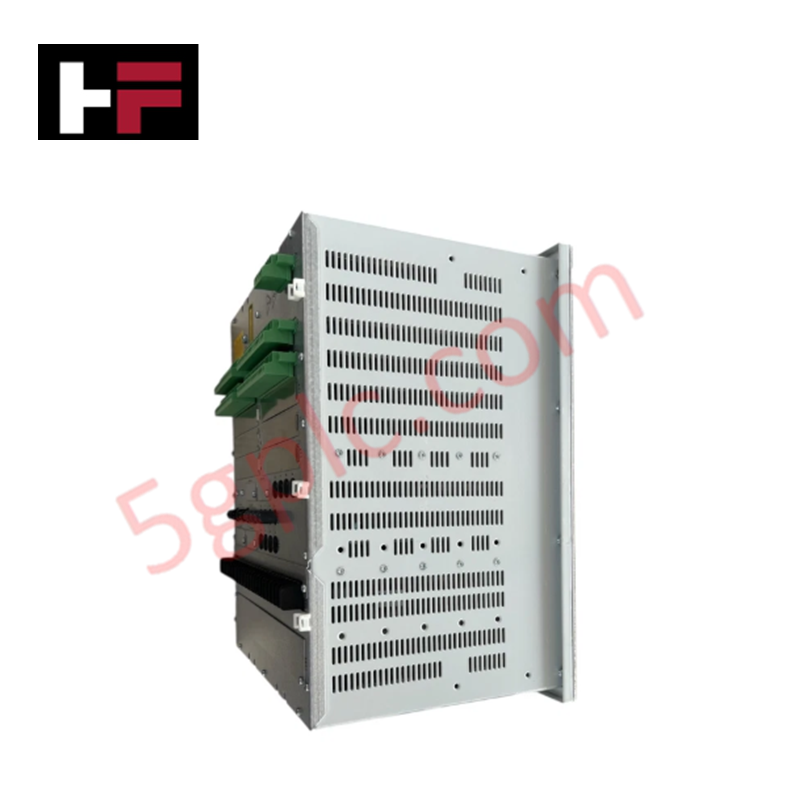
| Hardware Profile | Modular 19-inch subrack enclosure |
| Communication Ports | Multi-channel optical and copper Ethernet interfaces |
| Operating Temp | -40 to +75 deg C (Standard series chassis specification) |
| Power Consumption | Base module hardware and I/O channel allocation dependent |
| Weight | Variable based on analog input transformer module allocation |
Profinet / EtherNet/IP Deterministic Networks Performance
Differential trip calculations demand real-time data streaming that matches the backplane bus communication velocity of the central protection assembly. The high I/O density scaling of the RED670 hardware permits concurrent sampling of multiple CT inputs, mapping the values into synchronous telemetry frames. Maintaining strict firmware flash compatibility between the analog measurement cards and the active network communication blocks is mandatory to ensure zero-jitter pulse processing over deterministic communication rings.
Frequently Asked Questions
Q: Can the RED670 processing unit remain active during a hot-swap modification of the analog input module?
A: No. Hot-swapping the primary analog input hardware block is prohibited. Secondary current transformer circuits must be securely shorted and the auxiliary power isolated before extracting any internal board array to prevent high-voltage electrical arcing.
Q: What action is required if a firmware flash mismatch is present across the system interface?
A: A firmware variance will disable communication across the internal bus, forcing the unit into an unmapped fault state and blocking the execution of scheduled protection logic.
Q: How is synchronization achieved across different communication channels?
A: The hardware integrates time synchronization capabilities through its Ethernet channels using precision protocols specified under the IEC 61850 implementation architecture.
Field Installation Guidelines
- Secondary Circuit Isolation: Ensure all current transformer inputs are connected via shorting-type terminal blocks. Never open-circuit an active CT secondary line during physical wireways terminal modification.
- Shielding and Grounding Architecture: Terminate all analog copper cables using standard twisted-pair shielded conductors. Ground the outer copper shield at a single point on the entry gland plate to prevent localized circulating currents.
- Chassis Grounding Structure: Secure the chassis frame onto the 19-inch rack using low-impedance ground straps. Eradicate any paint or non-conductive coatings to ensure zero-potential metal contact.
Additional Information
- 100% Genuine Parts: All products are original and authentic, ensuring reliable industrial performance.
- 30-Day Refund Guarantee: Return any in-stock item within 30 days in original, unopened packaging for a full refund (excluding shipping and fees).
- 12-Month Warranty: Covers defects in materials or workmanship; excludes misuse, normal wear, or unauthorized modifications.
- Worldwide Shipping: We ship via USPS, UPS, FedEx, and DHL. Delivery times vary by country and may be subject to customs or import fees.
- Support & Contact: Technical and warranty assistance is available anytime. Contact us here: Contact.
- Purchase Guidance: Check product specifications and compatibility carefully before ordering to ensure proper application.






Tech & Buying Guide

Demystifying the DDE Protocol in Legacy Industrial Automation Systems
Modern control systems rely heavily on seamless interprocess communication to exchange operational data between software programs. Microsoft first introduced the Dynamic Data Exchange (DDE) protocol in 1987 to enable real-time data sharing. In factory automation, DDE served as an early bridge between control software and Windows desktop applications. Therefore, understanding DDE mechanics provides crucial insights into how legacy industrial networks established software-level connectivity.

Demystifying CPU Communication Ports in Siemens PLC Architectures
Industrial automation relies heavily on robust data exchange between devices. Without seamless connectivity, field instruments, network switches, human-machine interfaces, and programmable logic controllers cannot coordinate effectively. Therefore, understanding the various CPU communication ports available in Siemens hardware ensures efficient factory automation design and seamless system integration.

Mastering the Siemens PLC Scan Cycle: How the CPU Executes Automation Programs
Industrial automation relies heavily on programmable logic controllers (PLCs) to manage complex manufacturing processes. Many engineers dive straight into programming without mastering the underlying architecture. However, understanding how a PLC CPU executes a program ensures reliable system design. Therefore, mastering the scan cycle optimizes both performance and troubleshooting in modern control systems.