












Product Details
Technical Architecture and System Role
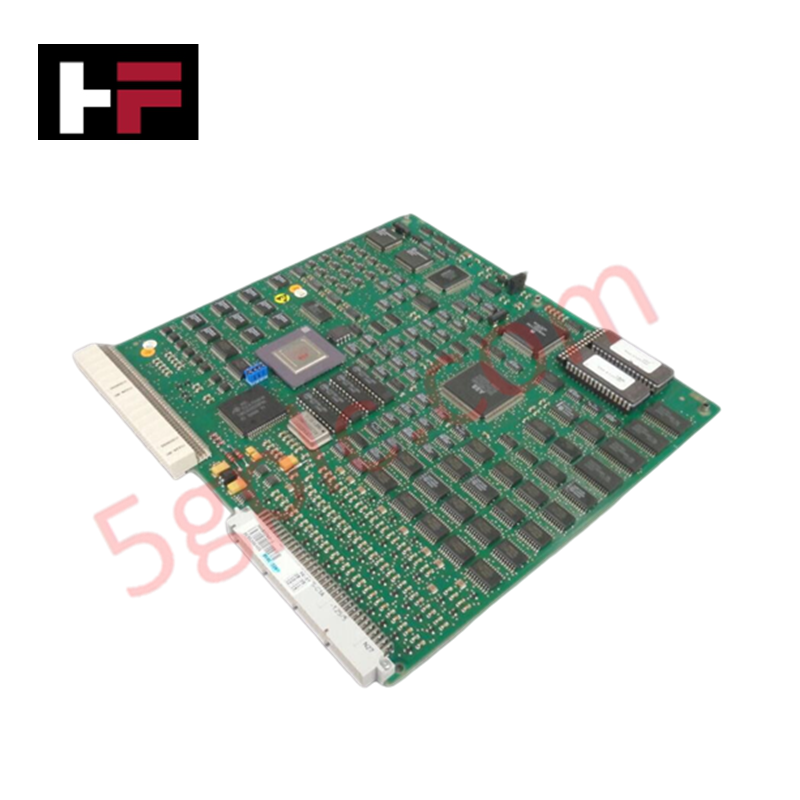
The DSQC 326 (3HAB2242-1) is a core computational module engineered for the ABB S4C robot controller generation. This high-density logic board serves as the central processing unit responsible for executing RobotWare system instructions, managing task memory, and coordinating communication between the I/O system and the drive units. Built to handle complex kinematic calculations in real-time, the DSQC 326 (3HAB2242-1) ensures the seamless operation of IRB series industrial robots, providing the stable processing environment necessary for high-speed manufacturing applications.
Technical Specifications
The mechanical and regulatory profile for the DSQC 326 (3HAB2242-1) is detailed as follows:
-
Product Function: Main Computer / CPU Processor Board
-
Controller Generation: ABB S4C (M97, M98 Eras)
-
Microprocessor Type: Embedded RISC Architecture
-
Physical Dimensions: 19.1 cm (Height) x 13.0 cm (Width) x 1.9 cm (Depth)
-
Net Weight: 0.2 kg
-
Country of Origin: USA
-
Mounting Interface: Proprietary backplane bus connector
-
Thermal Design: Integrated heatsink for passive airflow cooling
Operational Guidelines and FAQ
What are the primary symptoms of a failing DSQC 326 board?
The most frequent indicators include a "System Boot Failure" message on the programming unit, erratic software behavior, or the controller hanging during the initialization phase. If the internal status LEDs on the DSQC 326 (3HAB2242-1) remain red after power-on, it typically suggests a logic failure or memory parity error.
Is this board compatible with the later S4C+ controllers?
While functionally similar, the DSQC 326 (3HAB2242-1) is primarily intended for the S4C platform. S4C+ systems typically utilize the DSQC 500 series. Always verify your specific cabinet's part number to ensure bus protocol compatibility.
Does this board store the user programs?
The DSQC 326 (3HAB2242-1) processes the data, but the actual user programs and system parameters are usually stored on the flash disk or mass memory unit connected to it. When replacing this CPU, the memory module must be transferred to the new board.
Component Comparison: DSQC 326 vs. DSQC 325
| Attribute | DSQC 326 (3HAB2242-1) | DSQC 325 (3HAB2241-1) |
| Primary Use | Main Computer / CPU | Memory Expansion / Processing |
| System Compatibility | S4C Standard | S4C Legacy |
| Weight | 0.2 kg | 0.2 kg |
| Logic Density | High | Standard |
Additional Information
- 100% Genuine Parts: All products are original and authentic, ensuring reliable industrial performance.
- 30-Day Refund Guarantee: Return any in-stock item within 30 days in original, unopened packaging for a full refund (excluding shipping and fees).
- 12-Month Warranty: Covers defects in materials or workmanship; excludes misuse, normal wear, or unauthorized modifications.
- Worldwide Shipping: We ship via USPS, UPS, FedEx, and DHL. Delivery times vary by country and may be subject to customs or import fees.
- Support & Contact: Technical and warranty assistance is available anytime. Contact us here: Contact.
- Purchase Guidance: Check product specifications and compatibility carefully before ordering to ensure proper application.






Tech & Buying Guide

Understanding Root Causes of Unplanned PLC Stop Mode in Industrial Automation
Modern Programmable Logic Controllers manage execution through distinct operational states: Run, Stop, Start-Up, and Hold. During power-up, a controller initializes memory registers within Stop mode before briefly transitioning to Start-Up mode. During this phase, internal self-diagnostics evaluate system integrity across hardware and user programs. If the controller detects no critical faults, it enters Run mode to execute the control program continuously. However, any severe system anomaly forces the CPU back into Stop mode immediately to prevent erratic machine behavior across the plant floor.

Human-Machine Interface Design: Essential Guide to HMI Selection, Visualization, and Control System Integration
Human-Machine Interfaces (HMIs) serve as the primary operational window into complex industrial automation systems. Modern HMIs convert raw machine data into clear graphical displays, enabling operators to oversee entire manufacturing processes in real time. Instead of relying on physical control panels full of hardwired switches, engineers program interactive screens using intuitive graphics, dynamic color coding, and responsive touch interfaces. Over my 15 years in control systems engineering, I have observed HMIs transform from basic display screens into sophisticated command centers that drive operational efficiency across DCS and PLC environments.

Understanding Safety Relays in Industrial Automation: Architecture, Operation, and Functional Safety
Standard electromechanical relays provide basic electrical isolation between low-voltage control circuits and high-power output loads. A traditional switching relay features a magnetic coil driving mechanical Common (COM), Normally-Open (NO), and Normally-Closed (NC) contacts. However, standard relays pose severe functional risks when deployed in critical safety interlock circuits. High current inrush or mechanical wear can weld contacts together permanently. If contact welding occurs in an emergency stop circuit, pressing the button fails to halt hazardous machinery movements. Consequently, global functional safety standards prohibit standard relays for critical machine guarding functions.