










Product Details
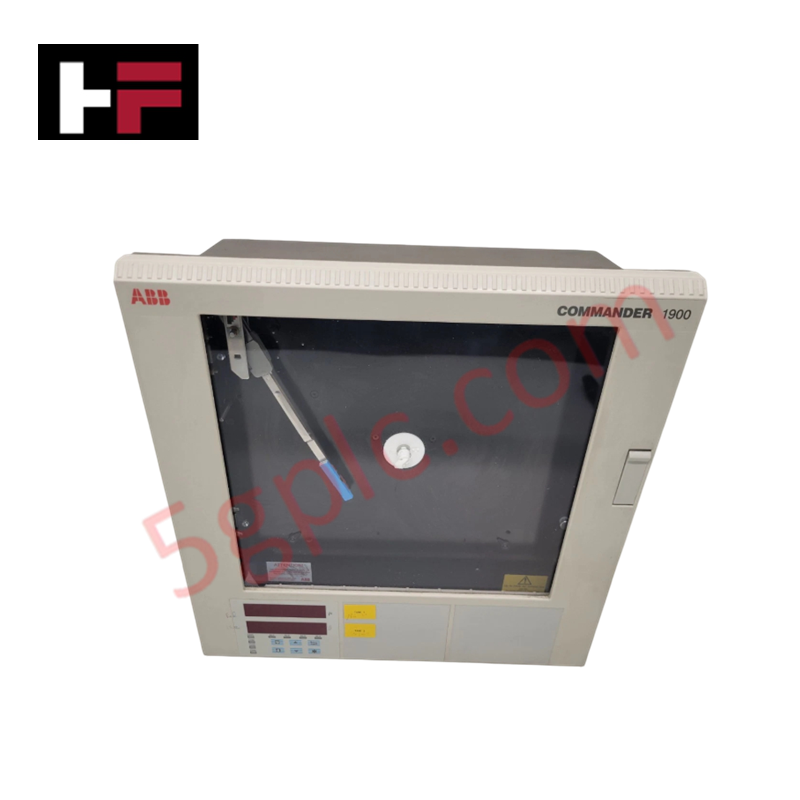
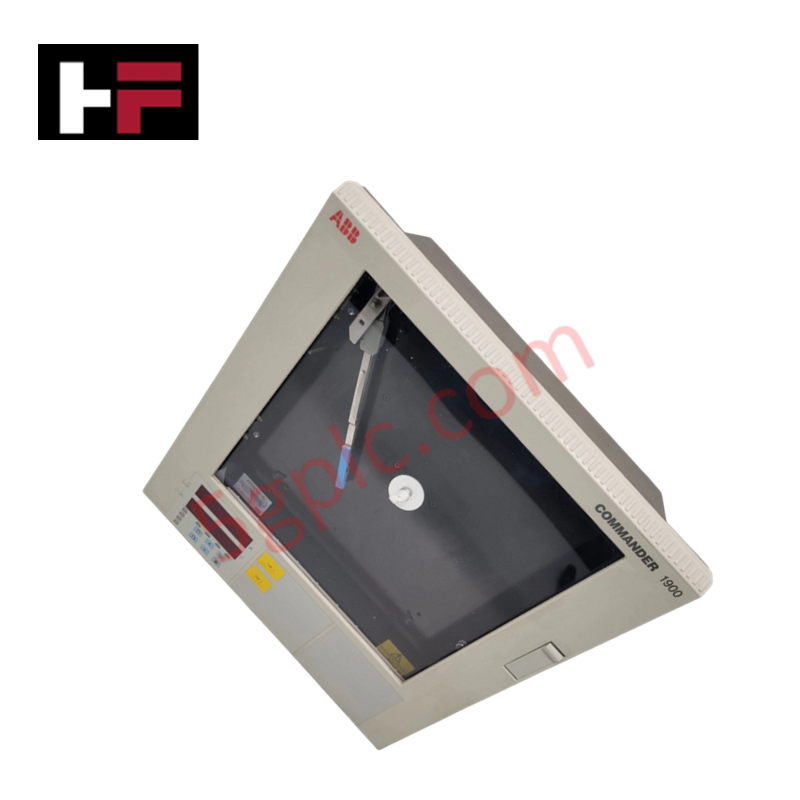
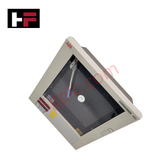
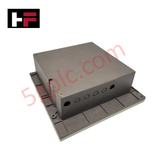
Configured for multi-channel field variable data collection and continuous trace visualization in process monitoring networks, the ABB 1912JA001100000 (1912JA001100000 Circular Chart Recorder) provides direct physical/electrical execution. It converts incoming analog process signals into real-time physical pen displacement and chart rotations across standard circular paper formats.
Hardware Specifications
| Parameter | Specification |
|---|---|
| Model | 1912JA001100000 |
| Brand | ABB |
| Origin | Sweden / Switzerland |
| Weight | 12 lbs (5.44 kg) |
| Dimensions | 305 mm x 254 mm x 203 mm (12 in x 10 in x 8 in) |
| Operating Temp | 0 to +55 deg C |
| Power Consumption | 115 VAC standard nominal supply load |
| Pen Configuration | 2 Pen standard configuration (up to 6 independent input channels) |
| Input Signal Support | Temperature (RTD/TC), pressure, flow, 4-20 mA / VDC analog signals |
| Chart Speed | User-selectable rotational time profiles |
| Product Type | Circular Chart Recorders |
| Environmental Compliance | CE, RoHS Compliant |
Channel-to-Channel Isolation and Analog Input Conditioning
The Commander 1900 series utilizes high-impedance input signal conditioning circuitry to process temperature, flow, and 4-20 mA loop variables. Channel-to-channel isolation prevents ground loop interference across active pens, maintaining signal integrity and pen position accuracy during full-scale step responses. Internal digital filters attenuate high-frequency process noise before translating loop values to servo-driven pen arm movements.
Frequently Asked Questions
Q: How should signal shielding be terminated for 4-20 mA analog input loops to prevent trace jitter?
A: Drain wires for shielded twisted-pair cables must be grounded at one single point (typically the instrument enclosure ground lug) to prevent common-mode noise interference across input channels.
Q: Can the pen calibration and chart rotation speed be adjusted directly on the unit?
A: Yes. The user-interface interface allows pen scaling adjustments, zero/span recalibration, and rotational speed selections without requiring external programming hardware.
Field Installation Guidelines
- Cut panel opening to specified dimensions (305 mm x 254 mm cutout clearance) and verify the panel thickness supports the 12 lbs module weight.
- Insert the unit through the front panel and tighten side-mounting brackets until the perimeter gasket forms a dust-tight seal.
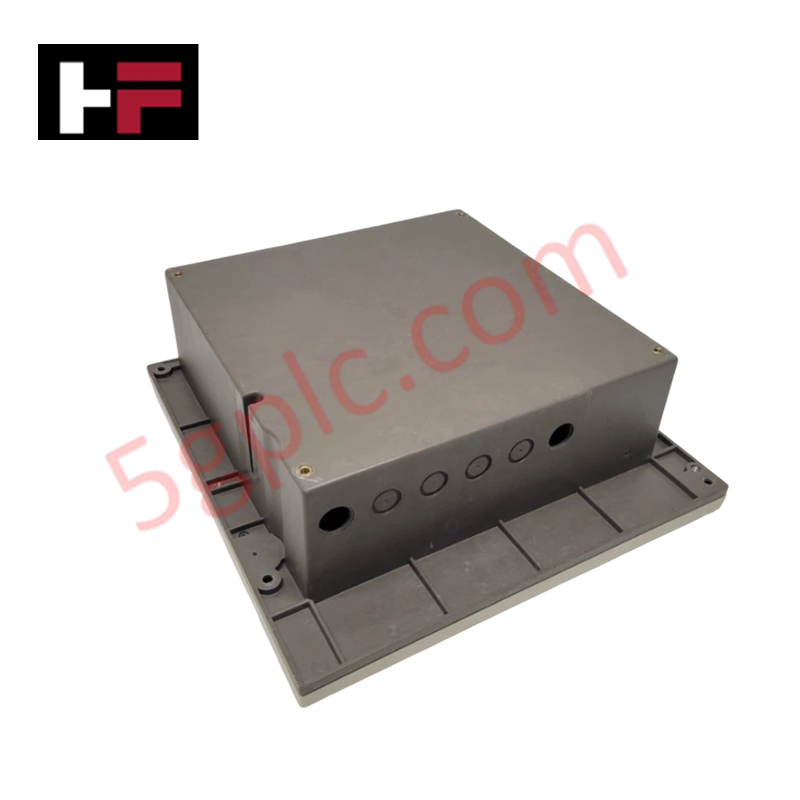
- Wire the 115 VAC power input and process signal cables to the rear terminal blocks in accordance with local electrical code safety ratings.
- Ensure the instrument housing is bonded to protective earth (PE) using a dedicated grounding conductor prior to applying line power.
Additional Information
- 100% Genuine Parts: All products are original and authentic, ensuring reliable industrial performance.
- 30-Day Refund Guarantee: Return any in-stock item within 30 days in original, unopened packaging for a full refund (excluding shipping and fees).
- 12-Month Warranty: Covers defects in materials or workmanship; excludes misuse, normal wear, or unauthorized modifications.
- Worldwide Shipping: We ship via USPS, UPS, FedEx, and DHL. Delivery times vary by country and may be subject to customs or import fees.
- Support & Contact: Technical and warranty assistance is available anytime. Contact us here: Contact.
- Purchase Guidance: Check product specifications and compatibility carefully before ordering to ensure proper application.









Tech & Buying Guide

Demystifying CPU Communication Ports in Siemens PLC Architectures
Industrial automation relies heavily on robust data exchange between devices. Without seamless connectivity, field instruments, network switches, human-machine interfaces, and programmable logic controllers cannot coordinate effectively. Therefore, understanding the various CPU communication ports available in Siemens hardware ensures efficient factory automation design and seamless system integration.

Mastering the Siemens PLC Scan Cycle: How the CPU Executes Automation Programs
Industrial automation relies heavily on programmable logic controllers (PLCs) to manage complex manufacturing processes. Many engineers dive straight into programming without mastering the underlying architecture. However, understanding how a PLC CPU executes a program ensures reliable system design. Therefore, mastering the scan cycle optimizes both performance and troubleshooting in modern control systems.

How to Connect to Siemens S7 PLCs: 5 Essential Communication Methods
Establishing a reliable hardware link between a programming terminal and a Siemens SIMATIC controller is essential for engineering workflows. Field engineers rely on distinct physical layers, ranging from legacy serial connections to high-speed Industrial Ethernet protocols. Modern factory automation environments prioritize fast data transfer and seamless driver integration. Selecting the correct connection method simplifies program downloads, online monitoring, and system troubleshooting in complex control systems.